Agency of Agriculture tells committee $1.5M in proposed capital funds would match federal grants for farm water‑quality projects
February 12, 2026 | Corrections & Institutions, HOUSE OF REPRESENTATIVES, Committees, Legislative , Vermont
This article was created by AI summarizing key points discussed. AI makes mistakes, so for full details and context, please refer to the video of the full meeting. Please report any errors so we can fix them. Report an error »
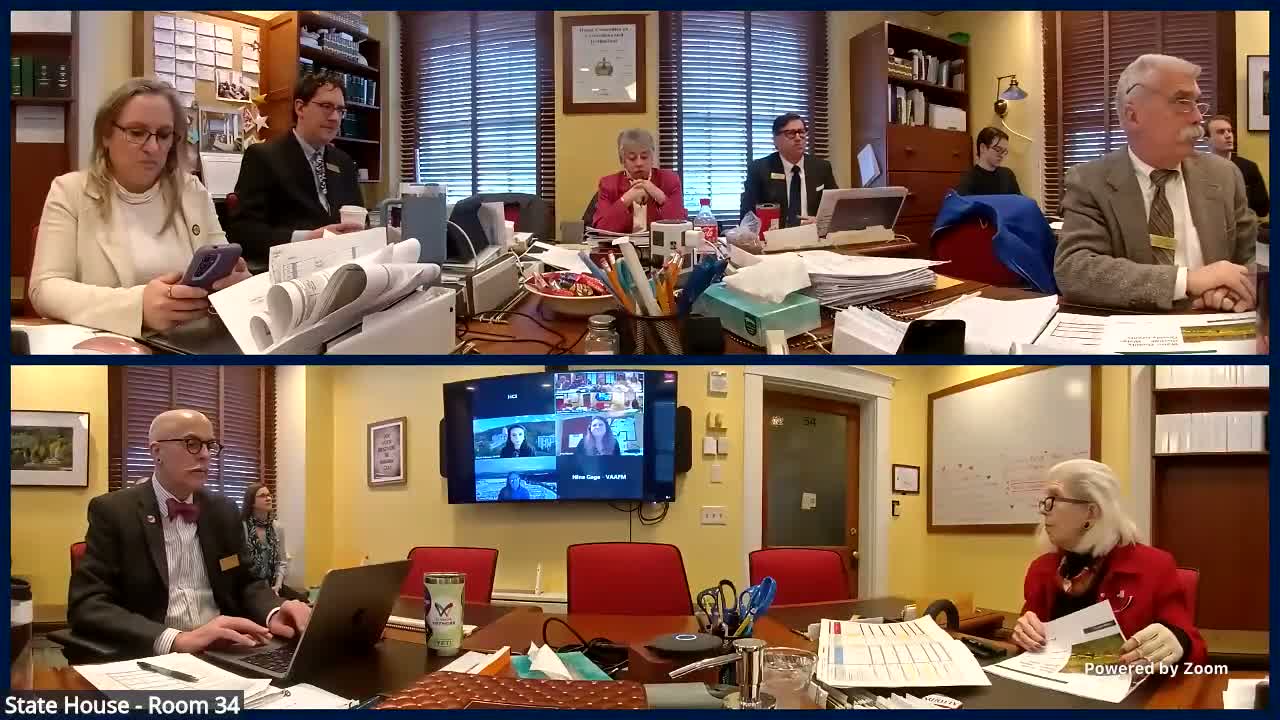
Nicole Dubuque, a representative of the Agency of Agriculture, told the committee that the governor’s proposed fiscal‑year 2027 capital adjustment includes $1.5 million for agricultural water‑quality grants and that a prior $3 million capital allocation for FY26 is already funding projects across the state.
At a departmental presentation, Nina Gage of the agency’s Water Quality Division said the division administers technical and financial assistance programs, enforces farm‑specific requirements and administers capital funding primarily through two programs: the Best Management Practices (BMP) program and the Conservation Reserve Enhancement Program (CREP). She said those state capital dollars typically serve as matching funds to federal programs such as USDA NRCS EQIP and the Farm Service Agency CREP agreements.
Why it matters: The state has EPA‑driven phosphorus reduction targets for Lake Champlain and other basins. Agency presenters told the committee that agriculture has been the largest contributor to estimated load reductions the state can measure; the division estimated about 74 metric tons of phosphorus removed to date and described agriculture as the sector providing the majority of estimated reductions. Agency staff said failing to meet benchmark obligations could prompt EPA direction of projects and priorities.
Key details from the presentation included: the division reported a nine‑year investment total that included $12.1 million in fiscal 2025, plus roughly $4 million in leveraged federal dollars tied to those projects; the BMP program’s average project size was cited at about $91,000 and the program averages roughly 43 projects per year; the CREP program’s average state payment was cited at about $4,200 and approximately 6–7 projects per year. Nina Gage summarized the division’s capital role: “A 100% of our proposed fiscal 27 funds are for infrastructure projects on farms.”
Committee members pressed for the status of the FY26 $3 million allocation. Agency staff said about $1.5 million of FY26 funding is already obligated in agreements, roughly $700,000 is in agreements being finalized with farms and engineers, leaving approximately $800,000 still available in that allocation for projects that must be ranked and encumbered. Agency staff reported they had received 42 applications toward the FY27 pipeline at the time of the hearing and that an application ranking deadline is scheduled in May.
On enforcement and small‑farm impacts, Laura DiPietro, director of the division’s inspection and enforcement work, told members that inspection activity has grown since enactment of Act 64 and because previously unassisted small‑farm sites are entering the compliance pipeline. DiPietro said the division offers cost‑share up to 90% through its programs and works with VHCB and federal partners to increase assistance where needed, but acknowledged that national milk pricing and consolidation trends put persistent economic pressure on small farms.
Members asked several follow‑up questions about how much of past capital allocations are state‑only projects versus federal‑matched projects and requested a project count and rough cost estimates for FY26 obligations and FY27 projected projects. Agency staff agreed to provide these figures by email prior to committee markup. The chair then moved to the next scheduled presenters.
The presentation and member questioning provided the committee with both program context and budgetary detail to inform upcoming capital‑bill markup decisions.
At a departmental presentation, Nina Gage of the agency’s Water Quality Division said the division administers technical and financial assistance programs, enforces farm‑specific requirements and administers capital funding primarily through two programs: the Best Management Practices (BMP) program and the Conservation Reserve Enhancement Program (CREP). She said those state capital dollars typically serve as matching funds to federal programs such as USDA NRCS EQIP and the Farm Service Agency CREP agreements.
Why it matters: The state has EPA‑driven phosphorus reduction targets for Lake Champlain and other basins. Agency presenters told the committee that agriculture has been the largest contributor to estimated load reductions the state can measure; the division estimated about 74 metric tons of phosphorus removed to date and described agriculture as the sector providing the majority of estimated reductions. Agency staff said failing to meet benchmark obligations could prompt EPA direction of projects and priorities.
Key details from the presentation included: the division reported a nine‑year investment total that included $12.1 million in fiscal 2025, plus roughly $4 million in leveraged federal dollars tied to those projects; the BMP program’s average project size was cited at about $91,000 and the program averages roughly 43 projects per year; the CREP program’s average state payment was cited at about $4,200 and approximately 6–7 projects per year. Nina Gage summarized the division’s capital role: “A 100% of our proposed fiscal 27 funds are for infrastructure projects on farms.”
Committee members pressed for the status of the FY26 $3 million allocation. Agency staff said about $1.5 million of FY26 funding is already obligated in agreements, roughly $700,000 is in agreements being finalized with farms and engineers, leaving approximately $800,000 still available in that allocation for projects that must be ranked and encumbered. Agency staff reported they had received 42 applications toward the FY27 pipeline at the time of the hearing and that an application ranking deadline is scheduled in May.
On enforcement and small‑farm impacts, Laura DiPietro, director of the division’s inspection and enforcement work, told members that inspection activity has grown since enactment of Act 64 and because previously unassisted small‑farm sites are entering the compliance pipeline. DiPietro said the division offers cost‑share up to 90% through its programs and works with VHCB and federal partners to increase assistance where needed, but acknowledged that national milk pricing and consolidation trends put persistent economic pressure on small farms.
Members asked several follow‑up questions about how much of past capital allocations are state‑only projects versus federal‑matched projects and requested a project count and rough cost estimates for FY26 obligations and FY27 projected projects. Agency staff agreed to provide these figures by email prior to committee markup. The chair then moved to the next scheduled presenters.
The presentation and member questioning provided the committee with both program context and budgetary detail to inform upcoming capital‑bill markup decisions.
Don't Miss a Word: See the Full Meeting!
Go beyond summaries. Unlock every video, transcript, and key insight with a Founder Membership.
✓
Get instant access to full meeting videos
✓
Search and clip any phrase from complete transcripts
✓
Receive AI-powered summaries & custom alerts
✓
Enjoy lifetime, unrestricted access to government data
30-day money-back guarantee
