Court hears contested service and motion-to-open-default in Clayton County case
February 11, 2026 | Clayton County State Court 304, Texas Courts, Judicial, Texas
This article was created by AI summarizing key points discussed. AI makes mistakes, so for full details and context, please refer to the video of the full meeting. Please report any errors so we can fix them. Report an error »
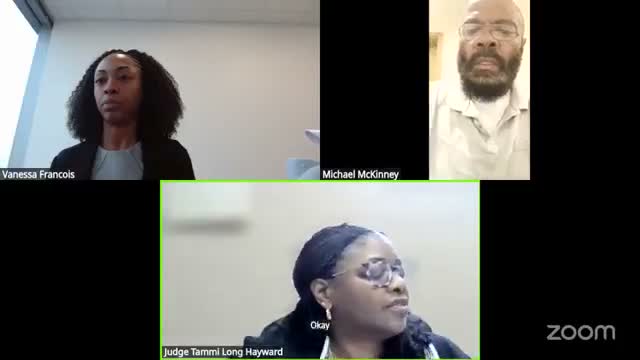
On Feb. 11 the court took extended testimony and argument on whether service of process was properly made on Michael McKinney in a fraud/collection dispute brought by Denise Tuckenberry and others.
McKinney told the court he was not personally served and only learned of the suit after receiving text messages; he said he was disabled and had used multiple addresses and phone numbers. Plaintiff counsel described eleven service efforts across two states, including sheriff attempts, a process server who left paperwork with a building owner and photographs verifying identity at a job site, and text messages with images of the summons sent on March 25, 2025. "I used 11 different methods to serve process," plaintiff's counsel said; court staff were asked to pull and display the return of service for review.
Judge Long Hayward instructed counsel to upload the return of service image to the record and said she would review the filings, the service return and the affidavit evidence before determining whether default should be opened. The judge cautioned McKinney that the court will send orders to the address he provided on court filings and that floating or inconsistent addresses can limit later claims of non-receipt. The court left the motion under advisement pending review of the documentary record and told the parties she would issue an order by mail.
McKinney told the court he was not personally served and only learned of the suit after receiving text messages; he said he was disabled and had used multiple addresses and phone numbers. Plaintiff counsel described eleven service efforts across two states, including sheriff attempts, a process server who left paperwork with a building owner and photographs verifying identity at a job site, and text messages with images of the summons sent on March 25, 2025. "I used 11 different methods to serve process," plaintiff's counsel said; court staff were asked to pull and display the return of service for review.
Judge Long Hayward instructed counsel to upload the return of service image to the record and said she would review the filings, the service return and the affidavit evidence before determining whether default should be opened. The judge cautioned McKinney that the court will send orders to the address he provided on court filings and that floating or inconsistent addresses can limit later claims of non-receipt. The court left the motion under advisement pending review of the documentary record and told the parties she would issue an order by mail.
View the Full Meeting & All Its Details
This article offers just a summary. Unlock complete video, transcripts, and insights as a Founder Member.
✓
Watch full, unedited meeting videos
✓
Search every word spoken in unlimited transcripts
✓
AI summaries & real-time alerts (all government levels)
✓
Permanent access to expanding government content
30-day money-back guarantee
