SFFD and SFPUC outline potable emergency firefighting water system for west side
February 11, 2026 | San Francisco City, San Francisco County, California
This article was created by AI summarizing key points discussed. AI makes mistakes, so for full details and context, please refer to the video of the full meeting. Please report any errors so we can fix them. Report an error »
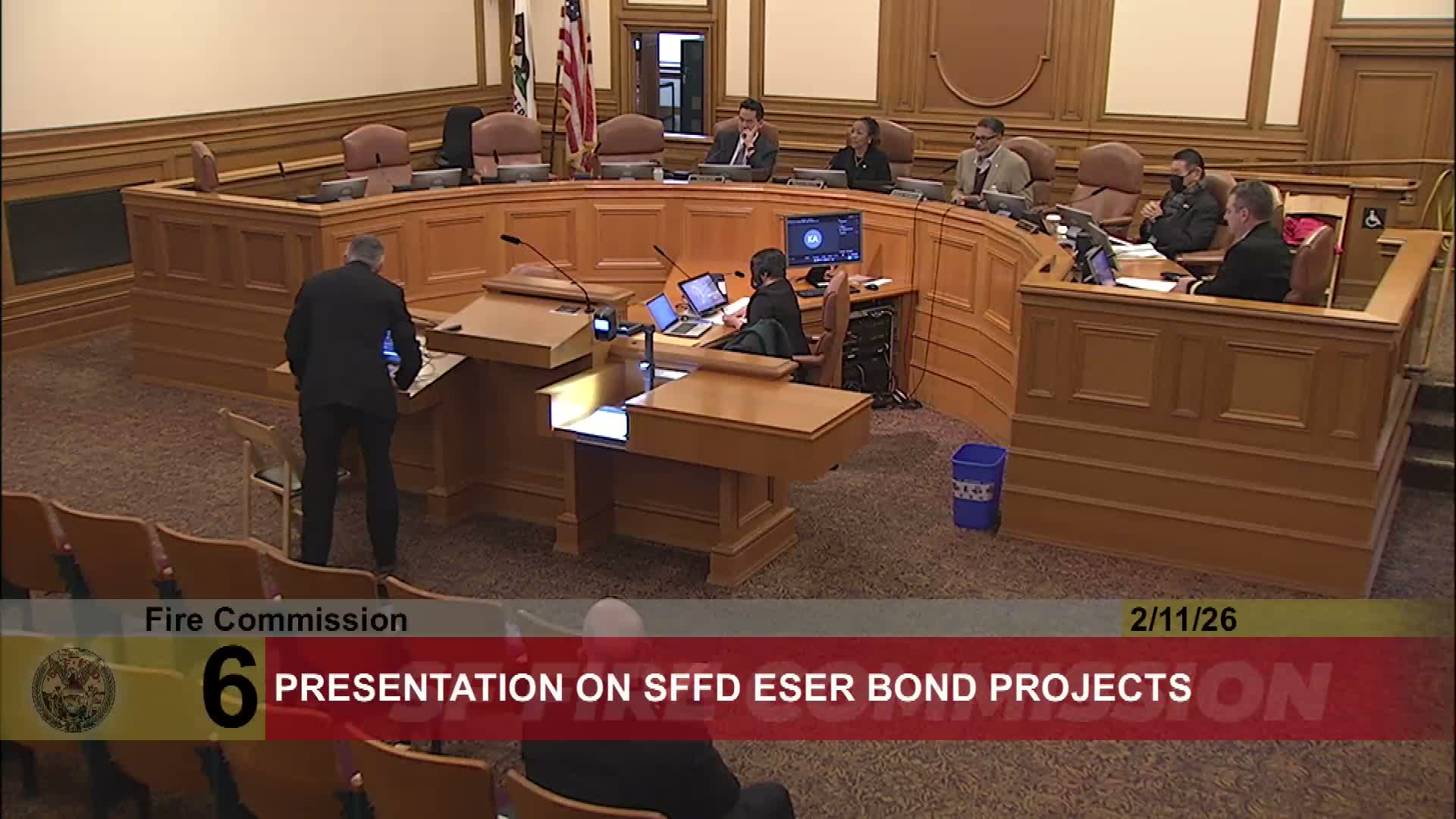
Captain James McGuigan presented a technical briefing on water-supply systems and the department's coordination with the San Francisco Public Utilities Commission (SFPUC).
McGuigan summarized San Francisco's multiple layers of fire-protection water sources: roughly 8,500 domestic hydrants; a high-pressure emergency firefighting water system (formerly AWSS) with about 135 miles of resilient pipe and 1,500 high-pressure hydrants; two saltwater pump stations and 35 saltwater suction hydrants along the waterfront; more than 180 cisterns averaging roughly 75,000 gallons each (some up to 500,000 gallons); and fireboat manifolds to augment supply.
On future work, McGuigan described a planned potable emergency firefighting water system—a dual-purpose, earthquake-resistant high-pressure transmission line sourced from Lake Merced that would provide both drinking-water transmission and the ability to switch to high-pressure firefighting service in a major emergency. He said the plan improves west-side coverage (Sunset and Richmond) and allows cost-sharing with the SFPUC because it serves both drinking-water and firefighting functions.
McGuigan and commissioners also discussed why saltwater from Ocean Beach is not the preferred option for the west side (permitting complexity and very high infrastructure costs) and confirmed that SFPUC will maintain the system once built; joint drills and quarterly training will continue to test interoperability.
Next steps: Phased construction and hydraulic modeling continue; selected segments (including Lake Merced connections) are planned to bid and award in 2026, with later phases moving into 2028 subject to design and appeals.
McGuigan summarized San Francisco's multiple layers of fire-protection water sources: roughly 8,500 domestic hydrants; a high-pressure emergency firefighting water system (formerly AWSS) with about 135 miles of resilient pipe and 1,500 high-pressure hydrants; two saltwater pump stations and 35 saltwater suction hydrants along the waterfront; more than 180 cisterns averaging roughly 75,000 gallons each (some up to 500,000 gallons); and fireboat manifolds to augment supply.
On future work, McGuigan described a planned potable emergency firefighting water system—a dual-purpose, earthquake-resistant high-pressure transmission line sourced from Lake Merced that would provide both drinking-water transmission and the ability to switch to high-pressure firefighting service in a major emergency. He said the plan improves west-side coverage (Sunset and Richmond) and allows cost-sharing with the SFPUC because it serves both drinking-water and firefighting functions.
McGuigan and commissioners also discussed why saltwater from Ocean Beach is not the preferred option for the west side (permitting complexity and very high infrastructure costs) and confirmed that SFPUC will maintain the system once built; joint drills and quarterly training will continue to test interoperability.
Next steps: Phased construction and hydraulic modeling continue; selected segments (including Lake Merced connections) are planned to bid and award in 2026, with later phases moving into 2028 subject to design and appeals.
Don't Miss a Word: See the Full Meeting!
Go beyond summaries. Unlock every video, transcript, and key insight with a Founder Membership.
✓
Get instant access to full meeting videos
✓
Search and clip any phrase from complete transcripts
✓
Receive AI-powered summaries & custom alerts
✓
Enjoy lifetime, unrestricted access to government data
30-day money-back guarantee
