Lawmakers Hear Opposition and Support for Bill That Would Tie MaineCare COLAs to Appropriations
February 11, 2026 | 2026 Legislature ME, Maine
This article was created by AI summarizing key points discussed. AI makes mistakes, so for full details and context, please refer to the video of the full meeting. Please report any errors so we can fix them. Report an error »
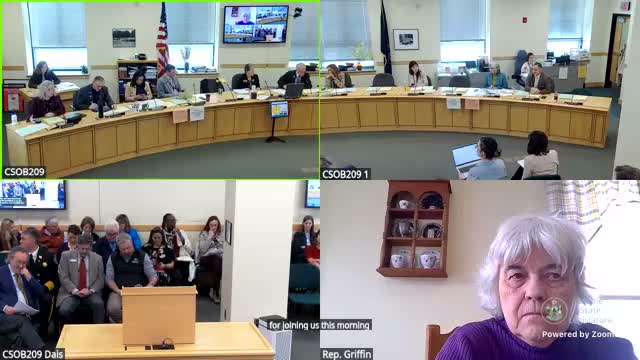
Representative Drew Gautien introduced LD 2177 as a department bill aimed at updating MaineCare’s reimbursement system and clarifying how statutory rate changes work when budget dollars are limited. Gautien said the measure reflects experience in the 2025 budget cycle and seeks to “provide clear guidance to the department about what the expectations are when those funds aren't there.”
Olivia Alford, deputy director of policy and programs at the Office of MaineCare Services, testified that the bill has four goals: protect sustainability by making certain rate adjustments subject to appropriation; change the timing of COLAs tied to minimum‑wage increases (she said the department proposes applying such COLAs 6–12 months after a wage increase to allow for budget planning); permit limited incorporation by reference in rulemaking; and clean up definitions, meeting frequency and technical language. “This bill does not change the requirement that rates must support 125 of the minimum wage for essential health workers,” Alford said, adding the change is intended to avoid retroactive, administratively burdensome updates.
Provider witnesses — including CEOs and trade groups representing nursing homes, home‑ and community‑based services and behavioral‑health providers — urged the committee to reject the bill’s Section 3 language that would let the department reduce or cancel COLAs if funding is unavailable. Todd Goodwin, CEO of John F. Murphy Homes, told the committee the bill “creates a strong sustainable framework” but warned it also “contemplates undoing many key provisions in the rate reform statute.” Michael Tyler of the Maine Health Care Association and Laura Cortes of the Maine Association for Community Service Providers emphasized that making COLAs discretionary would create instability and risk program closures.
Providers flagged several technical and practical concerns: the proposed prioritization framework for partial rate implementation could disadvantage some providers; allowing reductions without rulemaking or public comment would erode transparency and limit stakeholder input; and making reimbursement adjustments contingent on appropriations could leave providers unable to plan payroll or compete in local labor markets. Multiple witnesses asked the department to file a specific estimate of how many rate determinations remain outstanding and to propose alternatives to fully discretionary COLAs.
Lawmakers asked the department for more detail at the work session about the mechanics of the 6–12 month COLA lag, how the department would prioritize partial increases if funds were limited, and what the department would request in the biennial or supplemental budgets. Alford said the department can produce visuals and scheduling options for the committee and that some statutory provisions referenced in testimony (for example, the rate reform statute, cited as 31 73 j) have only recently been implemented across many service lines.
Next steps: committee members requested additional written materials (a detailed list of the rate determinations completed or outstanding, and examples of how the prioritization framework would allocate partial funding). The committee closed testimony on LD 2177 and will address the bill again at the work session.
Olivia Alford, deputy director of policy and programs at the Office of MaineCare Services, testified that the bill has four goals: protect sustainability by making certain rate adjustments subject to appropriation; change the timing of COLAs tied to minimum‑wage increases (she said the department proposes applying such COLAs 6–12 months after a wage increase to allow for budget planning); permit limited incorporation by reference in rulemaking; and clean up definitions, meeting frequency and technical language. “This bill does not change the requirement that rates must support 125 of the minimum wage for essential health workers,” Alford said, adding the change is intended to avoid retroactive, administratively burdensome updates.
Provider witnesses — including CEOs and trade groups representing nursing homes, home‑ and community‑based services and behavioral‑health providers — urged the committee to reject the bill’s Section 3 language that would let the department reduce or cancel COLAs if funding is unavailable. Todd Goodwin, CEO of John F. Murphy Homes, told the committee the bill “creates a strong sustainable framework” but warned it also “contemplates undoing many key provisions in the rate reform statute.” Michael Tyler of the Maine Health Care Association and Laura Cortes of the Maine Association for Community Service Providers emphasized that making COLAs discretionary would create instability and risk program closures.
Providers flagged several technical and practical concerns: the proposed prioritization framework for partial rate implementation could disadvantage some providers; allowing reductions without rulemaking or public comment would erode transparency and limit stakeholder input; and making reimbursement adjustments contingent on appropriations could leave providers unable to plan payroll or compete in local labor markets. Multiple witnesses asked the department to file a specific estimate of how many rate determinations remain outstanding and to propose alternatives to fully discretionary COLAs.
Lawmakers asked the department for more detail at the work session about the mechanics of the 6–12 month COLA lag, how the department would prioritize partial increases if funds were limited, and what the department would request in the biennial or supplemental budgets. Alford said the department can produce visuals and scheduling options for the committee and that some statutory provisions referenced in testimony (for example, the rate reform statute, cited as 31 73 j) have only recently been implemented across many service lines.
Next steps: committee members requested additional written materials (a detailed list of the rate determinations completed or outstanding, and examples of how the prioritization framework would allocate partial funding). The committee closed testimony on LD 2177 and will address the bill again at the work session.
Don't Miss a Word: See the Full Meeting!
Go beyond summaries. Unlock every video, transcript, and key insight with a Founder Membership.
✓
Get instant access to full meeting videos
✓
Search and clip any phrase from complete transcripts
✓
Receive AI-powered summaries & custom alerts
✓
Enjoy lifetime, unrestricted access to government data
30-day money-back guarantee
