Committee Hears Broad Support for Bill to Pay EMS for Treatment‑in‑Place and Community Paramedicine
February 11, 2026 | 2026 Legislature ME, Maine
This article was created by AI summarizing key points discussed. AI makes mistakes, so for full details and context, please refer to the video of the full meeting. Please report any errors so we can fix them. Report an error »
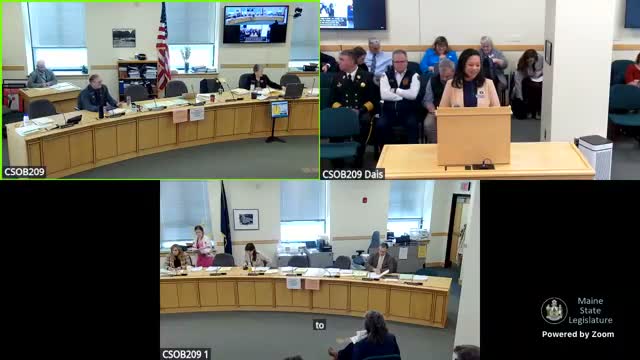
Representative Flavia DeBrito introduced LD 2119, describing it as a measure to align payment with how emergency medical services are delivered today — paying for treatment provided on scene, reimbursement for community paramedicine, and allowing reimbursement for transport to clinically appropriate alternative destinations.
Cosponsor Jack Ducharme and physician supporters described case examples in which community paramedicine teams kept frail or homebound patients out of emergency departments by providing on‑scene assessments, drawing labs and connecting patients with primary care. "This bill proposes to allow EMS agencies to bill for medical services rendered on-site rather than requiring transport to allow for the billing of the EMS provider," Ducharme said, explaining common no‑transport scenarios.
Strong, consistent support came from municipal leaders, fire chiefs, the Maine Ambulance Association, Waterville EMS and Northern Light Health. Chief Jason Frost (Waterville) said community paramedicine has prevented admissions and readmissions and filled gaps after Inland Hospital’s closure. Butch Russell (Maine Ambulance Association) and others stressed that current Medicare‑based rates and private pay caps leave EMS underfunded for readiness costs and non‑transport responses, with some services covering thousands of dollars per no‑transport call out of local subsidies.
Opponents (insurance trade groups) urged caution. The Maine Association of Health Plans and Anthem raised concerns about potential expansion of coverage mandates and premium impacts for fully insured plans; they recommended stakeholder workgroups to set reimbursement and authorization protocols for alternative destinations and private‑market effects.
Committee requests and next steps: lawmakers asked DHHS and the Bureau of Insurance for further analysis on interactions with existing laws (Title 24‑A) and to provide a side‑by‑side with similar bills in Health Care Finance and Policy. Proponents asked for an expedited rulemaking pathway and clearer timelines to implement billing codes for community paramedicine and non‑transport services.
Cosponsor Jack Ducharme and physician supporters described case examples in which community paramedicine teams kept frail or homebound patients out of emergency departments by providing on‑scene assessments, drawing labs and connecting patients with primary care. "This bill proposes to allow EMS agencies to bill for medical services rendered on-site rather than requiring transport to allow for the billing of the EMS provider," Ducharme said, explaining common no‑transport scenarios.
Strong, consistent support came from municipal leaders, fire chiefs, the Maine Ambulance Association, Waterville EMS and Northern Light Health. Chief Jason Frost (Waterville) said community paramedicine has prevented admissions and readmissions and filled gaps after Inland Hospital’s closure. Butch Russell (Maine Ambulance Association) and others stressed that current Medicare‑based rates and private pay caps leave EMS underfunded for readiness costs and non‑transport responses, with some services covering thousands of dollars per no‑transport call out of local subsidies.
Opponents (insurance trade groups) urged caution. The Maine Association of Health Plans and Anthem raised concerns about potential expansion of coverage mandates and premium impacts for fully insured plans; they recommended stakeholder workgroups to set reimbursement and authorization protocols for alternative destinations and private‑market effects.
Committee requests and next steps: lawmakers asked DHHS and the Bureau of Insurance for further analysis on interactions with existing laws (Title 24‑A) and to provide a side‑by‑side with similar bills in Health Care Finance and Policy. Proponents asked for an expedited rulemaking pathway and clearer timelines to implement billing codes for community paramedicine and non‑transport services.
Don't Miss a Word: See the Full Meeting!
Go beyond summaries. Unlock every video, transcript, and key insight with a Founder Membership.
✓
Get instant access to full meeting videos
✓
Search and clip any phrase from complete transcripts
✓
Receive AI-powered summaries & custom alerts
✓
Enjoy lifetime, unrestricted access to government data
30-day money-back guarantee
