Providers Urge Release of $8.1M in Nursing Facility Quality Bonuses; Committee Weighs Changes to Guardrails
February 11, 2026 | 2026 Legislature ME, Maine
This article was created by AI summarizing key points discussed. AI makes mistakes, so for full details and context, please refer to the video of the full meeting. Please report any errors so we can fix them. Report an error »
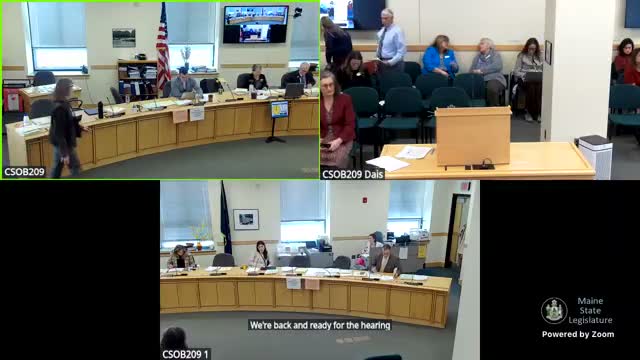
Senator Nicole Grochowski presented LD 2131, a resolve intended to stabilize Maine’s nursing facility sector during the three‑year transition to a new payment model. The amendment the sponsor introduced would (1) adjust ‘‘guardrails’’ that funnel how COLAs and transition calculations are applied so more facilities receive intended COLAs, (2) partially reinstate a direct‑care add‑on ($6 per MaineCare resident per day) as a bridge to prior funding levels, and (3) require release of $8.1 million in quality bonus (QUEST) payments earned by participating facilities.
Provider witnesses from larger and small systems testified in strong support. “These funds were promised,” said Mary Jane McDade, CEO of North Country Associates, noting facilities planned budgets and issued wage increases based on letters from DHHS. Angela Westhoff of the Maine Health Care Association said the guardrails’ sequencing unintentionally excluded many facilities from the 2026 COLA and that the transition fund exists to bridge those costs. Several witnesses warned that failure to adjust guardrails and release funds could force additional closures and out‑of‑state placements.
DHHS deputy Olivia Alford testified in opposition to immediate, across‑the‑board changes to guardrails and cautioned that issuing the QUEST bonus without federal (CMS) approval could exhaust transition‑fund dollars and jeopardize other elements of the 3‑year transition. Alford said the state plan amendment is under CMS review and that the department is prioritizing the review; she estimated CMS approval could arrive within weeks but noted federal review timelines are uncertain.
Committee follow‑ups: legislators asked DHHS for a detailed transition‑fund accounting, a timeline for CMS review, a sample provider letter on awarded bonus amounts and clarification of how guardrails interact with the statewide rate. Several members asked DHHS to provide options that would release some funds now without exhausting the transition fund prematurely.
Provider witnesses from larger and small systems testified in strong support. “These funds were promised,” said Mary Jane McDade, CEO of North Country Associates, noting facilities planned budgets and issued wage increases based on letters from DHHS. Angela Westhoff of the Maine Health Care Association said the guardrails’ sequencing unintentionally excluded many facilities from the 2026 COLA and that the transition fund exists to bridge those costs. Several witnesses warned that failure to adjust guardrails and release funds could force additional closures and out‑of‑state placements.
DHHS deputy Olivia Alford testified in opposition to immediate, across‑the‑board changes to guardrails and cautioned that issuing the QUEST bonus without federal (CMS) approval could exhaust transition‑fund dollars and jeopardize other elements of the 3‑year transition. Alford said the state plan amendment is under CMS review and that the department is prioritizing the review; she estimated CMS approval could arrive within weeks but noted federal review timelines are uncertain.
Committee follow‑ups: legislators asked DHHS for a detailed transition‑fund accounting, a timeline for CMS review, a sample provider letter on awarded bonus amounts and clarification of how guardrails interact with the statewide rate. Several members asked DHHS to provide options that would release some funds now without exhausting the transition fund prematurely.
View the Full Meeting & All Its Details
This article offers just a summary. Unlock complete video, transcripts, and insights as a Founder Member.
✓
Watch full, unedited meeting videos
✓
Search every word spoken in unlimited transcripts
✓
AI summaries & real-time alerts (all government levels)
✓
Permanent access to expanding government content
30-day money-back guarantee
