Lawmakers spar over 5,000 fentanyl deaths in New York and a pardon for "Mister Hernandez"
February 11, 2026 | House Committee on Foreign Affairs, House Committee, House, Legislative, Federal
This article was created by AI summarizing key points discussed. AI makes mistakes, so for full details and context, please refer to the video of the full meeting. Please report any errors so we can fix them. Report an error »
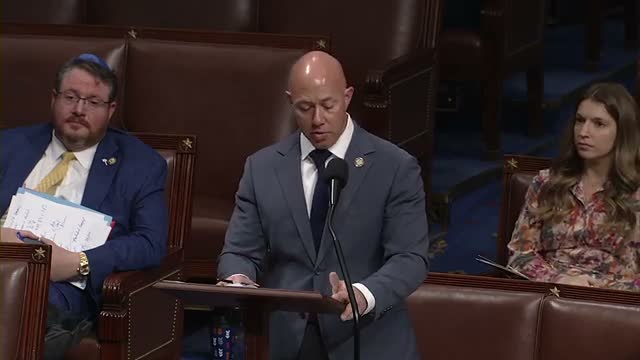
Speaker 1 repeatedly pressed a colleague to call roughly 5,000 fentanyl-related deaths in New York an emergency, asking directly, "Would you like to say 5000 deaths in New York is an emergency?" Speaker 2 did not grant that designation during the exchange and instead asked about a pardon for "Mister Hernandez," saying, "Have you found out yet why mister Hernandez has been pardoned?" and adding, "I would... prosecute him."
The two also disputed the source of fentanyl supplies. When Speaker 2 asked, "Did those the fentanyl come from Canada?" Speaker 1 answered, "Much of it did," and asserted that Canada had seen an additional 8,000 fentanyl-related arrests last year and an "increase of 80%" in seizures at the U.S.-Canada border, which Speaker 1 attributed to Canadian enforcement actions. Speaker 1 characterized those actions as "Canada doing law enforcement on its side." Speaker 2 countered that the United States was not conducting comparable enforcement "on our side."
Speaker 1 also speculated about motives behind the pardon, saying it "might have been making room for Maduro," and noted they "didn't have that talk" with the president, framing that statement as speculation rather than established fact. The exchange featured repeated requests for an explicit labeling of the New York deaths as an emergency and criticism of the colleague's silence: "Because the death of 5000 of his statesmen apparently means nothing to him," Speaker 1 said.
The assertions about arrest totals, the 80% figure and the origin of seized fentanyl were offered in the colloquy by participants and were not independently verified during the exchange. The discussion produced no formal motion, vote or official finding; it remained an unresolved dispute between the two speakers.
The two also disputed the source of fentanyl supplies. When Speaker 2 asked, "Did those the fentanyl come from Canada?" Speaker 1 answered, "Much of it did," and asserted that Canada had seen an additional 8,000 fentanyl-related arrests last year and an "increase of 80%" in seizures at the U.S.-Canada border, which Speaker 1 attributed to Canadian enforcement actions. Speaker 1 characterized those actions as "Canada doing law enforcement on its side." Speaker 2 countered that the United States was not conducting comparable enforcement "on our side."
Speaker 1 also speculated about motives behind the pardon, saying it "might have been making room for Maduro," and noted they "didn't have that talk" with the president, framing that statement as speculation rather than established fact. The exchange featured repeated requests for an explicit labeling of the New York deaths as an emergency and criticism of the colleague's silence: "Because the death of 5000 of his statesmen apparently means nothing to him," Speaker 1 said.
The assertions about arrest totals, the 80% figure and the origin of seized fentanyl were offered in the colloquy by participants and were not independently verified during the exchange. The discussion produced no formal motion, vote or official finding; it remained an unresolved dispute between the two speakers.
View the Full Meeting & All Its Details
This article offers just a summary. Unlock complete video, transcripts, and insights as a Founder Member.
✓
Watch full, unedited meeting videos
✓
Search every word spoken in unlimited transcripts
✓
AI summaries & real-time alerts (all government levels)
✓
Permanent access to expanding government content
30-day money-back guarantee
