Appeals court hears dispute over $1M home: contractor says work was substantially complete; estate says defects prevailed
February 11, 2026 | Judicial - Appeals Court Oral Arguments, Judicial, Massachusetts
This article was created by AI summarizing key points discussed. AI makes mistakes, so for full details and context, please refer to the video of the full meeting. Please report any errors so we can fix them. Report an error »
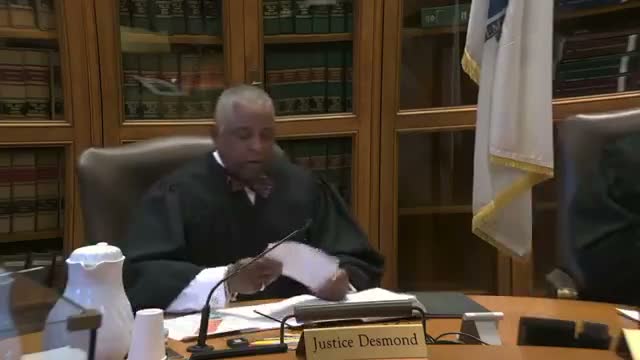
Judge Desmond and a three-judge panel heard argument in 25P0466, Janie Construction Management & Consulting v. Whitmore Gascott (and others), about whether Janie was entitled to recover the unpaid balance of a lump-sum contract after a jury and trial judge found violations under Chapter 93A and related contract claims.
Joseph B. Lickblau, arguing for the appellant Janie Construction, said the house was "substantially complete" when the certificate of occupancy issued on 06/11/2019 and that remaining work amounted to punch-list items rather than defects that would bar recovery. "The certificate of occupancy had been issued in June," Lickblau said, and the contractor "was substantially complete." He urged the court to apply the pre-G4S substantial-performance approach (or the G4S totality test favorably) and noted that Janie’s last billing was August 2018 as the dispute over payment unfolded.
Attorney Goodhart, representing the estate and heirs, told the court the trial record and the judge’s independent findings support the contrary conclusion. Goodhart said the trial judge found "incomplete defective performance," relying on Troy de Pisa’s testimony and a detailed factual record, and noted that Janie was paid roughly $981,018.24 on a $1,000,043 contract for an incomplete project. "She found that Troy de Pisa and his testimony supported a finding of $83,000 in damage to the home," Goodhart said, adding that the court awarded other discrete items that brought the judge’s damages to about $103,000.
Goodhart argued the plaintiff never made a distinct equitable showing of value added beyond contract performance and that the quantum meruit claim was therefore properly dismissed: "At the pleading stage they never articulated any different bucket of value that they added that wasn't covered by the contract," Goodhart told the panel. The estate emphasized the trial judge’s discretion in weighing advisory jury findings and independent assessment of damages.
The panel repeatedly questioned how advisory jury findings should be reconciled with the judge’s own determinations and pressed counsel about whether the SJC’s G4S decision meaningfully changed the standard for builders on equitable claims. Both sides relied on the trial record and factual findings; the court took the matter under advisement and submitted the case.
The appeals argument focused on three discrete issues: whether the work met a substantial-performance standard given the issuance of a certificate of occupancy and subsequent punch-list items; whether the record permits a quantum meruit recovery after a contract trial and an adverse jury verdict on damages; and how the G4S line of authority interacts with equitable relief and materiality in construction disputes. The court did not announce a decision from the bench; the case stands submitted to the panel.
Joseph B. Lickblau, arguing for the appellant Janie Construction, said the house was "substantially complete" when the certificate of occupancy issued on 06/11/2019 and that remaining work amounted to punch-list items rather than defects that would bar recovery. "The certificate of occupancy had been issued in June," Lickblau said, and the contractor "was substantially complete." He urged the court to apply the pre-G4S substantial-performance approach (or the G4S totality test favorably) and noted that Janie’s last billing was August 2018 as the dispute over payment unfolded.
Attorney Goodhart, representing the estate and heirs, told the court the trial record and the judge’s independent findings support the contrary conclusion. Goodhart said the trial judge found "incomplete defective performance," relying on Troy de Pisa’s testimony and a detailed factual record, and noted that Janie was paid roughly $981,018.24 on a $1,000,043 contract for an incomplete project. "She found that Troy de Pisa and his testimony supported a finding of $83,000 in damage to the home," Goodhart said, adding that the court awarded other discrete items that brought the judge’s damages to about $103,000.
Goodhart argued the plaintiff never made a distinct equitable showing of value added beyond contract performance and that the quantum meruit claim was therefore properly dismissed: "At the pleading stage they never articulated any different bucket of value that they added that wasn't covered by the contract," Goodhart told the panel. The estate emphasized the trial judge’s discretion in weighing advisory jury findings and independent assessment of damages.
The panel repeatedly questioned how advisory jury findings should be reconciled with the judge’s own determinations and pressed counsel about whether the SJC’s G4S decision meaningfully changed the standard for builders on equitable claims. Both sides relied on the trial record and factual findings; the court took the matter under advisement and submitted the case.
The appeals argument focused on three discrete issues: whether the work met a substantial-performance standard given the issuance of a certificate of occupancy and subsequent punch-list items; whether the record permits a quantum meruit recovery after a contract trial and an adverse jury verdict on damages; and how the G4S line of authority interacts with equitable relief and materiality in construction disputes. The court did not announce a decision from the bench; the case stands submitted to the panel.
View the Full Meeting & All Its Details
This article offers just a summary. Unlock complete video, transcripts, and insights as a Founder Member.
✓
Watch full, unedited meeting videos
✓
Search every word spoken in unlimited transcripts
✓
AI summaries & real-time alerts (all government levels)
✓
Permanent access to expanding government content
30-day money-back guarantee
