Commission weighs expanding architectural standards and building a vacant‑storefront inventory
February 11, 2026 | St. Helens, Columbia County, Oregon
This article was created by AI summarizing key points discussed. AI makes mistakes, so for full details and context, please refer to the video of the full meeting. Please report any errors so we can fix them. Report an error »
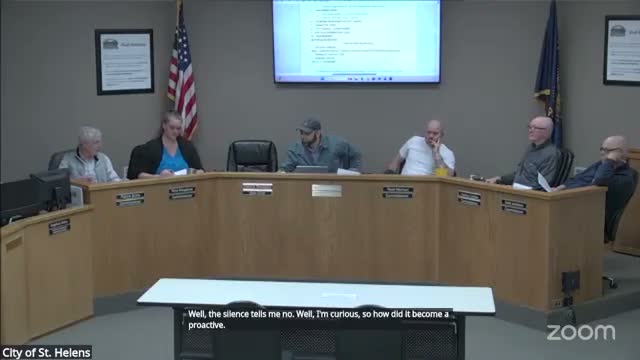
The Planning Commission discussed proactive items including whether to expand architectural standards beyond the Riverfront District and how to construct an inventory of vacant and underutilized storefronts.
Commissioners noted examples from other Oregon cities, including Astoria and Pendleton, that use incentives and penalties to encourage occupancy. A commissioner said the inventory should include both residential and business listings and suggested adding objective criteria such as appearance ratings or hours open to reduce subjectivity. One commissioner reported that Angelica provided business license listings and that a previous inventory covered roughly 400 businesses, with current licensing showing more than 500.
Commissioners agreed it would be reasonable to include a draft inventory and related enforcement questions in the packet for the March joint meeting and discussed piloting the inventory in a smaller geography (for example, Bolton or Old Town) before scaling citywide. Staff emphasized enforcement and budget consequences will be critical considerations for any code changes tied to vacancy.
What happens next: Scott (first mentioned in the transcript as providing the inventory draft) will send the inventory to staff for inclusion in the joint meeting packet. Commissioners flagged enforcement, penalties and equal‑protection concerns if the rules apply to only selected business types.
Commissioners noted examples from other Oregon cities, including Astoria and Pendleton, that use incentives and penalties to encourage occupancy. A commissioner said the inventory should include both residential and business listings and suggested adding objective criteria such as appearance ratings or hours open to reduce subjectivity. One commissioner reported that Angelica provided business license listings and that a previous inventory covered roughly 400 businesses, with current licensing showing more than 500.
Commissioners agreed it would be reasonable to include a draft inventory and related enforcement questions in the packet for the March joint meeting and discussed piloting the inventory in a smaller geography (for example, Bolton or Old Town) before scaling citywide. Staff emphasized enforcement and budget consequences will be critical considerations for any code changes tied to vacancy.
What happens next: Scott (first mentioned in the transcript as providing the inventory draft) will send the inventory to staff for inclusion in the joint meeting packet. Commissioners flagged enforcement, penalties and equal‑protection concerns if the rules apply to only selected business types.
Don't Miss a Word: See the Full Meeting!
Go beyond summaries. Unlock every video, transcript, and key insight with a Founder Membership.
✓
Get instant access to full meeting videos
✓
Search and clip any phrase from complete transcripts
✓
Receive AI-powered summaries & custom alerts
✓
Enjoy lifetime, unrestricted access to government data
30-day money-back guarantee
