Vermont State Colleges seeks FY27 funds for microcredentials, allied health hires and capital planning
February 11, 2026 | Appropriations, HOUSE OF REPRESENTATIVES, Committees, Legislative , Vermont
This article was created by AI summarizing key points discussed. AI makes mistakes, so for full details and context, please refer to the video of the full meeting. Please report any errors so we can fix them. Report an error »
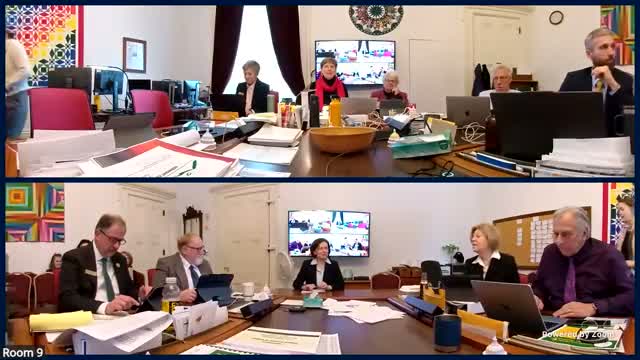
Chancellor Beth Mauck told the House Appropriations Committee on Feb. 10 that the Vermont State College System is seeking funding in FY2027 to expand workforce programs, bolster allied health faculty pay, and support capital planning tied to student housing.
Mauck said the governor recommended a 3% increase to the system’s general fund base and that the colleges requested one‑time funds to develop rural microcredentials and certificate programs intended to meet local workforce needs. She said the board is not requesting further bridge funding this year.
On allied health, Mauck said the system has been using a mix of general fund and Global Commitment grant funds to support faculty and clinical instruction for nursing and other allied health programs. She said the system requested an increase this year to help make nursing faculty salaries more competitive with hospital pay, citing a transcribed request amount of $4,200,000 for that purpose.
Mauck described a proposed stackable paraeducator‑to‑teacher pathway created with the Agency of Education and the Department of Labor: a 30‑credit paraeducator certificate delivered by the Community College of Vermont (CCV), progress to an associate’s degree while working, and eventual transfer to Vermont State University. She said the microcredentials are designed to be delivered online and asynchronously so working adults can participate.
She also described community recovery work at the Johnson campus after recent floods, including community development block grant funds and senator‑directed funds that are supporting conversion of the McClellan Building for senior housing and a planned Health Center relocation onto campus. Mauck said the system included a $1,000,000 capital planning/predevelopment request this year for a proposed apartment complex tied to campus needs.
Mauck highlighted the Freedom and Unity program (an outgrowth of the 802 Opportunity) that provided one‑time funding last year ($1,500,000) to help families under an income threshold attend CCV tuition‑free; she said VSAC is requesting a $2,300,000 base appropriation this year to continue and expand that work. Committee members pressed for clarity on AGI thresholds and parity of benefits between CCV and Vermont State University; Mauck noted thresholds discussed in the hearing (examples cited included $65,000 and $100,000) and said the system is working to align access across campuses.
Committee members asked for packet references and line‑item placement; staff pointed to the last page of the budget packet for the three primary requests. Presenters and legislators exchanged scheduling notes for later committee discussions and thanked one another.
The system’s presentation emphasized enrollment trends (an overall 1.4% increase and about a 10% increase in online enrollment), a median student age of about 27, and the system’s goal of serving nontraditional and working students through flexible programming.
Mauck said the governor recommended a 3% increase to the system’s general fund base and that the colleges requested one‑time funds to develop rural microcredentials and certificate programs intended to meet local workforce needs. She said the board is not requesting further bridge funding this year.
On allied health, Mauck said the system has been using a mix of general fund and Global Commitment grant funds to support faculty and clinical instruction for nursing and other allied health programs. She said the system requested an increase this year to help make nursing faculty salaries more competitive with hospital pay, citing a transcribed request amount of $4,200,000 for that purpose.
Mauck described a proposed stackable paraeducator‑to‑teacher pathway created with the Agency of Education and the Department of Labor: a 30‑credit paraeducator certificate delivered by the Community College of Vermont (CCV), progress to an associate’s degree while working, and eventual transfer to Vermont State University. She said the microcredentials are designed to be delivered online and asynchronously so working adults can participate.
She also described community recovery work at the Johnson campus after recent floods, including community development block grant funds and senator‑directed funds that are supporting conversion of the McClellan Building for senior housing and a planned Health Center relocation onto campus. Mauck said the system included a $1,000,000 capital planning/predevelopment request this year for a proposed apartment complex tied to campus needs.
Mauck highlighted the Freedom and Unity program (an outgrowth of the 802 Opportunity) that provided one‑time funding last year ($1,500,000) to help families under an income threshold attend CCV tuition‑free; she said VSAC is requesting a $2,300,000 base appropriation this year to continue and expand that work. Committee members pressed for clarity on AGI thresholds and parity of benefits between CCV and Vermont State University; Mauck noted thresholds discussed in the hearing (examples cited included $65,000 and $100,000) and said the system is working to align access across campuses.
Committee members asked for packet references and line‑item placement; staff pointed to the last page of the budget packet for the three primary requests. Presenters and legislators exchanged scheduling notes for later committee discussions and thanked one another.
The system’s presentation emphasized enrollment trends (an overall 1.4% increase and about a 10% increase in online enrollment), a median student age of about 27, and the system’s goal of serving nontraditional and working students through flexible programming.
Don't Miss a Word: See the Full Meeting!
Go beyond summaries. Unlock every video, transcript, and key insight with a Founder Membership.
✓
Get instant access to full meeting videos
✓
Search and clip any phrase from complete transcripts
✓
Receive AI-powered summaries & custom alerts
✓
Enjoy lifetime, unrestricted access to government data
30-day money-back guarantee
