Guam committee hears bill to widen licensure paths for foreign medical graduates, establish local Conrad 30 administration
February 11, 2026 | General Government Operations and Appropriations , Legislative, Guam, International
This article was created by AI summarizing key points discussed. AI makes mistakes, so for full details and context, please refer to the video of the full meeting. Please report any errors so we can fix them. Report an error »
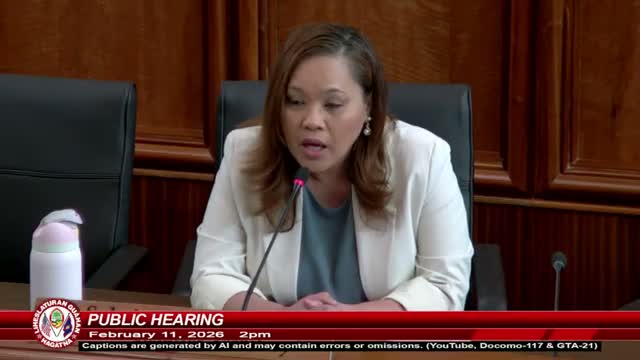
Senator Otello Tydigui on Wednesday asked the Committee on Health and Veterans Affairs to advance Bill 206-38, saying the measure would amend Title 10 to create statutory pathways for qualified foreign medical graduates to practice in Guam and designate the Department of Public Health and Social Services as the local administrator of a Conrad 30 J-1 physician waiver program.
"This bill does not lower standards for medical practice on Guam," Tydigui said, adding the proposal would recognize existing certification processes such as the Educational Commission for Foreign Medical Graduates (ECFMG) and authorize licensure by endorsement and temporary special licenses where appropriated.
Why it matters: Testimony from patient advocates, former legislators and clinicians framed the measure as a practical response to persistent physician shortages at Guam Memorial Hospital Authority and community clinics. Dennis Rodriguez Jr., founder of the Total Guam Foundation and a former senator, told the committee the bill would provide "a measured approach" to recruit physicians to underserved areas and asked that priority placements include nonprofit safety-net centers. Resident and parent Bistro Mendiola said expanding licensure and implementing a Guam-specific Conrad 30 program would help families avoid off-island travel for specialty care.
Support and caution from health officials and clinicians: DPHSS provided conditional support for the bill's intent but recommended the committee consider a forthcoming executive proposal from the governor's office that the department said had been developed with the Federation of State Medical Boards (FSMB). A DPHSS representative urged a unified approach to incorporate FSMB guidance.
Physicians testifying in the hearing generally supported alternative licensing pathways but asked for tightened safeguards. Dr. Jonathan Thorpe, medical director of the Guam Seventh-day Adventist Clinic, warned that "good intentions do not protect patients," and urged the committee to retain a postgraduate training requirement or clearly define acceptable training locations and a supervised provisional period aligned with FSMB and ACGME competency frameworks. Dr. Thomas Hsieh, an OB-GYN in private practice, pressed the panel to include private-sector sponsors and nursing workforce considerations and to limit discretionary authority placed with the Guam Board of Medical Examiners.
Federal and statutory context: Witnesses described the federal Conrad 30 J-1 physician waiver as an existing mechanism that allows states and territories to recommend up to 30 J-1 visa waiver requests per federal fiscal year in exchange for service commitments in health professional shortage or medically underserved areas. Several testifiers noted recent federal guidance adding fees and procedural requirements for visa pathways, and DPHSS and clinicians urged statutory clarity so Guam can act quickly when federal waivers are available.
Next steps: Committee members asked DPHSS to produce records and best-practice documentation from FSMB consultations and to provide counts and complaint histories, if available, for foreign-trained physicians licensed or practicing in Guam. Senator Tydigui said he would continue working with the governor's office and stakeholders on amendments and invited further roundtable discussions before markup.
No vote was taken. The committee closed the Bill 206 public hearing and moved on to other business. The committee requested follow-up material from DPHSS and other agencies to inform drafting and markup.
"This bill does not lower standards for medical practice on Guam," Tydigui said, adding the proposal would recognize existing certification processes such as the Educational Commission for Foreign Medical Graduates (ECFMG) and authorize licensure by endorsement and temporary special licenses where appropriated.
Why it matters: Testimony from patient advocates, former legislators and clinicians framed the measure as a practical response to persistent physician shortages at Guam Memorial Hospital Authority and community clinics. Dennis Rodriguez Jr., founder of the Total Guam Foundation and a former senator, told the committee the bill would provide "a measured approach" to recruit physicians to underserved areas and asked that priority placements include nonprofit safety-net centers. Resident and parent Bistro Mendiola said expanding licensure and implementing a Guam-specific Conrad 30 program would help families avoid off-island travel for specialty care.
Support and caution from health officials and clinicians: DPHSS provided conditional support for the bill's intent but recommended the committee consider a forthcoming executive proposal from the governor's office that the department said had been developed with the Federation of State Medical Boards (FSMB). A DPHSS representative urged a unified approach to incorporate FSMB guidance.
Physicians testifying in the hearing generally supported alternative licensing pathways but asked for tightened safeguards. Dr. Jonathan Thorpe, medical director of the Guam Seventh-day Adventist Clinic, warned that "good intentions do not protect patients," and urged the committee to retain a postgraduate training requirement or clearly define acceptable training locations and a supervised provisional period aligned with FSMB and ACGME competency frameworks. Dr. Thomas Hsieh, an OB-GYN in private practice, pressed the panel to include private-sector sponsors and nursing workforce considerations and to limit discretionary authority placed with the Guam Board of Medical Examiners.
Federal and statutory context: Witnesses described the federal Conrad 30 J-1 physician waiver as an existing mechanism that allows states and territories to recommend up to 30 J-1 visa waiver requests per federal fiscal year in exchange for service commitments in health professional shortage or medically underserved areas. Several testifiers noted recent federal guidance adding fees and procedural requirements for visa pathways, and DPHSS and clinicians urged statutory clarity so Guam can act quickly when federal waivers are available.
Next steps: Committee members asked DPHSS to produce records and best-practice documentation from FSMB consultations and to provide counts and complaint histories, if available, for foreign-trained physicians licensed or practicing in Guam. Senator Tydigui said he would continue working with the governor's office and stakeholders on amendments and invited further roundtable discussions before markup.
No vote was taken. The committee closed the Bill 206 public hearing and moved on to other business. The committee requested follow-up material from DPHSS and other agencies to inform drafting and markup.
View the Full Meeting & All Its Details
This article offers just a summary. Unlock complete video, transcripts, and insights as a Founder Member.
✓
Watch full, unedited meeting videos
✓
Search every word spoken in unlimited transcripts
✓
AI summaries & real-time alerts (all government levels)
✓
Permanent access to expanding government content
30-day money-back guarantee
