Loxahatchee Groves advisory group debates 'equestrian estate' overlay for larger parcels
February 11, 2026 | Town of Loxahatchee Groves, Palm Beach County, Florida
This article was created by AI summarizing key points discussed. AI makes mistakes, so for full details and context, please refer to the video of the full meeting. Please report any errors so we can fix them. Report an error »
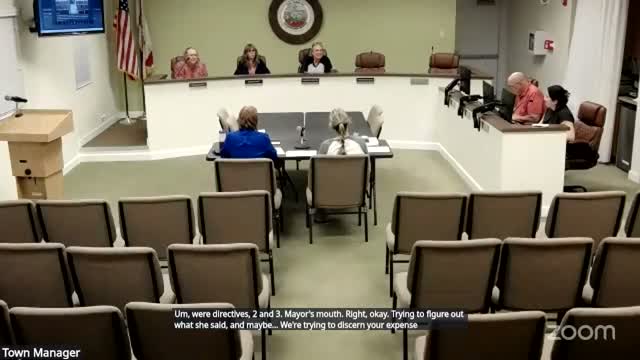
Members of an advisory body in the Town of Loxahatchee Groves spent the meeting weighing a proposal to create an "equestrian estate" zoning overlay that would allow larger accessory dwellings, caretaker or groom quarters and planned residential compounds on larger parcels, but took no formal land‑use action.
The proposal, offered by a resident, suggested allowing the overlay only on 10‑acre or larger tracts and including design requirements such as setbacks, buffers and unity‑of‑title controls to prevent later subdivision. "One thing that we have a really bad habit of doing in this town is perpetuating a culture of breaking the rules," the resident said while urging the board to create a legal pathway for estate development that would be both attractive and enforceable.
Staff and a planning advisor said many of the issues raised—accessory dwelling sizes, grooms or caretaker quarters inside barns, and lot‑coverage limits—are already governed by a mix of municipal code, building codes and agricultural exemptions. "Our density is at 1 unit per 5 acres," the planning advisor said, noting that changing allowances for accessory units on larger parcels could increase the number of people legally on a property without changing underlying density rules.
Board members raised a series of concerns. Some expressed worry that loosening restrictions could allow clustering of multiple residences on what had been separate 5‑acre lots; others warned that an overlay might unintentionally reduce protections the town relies on today. "We didn't become a town to accommodate the staff of a business," one member said, citing the risk that commercial boarding operations could be transformed into de‑facto residential compounds for staff and seasonal workers.
Technical constraints were also flagged. Board members discussed flood‑management requirements and "compensating storage" obligations that can affect whether multiple ponds or berms are required when lots are developed separately; staff confirmed there had been confusion about a previously reported berm requirement. The group also explored how a barn with living facilities could trigger building‑permit and appraisal considerations that remove agricultural exemptions.
The Right to Farm Act and agricultural classifications drew repeated attention. Staff said agricultural exemptions may limit municipal lot‑coverage controls for non‑residential agricultural structures but that any building containing a residential component would require a permit and be treated as residential for code and appraisal purposes. A staff member said she would circulate the Right to Farm Act language and relevant building‑code guidance ahead of a follow‑up meeting.
As part of next steps, the board asked staff to prepare a packet showing the existing code side‑by‑side with potential overlay options, collect examples of local parcels and zoning questions (including how grooms quarters and bathroom/kitchen facilities are regulated), and return with recommendations. The group tentatively scheduled the next discussion for April 14. No ordinance, amendment or binding action was introduced or adopted at this meeting.
Procedural note: the board approved the previous meeting minutes with a verbal correction and adjourned at the close of the session.
The proposal, offered by a resident, suggested allowing the overlay only on 10‑acre or larger tracts and including design requirements such as setbacks, buffers and unity‑of‑title controls to prevent later subdivision. "One thing that we have a really bad habit of doing in this town is perpetuating a culture of breaking the rules," the resident said while urging the board to create a legal pathway for estate development that would be both attractive and enforceable.
Staff and a planning advisor said many of the issues raised—accessory dwelling sizes, grooms or caretaker quarters inside barns, and lot‑coverage limits—are already governed by a mix of municipal code, building codes and agricultural exemptions. "Our density is at 1 unit per 5 acres," the planning advisor said, noting that changing allowances for accessory units on larger parcels could increase the number of people legally on a property without changing underlying density rules.
Board members raised a series of concerns. Some expressed worry that loosening restrictions could allow clustering of multiple residences on what had been separate 5‑acre lots; others warned that an overlay might unintentionally reduce protections the town relies on today. "We didn't become a town to accommodate the staff of a business," one member said, citing the risk that commercial boarding operations could be transformed into de‑facto residential compounds for staff and seasonal workers.
Technical constraints were also flagged. Board members discussed flood‑management requirements and "compensating storage" obligations that can affect whether multiple ponds or berms are required when lots are developed separately; staff confirmed there had been confusion about a previously reported berm requirement. The group also explored how a barn with living facilities could trigger building‑permit and appraisal considerations that remove agricultural exemptions.
The Right to Farm Act and agricultural classifications drew repeated attention. Staff said agricultural exemptions may limit municipal lot‑coverage controls for non‑residential agricultural structures but that any building containing a residential component would require a permit and be treated as residential for code and appraisal purposes. A staff member said she would circulate the Right to Farm Act language and relevant building‑code guidance ahead of a follow‑up meeting.
As part of next steps, the board asked staff to prepare a packet showing the existing code side‑by‑side with potential overlay options, collect examples of local parcels and zoning questions (including how grooms quarters and bathroom/kitchen facilities are regulated), and return with recommendations. The group tentatively scheduled the next discussion for April 14. No ordinance, amendment or binding action was introduced or adopted at this meeting.
Procedural note: the board approved the previous meeting minutes with a verbal correction and adjourned at the close of the session.
View the Full Meeting & All Its Details
This article offers just a summary. Unlock complete video, transcripts, and insights as a Founder Member.
✓
Watch full, unedited meeting videos
✓
Search every word spoken in unlimited transcripts
✓
AI summaries & real-time alerts (all government levels)
✓
Permanent access to expanding government content
30-day money-back guarantee
