Committee tables bill to fund meals for off-site public preschool students, seeks amendments and fiscal note
February 11, 2026 | 2026 Legislature ME, Maine
This article was created by AI summarizing key points discussed. AI makes mistakes, so for full details and context, please refer to the video of the full meeting. Please report any errors so we can fix them. Report an error »
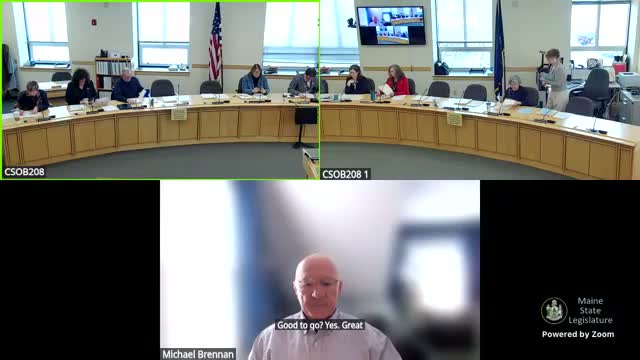
A legislative committee on Thursday tabled LD2064, a proposal to establish a state grant program to provide breakfast, lunch and a snack to public pre-K students who attend public preschool through off-site partnerships.
Maura, the committee’s bill analyst, described the bill as creating a grant administered by the Maine Children’s Cabinet Early Childhood Advisory Council in consultation with the Department of Health and Human Services and the Department of Education. The draft sets a per-student grant cap of $1,200 per year and allows programs to apply for up to $10,000 for limited infrastructure improvements to enable meal service. The analysis noted the bill contains no appropriation.
The $1,200 figure, witnesses said, was based on the federal National School Lunch Program reimbursement rate. “So right now, we know that 353 students are in pre-k partnerships in off-site childcare programs,” Anna Hicks said, and staff described the $1,200 as a reasonable estimate that could change over time. Committee members pressed staff for better numbers and asked whether the Department of Education’s child nutrition team would be a more appropriate administrator than the advisory council.
Dr. Laura Cyr of the Department of Education told the committee the department would need two new positions to run a state grant program: a grant-management position and a programmatic staff person to develop guidelines, monitor compliance and provide technical assistance. “The answer to that is yes, unequivocally,” she said when asked whether additional staff would be required.
Representative Kelly Murphy moved to table the bill while staff and the department craft an amendment incorporating recommendations from testimony and provide a clearer fiscal picture. The motion passed by voice vote; the committee recorded the tally as 11–0. Committee staff were directed to draft amended language to clarify the target population — students enrolled at public schools who receive pre-K instruction at an off-site community partner — and to work with DOE and fiscal staff on an estimate of costs and staffing needs.
The tabling preserves the committee’s ability to return the bill with revised language and a fiscal note for a future work session and public hearing.
Maura, the committee’s bill analyst, described the bill as creating a grant administered by the Maine Children’s Cabinet Early Childhood Advisory Council in consultation with the Department of Health and Human Services and the Department of Education. The draft sets a per-student grant cap of $1,200 per year and allows programs to apply for up to $10,000 for limited infrastructure improvements to enable meal service. The analysis noted the bill contains no appropriation.
The $1,200 figure, witnesses said, was based on the federal National School Lunch Program reimbursement rate. “So right now, we know that 353 students are in pre-k partnerships in off-site childcare programs,” Anna Hicks said, and staff described the $1,200 as a reasonable estimate that could change over time. Committee members pressed staff for better numbers and asked whether the Department of Education’s child nutrition team would be a more appropriate administrator than the advisory council.
Dr. Laura Cyr of the Department of Education told the committee the department would need two new positions to run a state grant program: a grant-management position and a programmatic staff person to develop guidelines, monitor compliance and provide technical assistance. “The answer to that is yes, unequivocally,” she said when asked whether additional staff would be required.
Representative Kelly Murphy moved to table the bill while staff and the department craft an amendment incorporating recommendations from testimony and provide a clearer fiscal picture. The motion passed by voice vote; the committee recorded the tally as 11–0. Committee staff were directed to draft amended language to clarify the target population — students enrolled at public schools who receive pre-K instruction at an off-site community partner — and to work with DOE and fiscal staff on an estimate of costs and staffing needs.
The tabling preserves the committee’s ability to return the bill with revised language and a fiscal note for a future work session and public hearing.
Don't Miss a Word: See the Full Meeting!
Go beyond summaries. Unlock every video, transcript, and key insight with a Founder Membership.
✓
Get instant access to full meeting videos
✓
Search and clip any phrase from complete transcripts
✓
Receive AI-powered summaries & custom alerts
✓
Enjoy lifetime, unrestricted access to government data
30-day money-back guarantee
