Committee reviews DEP rule changes that expand protections for endangered species and vernal pools
February 11, 2026 | 2026 Legislature ME, Maine
This article was created by AI summarizing key points discussed. AI makes mistakes, so for full details and context, please refer to the video of the full meeting. Please report any errors so we can fix them. Report an error »
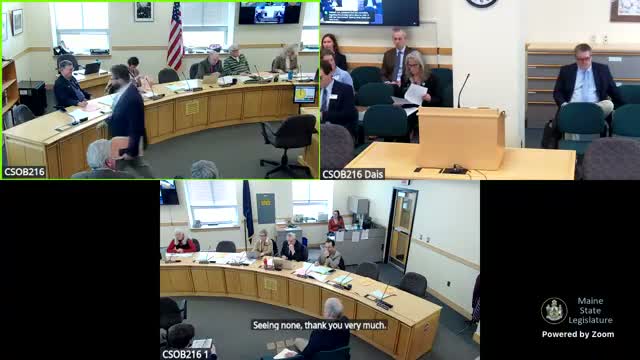
The Joint Standing Committee on Environment and Natural Resources heard testimony Feb. 14 on LD 2,171, a legislative review of Department of Environmental Protection rules that update how Maine protects significant wildlife habitat under the Natural Resources Protection Act.
Naomi Kirklawler, Policy Development Specialist in the Commissioner’s Office at DEP, told the committee that the provisionally adopted rule package implements statutory changes from recent laws and clarifies the department’s approach. “LD 2,171 provides for legislative review of a major substantive rulemaking provisionally adopted by the Board of Environmental Protection that amends the Department’s chapter 305 and chapter 335 rules to comply with statutory changes to the Natural Resources Protection Act,” Kirklawler said.
Why it matters: the changes add habitat for state endangered and threatened species to the list of significant wildlife habitats and adjust how significant vernal pools are treated. The rules define endangered and threatened species habitat by reference to DIFW‑produced publicly available GIS layers and require verified evidence — documented sightings, genetic evidence, nests or burrows, vocalizations, and other physical signs — either by qualified observers or DIFW verification before habitat is included on maps. The provisionally adopted rules also create a 100‑foot Significant Vernal Pool Protection Zone while retaining broader 250‑foot critical terrestrial habitat protections.
Key details
- Mapping and verification: DEP and DIFW told the committee that only areas with verified records will be mapped as endangered or threatened species habitat. Nate Webb, Wildlife Division Director at the Department of Inland Fisheries and Wildlife, said mapping will cover a small portion of the landscape and will use rigorous criteria. “A very small proportion of the landscape we expect would be mapped by our department,” Webb said.
- Permit‑by‑rule (PBR) limits: the revised permit‑by‑rule provisions add endangered and threatened species to certain PBR categories but limit what may proceed under PBR. The rules allow limited activities within mapped habitat—mostly small projects in already developed areas, modest extensions of existing developed footprints, and narrowly defined footpaths—while other activities will require full DEP review.
- Vernal pools: the rules adopt a statutory requirement of minimal disturbance within 100 feet of a significant vernal pool depression, while maintaining regulation of the broader 250‑foot critical terrestrial habitat. Kirklawler said the provision generally follows statutory language, but the PBR section includes two exceptions (non‑graveled footpaths and certain activities on single residential lots when avoidance is impracticable) with a 25‑foot minimum buffer requirement.
Debate and concerns
Lawmakers pressed agencies on two practical trade‑offs: who decides whether avoiding impacts is practicable and whether protections that apply to multi‑unit and multi‑lot projects but not standalone single‑family lots create a message that favors single‑family permitting. Kirklawler said the rule mirrors statute and noted the legislative determination was influenced by permitting workload and the department’s review triggers. “The rule changes before you exactly follow the statute in that respect,” she said.
Conservation groups, including Maine Audubon and the Natural Resources Council of Maine, urged approval of the rules. Ches Gundrum of Maine Audubon said the package reflects a balanced, science‑based approach and helps close regulatory gaps. Luke Frankel of NRCM said small technical changes during rulemaking improved clarity and protections.
Next steps
The committee closed the public hearing and indicated the rule package would proceed to work session, where members requested follow‑up details and would consider any targeted amendments. No committee vote was taken at the hearing.
The work session will be the next opportunity for members to direct amendment language or set conditions for approval.
Naomi Kirklawler, Policy Development Specialist in the Commissioner’s Office at DEP, told the committee that the provisionally adopted rule package implements statutory changes from recent laws and clarifies the department’s approach. “LD 2,171 provides for legislative review of a major substantive rulemaking provisionally adopted by the Board of Environmental Protection that amends the Department’s chapter 305 and chapter 335 rules to comply with statutory changes to the Natural Resources Protection Act,” Kirklawler said.
Why it matters: the changes add habitat for state endangered and threatened species to the list of significant wildlife habitats and adjust how significant vernal pools are treated. The rules define endangered and threatened species habitat by reference to DIFW‑produced publicly available GIS layers and require verified evidence — documented sightings, genetic evidence, nests or burrows, vocalizations, and other physical signs — either by qualified observers or DIFW verification before habitat is included on maps. The provisionally adopted rules also create a 100‑foot Significant Vernal Pool Protection Zone while retaining broader 250‑foot critical terrestrial habitat protections.
Key details
- Mapping and verification: DEP and DIFW told the committee that only areas with verified records will be mapped as endangered or threatened species habitat. Nate Webb, Wildlife Division Director at the Department of Inland Fisheries and Wildlife, said mapping will cover a small portion of the landscape and will use rigorous criteria. “A very small proportion of the landscape we expect would be mapped by our department,” Webb said.
- Permit‑by‑rule (PBR) limits: the revised permit‑by‑rule provisions add endangered and threatened species to certain PBR categories but limit what may proceed under PBR. The rules allow limited activities within mapped habitat—mostly small projects in already developed areas, modest extensions of existing developed footprints, and narrowly defined footpaths—while other activities will require full DEP review.
- Vernal pools: the rules adopt a statutory requirement of minimal disturbance within 100 feet of a significant vernal pool depression, while maintaining regulation of the broader 250‑foot critical terrestrial habitat. Kirklawler said the provision generally follows statutory language, but the PBR section includes two exceptions (non‑graveled footpaths and certain activities on single residential lots when avoidance is impracticable) with a 25‑foot minimum buffer requirement.
Debate and concerns
Lawmakers pressed agencies on two practical trade‑offs: who decides whether avoiding impacts is practicable and whether protections that apply to multi‑unit and multi‑lot projects but not standalone single‑family lots create a message that favors single‑family permitting. Kirklawler said the rule mirrors statute and noted the legislative determination was influenced by permitting workload and the department’s review triggers. “The rule changes before you exactly follow the statute in that respect,” she said.
Conservation groups, including Maine Audubon and the Natural Resources Council of Maine, urged approval of the rules. Ches Gundrum of Maine Audubon said the package reflects a balanced, science‑based approach and helps close regulatory gaps. Luke Frankel of NRCM said small technical changes during rulemaking improved clarity and protections.
Next steps
The committee closed the public hearing and indicated the rule package would proceed to work session, where members requested follow‑up details and would consider any targeted amendments. No committee vote was taken at the hearing.
The work session will be the next opportunity for members to direct amendment language or set conditions for approval.
View the Full Meeting & All Its Details
This article offers just a summary. Unlock complete video, transcripts, and insights as a Founder Member.
✓
Watch full, unedited meeting videos
✓
Search every word spoken in unlimited transcripts
✓
AI summaries & real-time alerts (all government levels)
✓
Permanent access to expanding government content
30-day money-back guarantee
