Comprehensive‑plan rewrite advances amid SB 180 uncertainty; board discusses form‑based code for urban corridors
February 11, 2026 | Manatee County, Florida
This article was created by AI summarizing key points discussed. AI makes mistakes, so for full details and context, please refer to the video of the full meeting. Please report any errors so we can fix them. Report an error »
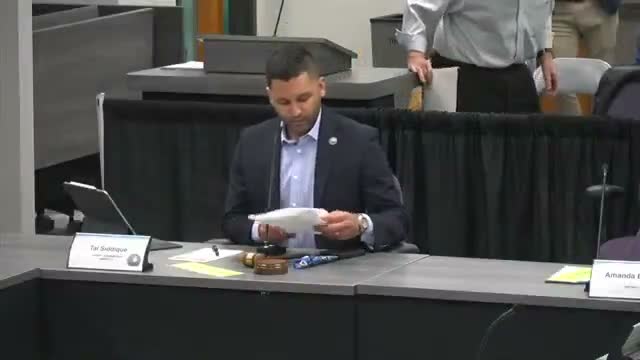
Manatee County’s multi‑year comprehensive‑plan update moved forward as consultants and staff outlined proposed policy cleanup, housing incentives and options for form‑based code in targeted urban corridors.
Nicole Knapp of Development Services introduced consultant Kelly Klepper, who said recent state legislation (including references to SB 180) has shifted the regulatory landscape and created uncertainty, but staff and consultants recommended continuing to refine the county’s 13‑element comprehensive plan. Klepper said staff focused on removing duplicative language, adding clearer definitions (for terms such as accessory dwelling unit and density), and offering incentive‑based policies for affordable housing while coordinating closely with state agencies to avoid creating rules that would be deemed more‑burdensome than state law allows.
The board and staff spent substantial time on housing policy and transportation: commissioners and staff discussed incentives to enable homeownership (community land trusts, smaller lot and product types, impact‑fee credits) as well as density or process incentives to encourage infill in urban centers where infrastructure exists. On transportation, staff recommended incorporating context‑sensitive classifications and even anticipating new mobility technologies (autonomous vehicles, drop‑off corridors and reduced minimum parking ratios) into long‑range thoroughfare planning.
On form‑based code, planning staff and consultants said the county’s existing urban‑corridor code (LDC 902) already includes many form‑based ideas but is cumbersome and has not produced the intended infill. Staff proposed a two‑phase approach: (1) a near‑term cleanup to reduce regulatory barriers in section 902 and expand incentives into the urban service area, and (2) a later, consultant‑led transect mapping exercise and targeted form‑based overlays for corridors (the county would consider adding a portion of 9th Street West to the urban corridor map). Commissioners generally favored starting with the staff cleanup and pursuing outside expertise for a full transect process.
Nicole Knapp of Development Services introduced consultant Kelly Klepper, who said recent state legislation (including references to SB 180) has shifted the regulatory landscape and created uncertainty, but staff and consultants recommended continuing to refine the county’s 13‑element comprehensive plan. Klepper said staff focused on removing duplicative language, adding clearer definitions (for terms such as accessory dwelling unit and density), and offering incentive‑based policies for affordable housing while coordinating closely with state agencies to avoid creating rules that would be deemed more‑burdensome than state law allows.
The board and staff spent substantial time on housing policy and transportation: commissioners and staff discussed incentives to enable homeownership (community land trusts, smaller lot and product types, impact‑fee credits) as well as density or process incentives to encourage infill in urban centers where infrastructure exists. On transportation, staff recommended incorporating context‑sensitive classifications and even anticipating new mobility technologies (autonomous vehicles, drop‑off corridors and reduced minimum parking ratios) into long‑range thoroughfare planning.
On form‑based code, planning staff and consultants said the county’s existing urban‑corridor code (LDC 902) already includes many form‑based ideas but is cumbersome and has not produced the intended infill. Staff proposed a two‑phase approach: (1) a near‑term cleanup to reduce regulatory barriers in section 902 and expand incentives into the urban service area, and (2) a later, consultant‑led transect mapping exercise and targeted form‑based overlays for corridors (the county would consider adding a portion of 9th Street West to the urban corridor map). Commissioners generally favored starting with the staff cleanup and pursuing outside expertise for a full transect process.
View the Full Meeting & All Its Details
This article offers just a summary. Unlock complete video, transcripts, and insights as a Founder Member.
✓
Watch full, unedited meeting videos
✓
Search every word spoken in unlimited transcripts
✓
AI summaries & real-time alerts (all government levels)
✓
Permanent access to expanding government content
30-day money-back guarantee
