Heated hearing on HB 2329 as sponsor seeks to halve personal property tax assessment over three years
February 09, 2026 | 2026 Legislature MO, Missouri
This article was created by AI summarizing key points discussed. AI makes mistakes, so for full details and context, please refer to the video of the full meeting. Please report any errors so we can fix them. Report an error »
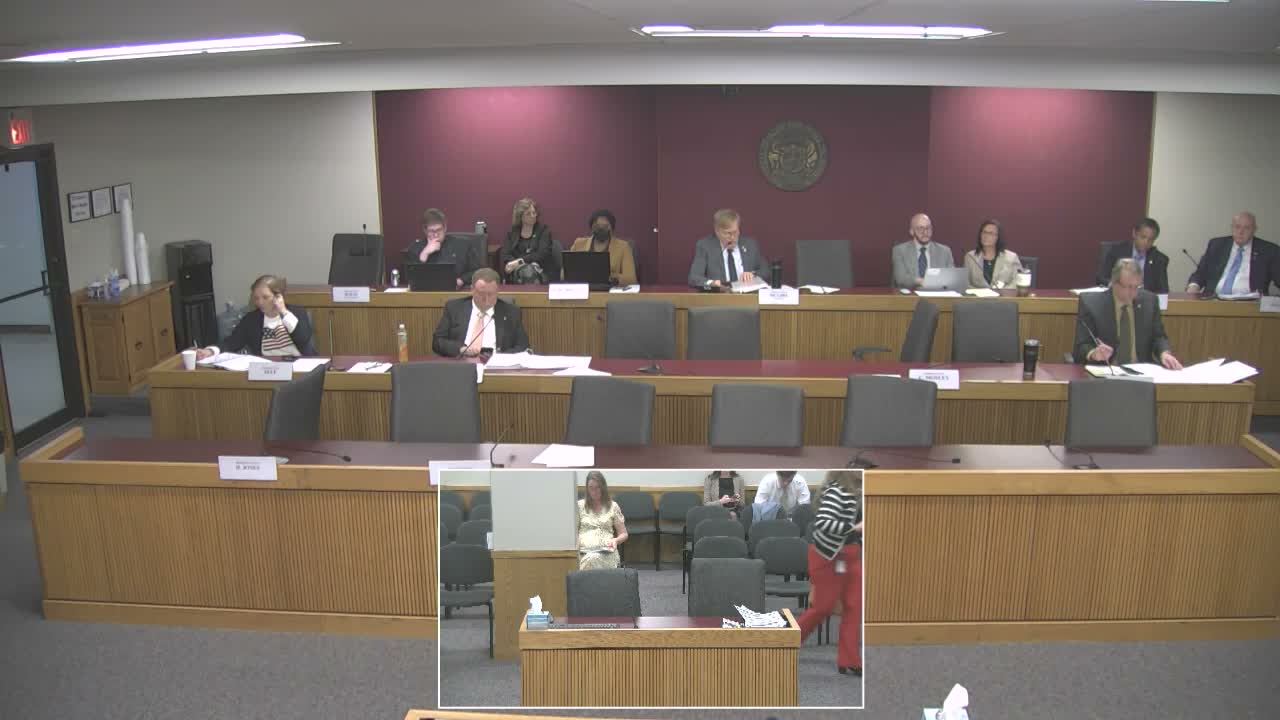
Representative Richard West introduced House Bill 2329, which would reduce the assessed valuation ratio for personal property from about 33% to 18% over three years (phased in for 2027–2029), effectively lowering the tax burden on personal property.
West argued the change would reduce what he called an "egregious" and recurring burden on households and businesses, and described administrative costs local governments pay to assess and collect personal property tax. "My goal here is to do away with the personal property tax," West said, adding that the bill gives taxing jurisdictions time to find alternative revenue sources.
Supporters included Camilla Peterson of Americans for Prosperity, who urged the committee to consider personal property relief as part of broader tax simplification. Peterson said personal property tax is often the first thing constituents mention when discussing tax relief because they pay it directly each year.
Opposition testimony came from Kenny Moore, Boone County assessor and legislative chair of the Missouri State Assessors Association, who gave county-level estimates showing large assessed-value reductions from the proposed change and warned that the bill "would devastate taxing districts" without replacement funding. Moore said Boone County's 2025 personal property assessed value exceeded $840 million and that shrinking that base would cut millions in local revenue; he said the bill provides no mechanism to replace the lost funds, which could lead to higher real-property levies or referenda to raise rates.
Committee members questioned the scope of the impact, whether the proposal treats business fleets and corporate property differently from individual vehicles, and how small, rural counties that rely more heavily on personal property would manage the shortfall. Representatives expressed a range of views: some praised the proposal for relieving constituents, while others warned that the consequence could be higher real-property taxes or cuts to local services.
The hearing closed with no committee-level vote recorded in the transcript.
West argued the change would reduce what he called an "egregious" and recurring burden on households and businesses, and described administrative costs local governments pay to assess and collect personal property tax. "My goal here is to do away with the personal property tax," West said, adding that the bill gives taxing jurisdictions time to find alternative revenue sources.
Supporters included Camilla Peterson of Americans for Prosperity, who urged the committee to consider personal property relief as part of broader tax simplification. Peterson said personal property tax is often the first thing constituents mention when discussing tax relief because they pay it directly each year.
Opposition testimony came from Kenny Moore, Boone County assessor and legislative chair of the Missouri State Assessors Association, who gave county-level estimates showing large assessed-value reductions from the proposed change and warned that the bill "would devastate taxing districts" without replacement funding. Moore said Boone County's 2025 personal property assessed value exceeded $840 million and that shrinking that base would cut millions in local revenue; he said the bill provides no mechanism to replace the lost funds, which could lead to higher real-property levies or referenda to raise rates.
Committee members questioned the scope of the impact, whether the proposal treats business fleets and corporate property differently from individual vehicles, and how small, rural counties that rely more heavily on personal property would manage the shortfall. Representatives expressed a range of views: some praised the proposal for relieving constituents, while others warned that the consequence could be higher real-property taxes or cuts to local services.
The hearing closed with no committee-level vote recorded in the transcript.
Don't Miss a Word: See the Full Meeting!
Go beyond summaries. Unlock every video, transcript, and key insight with a Founder Membership.
✓
Get instant access to full meeting videos
✓
Search and clip any phrase from complete transcripts
✓
Receive AI-powered summaries & custom alerts
✓
Enjoy lifetime, unrestricted access to government data
30-day money-back guarantee
