Township of Washington board votes to password-protect online planning applications after scam
February 11, 2026 | Township of Washington, Warren County, New Jersey
This article was created by AI summarizing key points discussed. AI makes mistakes, so for full details and context, please refer to the video of the full meeting. Please report any errors so we can fix them. Report an error »
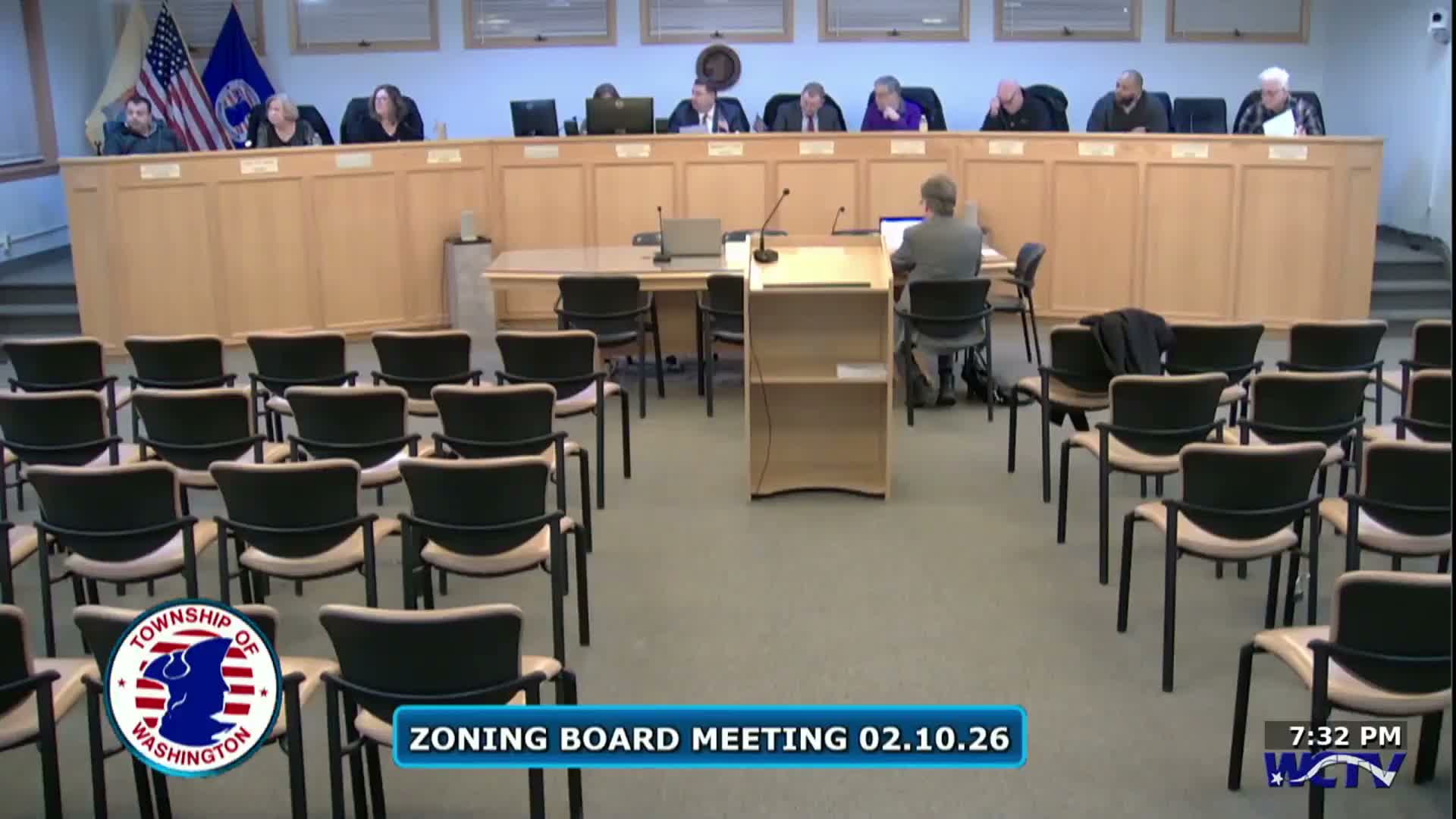
The Township of Washington planning board voted to password-protect planning application files posted on the town website after staff reported multiple spoofing incidents that targeted applicants.
Heather Henry, who presented options for securing application materials, told the board a scammer “used some of the information that was posted online with one of the applications and tried to have one of the applicants send money,” prompting the planning board to start restricting access. Henry said the planning board had already moved to require sign-in credentials for its applications and recommended the zoning board follow suit.
Board members discussed several short-term and longer-term options. Some suggested redacting contact information or posting only a brief synopsis (project address, plan type) while letting interested residents request full access. Others asked whether geographic limits (“geofencing”) could restrict viewing to nearby addresses; Henry said geofencing could be added at modest cost but might not fully prevent spoofing from determined actors.
Several members stressed the convenience and transparency benefits of posting plans online for neighbors who cannot attend meetings, but the consensus was that protecting applicants from fraud took priority while staff develops a safer public-access process. Unidentified Speaker 1 moved to password-protect all planning application documents currently posted and to require password protection for future postings “until further notice.” The motion was seconded and approved by roll call; members present voted yes (D'Agostino was absent at roll call).
The board directed staff to post a clear notice explaining how members of the public can request access (by phone or in-person inspection) and to return with proposals for a more permanent process — including options to generate one-time credentials for verified requestors or to redact sensitive fields in posted documents.
The immediate effect is to limit online viewing of detailed application files to authorized users while maintaining public access through scheduled in-office review or verified digital credentials. The board said it will revisit transparency procedures and technical safeguards at a future meeting.
Heather Henry, who presented options for securing application materials, told the board a scammer “used some of the information that was posted online with one of the applications and tried to have one of the applicants send money,” prompting the planning board to start restricting access. Henry said the planning board had already moved to require sign-in credentials for its applications and recommended the zoning board follow suit.
Board members discussed several short-term and longer-term options. Some suggested redacting contact information or posting only a brief synopsis (project address, plan type) while letting interested residents request full access. Others asked whether geographic limits (“geofencing”) could restrict viewing to nearby addresses; Henry said geofencing could be added at modest cost but might not fully prevent spoofing from determined actors.
Several members stressed the convenience and transparency benefits of posting plans online for neighbors who cannot attend meetings, but the consensus was that protecting applicants from fraud took priority while staff develops a safer public-access process. Unidentified Speaker 1 moved to password-protect all planning application documents currently posted and to require password protection for future postings “until further notice.” The motion was seconded and approved by roll call; members present voted yes (D'Agostino was absent at roll call).
The board directed staff to post a clear notice explaining how members of the public can request access (by phone or in-person inspection) and to return with proposals for a more permanent process — including options to generate one-time credentials for verified requestors or to redact sensitive fields in posted documents.
The immediate effect is to limit online viewing of detailed application files to authorized users while maintaining public access through scheduled in-office review or verified digital credentials. The board said it will revisit transparency procedures and technical safeguards at a future meeting.
Don't Miss a Word: See the Full Meeting!
Go beyond summaries. Unlock every video, transcript, and key insight with a Founder Membership.
✓
Get instant access to full meeting videos
✓
Search and clip any phrase from complete transcripts
✓
Receive AI-powered summaries & custom alerts
✓
Enjoy lifetime, unrestricted access to government data
30-day money-back guarantee
