DEC outlines Typhoon Halong response, says long cleanup and recoupment work remain
February 06, 2026 | 2026 Legislature Alaska, Alaska
This article was created by AI summarizing key points discussed. AI makes mistakes, so for full details and context, please refer to the video of the full meeting. Please report any errors so we can fix them. Report an error »
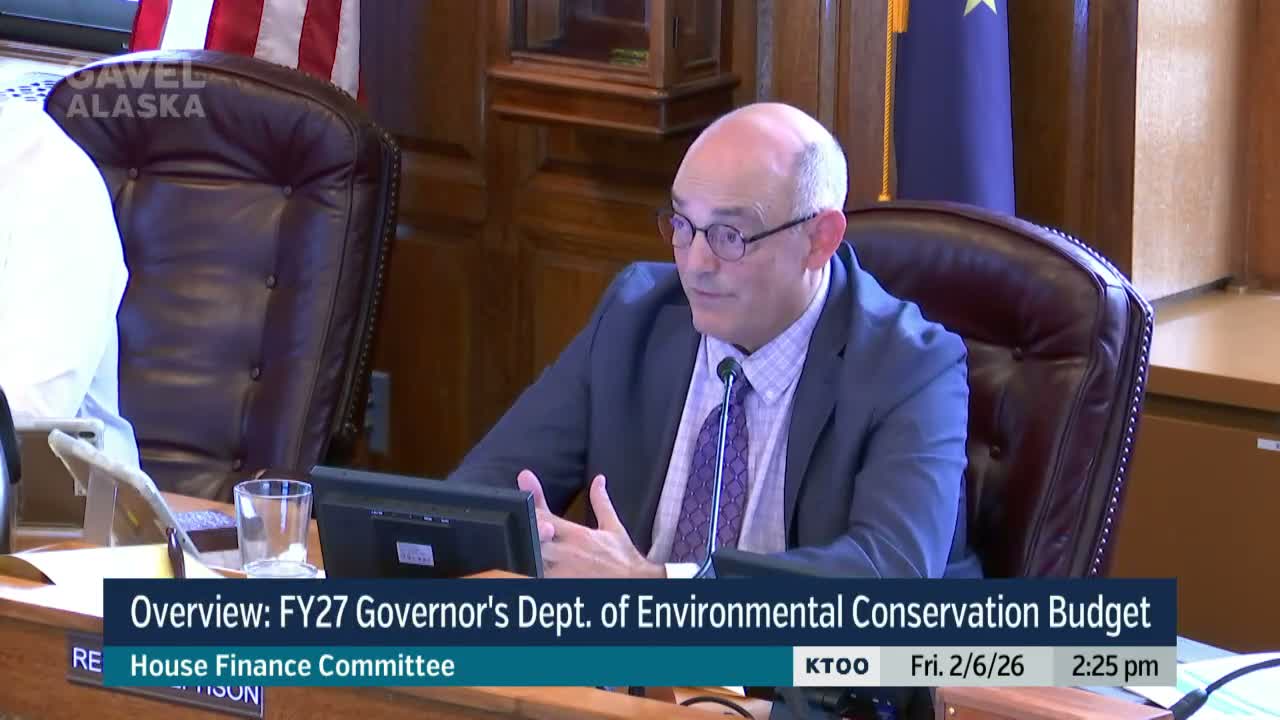
The Department of Environmental Conservation told the House Finance Committee on Feb. 6 that its response to Typhoon Halong involved rapid field assessments, mobilized staff and pre‑staged materials, and that long‑term cleanup and recovery will continue through spring thaw and beyond.
Commissioner‑designee Randy Bates said DEC staff assessed impacts to drinking water systems, landfills, heating‑oil spills and community infrastructure in impacted villages and worked closely with partners, including the Division of Homeland Security and Emergency Management (DHSEM) and FEMA. Bates described "mass devastation" in places like Kipnuk and noted the department mobilized staff with an all‑hands message and pre‑staged booms and absorbents for when access reopened.
Financial questions: Chair Josephson asked how much DEC spent from the state response fund (a statutory fund up to $50 million) and what will be recouped from FEMA. Director of Administrative Services Meg Kohler said DEC opened the response fund, is working with DHSEM and FEMA on reimbursable agreements, and that initial numbers from OMB showed about $100,000 in DEC‑direct activity with larger costs expected; she said DEC will provide current expenditure and recoupment estimates to the committee.
PFAS/firefighting foam accounting: Kohler explained a multi‑year firefighting‑foam (AFFF/PFAS) disposal reimbursement appears as a FY27 reversal in the budget (-$2.5 million) because of accounting; she said roughly $2.2 million remained and 11 payouts had been made, and the remaining balance will be carried forward and available in FY27.
Staffing and program priorities: The department said FY27 changes are largely technical—IT classification and salary adjustments—with vacancy rates near 6.7% departmentwide and a lower vacancy around 4% in the Spill Prevention and Response (SPAR) division. DEC also said it will continue to invest in infrastructure projects, lab supplies and the multi‑year disposal and reimbursement efforts related to firefighting foam.
What the committee asked for: Members requested a detailed accounting of DEC’s expenditures related to the typhoon, the amounts expected to be recouped from FEMA, and a report on planned spring field work and long‑term cleanup schedules; DEC agreed to provide updated numbers and follow‑up briefings.
(Reporting based solely on committee testimony; no votes were taken.)
Commissioner‑designee Randy Bates said DEC staff assessed impacts to drinking water systems, landfills, heating‑oil spills and community infrastructure in impacted villages and worked closely with partners, including the Division of Homeland Security and Emergency Management (DHSEM) and FEMA. Bates described "mass devastation" in places like Kipnuk and noted the department mobilized staff with an all‑hands message and pre‑staged booms and absorbents for when access reopened.
Financial questions: Chair Josephson asked how much DEC spent from the state response fund (a statutory fund up to $50 million) and what will be recouped from FEMA. Director of Administrative Services Meg Kohler said DEC opened the response fund, is working with DHSEM and FEMA on reimbursable agreements, and that initial numbers from OMB showed about $100,000 in DEC‑direct activity with larger costs expected; she said DEC will provide current expenditure and recoupment estimates to the committee.
PFAS/firefighting foam accounting: Kohler explained a multi‑year firefighting‑foam (AFFF/PFAS) disposal reimbursement appears as a FY27 reversal in the budget (-$2.5 million) because of accounting; she said roughly $2.2 million remained and 11 payouts had been made, and the remaining balance will be carried forward and available in FY27.
Staffing and program priorities: The department said FY27 changes are largely technical—IT classification and salary adjustments—with vacancy rates near 6.7% departmentwide and a lower vacancy around 4% in the Spill Prevention and Response (SPAR) division. DEC also said it will continue to invest in infrastructure projects, lab supplies and the multi‑year disposal and reimbursement efforts related to firefighting foam.
What the committee asked for: Members requested a detailed accounting of DEC’s expenditures related to the typhoon, the amounts expected to be recouped from FEMA, and a report on planned spring field work and long‑term cleanup schedules; DEC agreed to provide updated numbers and follow‑up briefings.
(Reporting based solely on committee testimony; no votes were taken.)
View the Full Meeting & All Its Details
This article offers just a summary. Unlock complete video, transcripts, and insights as a Founder Member.
✓
Watch full, unedited meeting videos
✓
Search every word spoken in unlimited transcripts
✓
AI summaries & real-time alerts (all government levels)
✓
Permanent access to expanding government content
30-day money-back guarantee
