Students push back on proposed proficiency test and statewide phone ban; committees hear concerns about SB209 and SB18
February 09, 2026 | 2026 Legislature Alaska, Alaska
This article was created by AI summarizing key points discussed. AI makes mistakes, so for full details and context, please refer to the video of the full meeting. Please report any errors so we can fix them. Report an error »
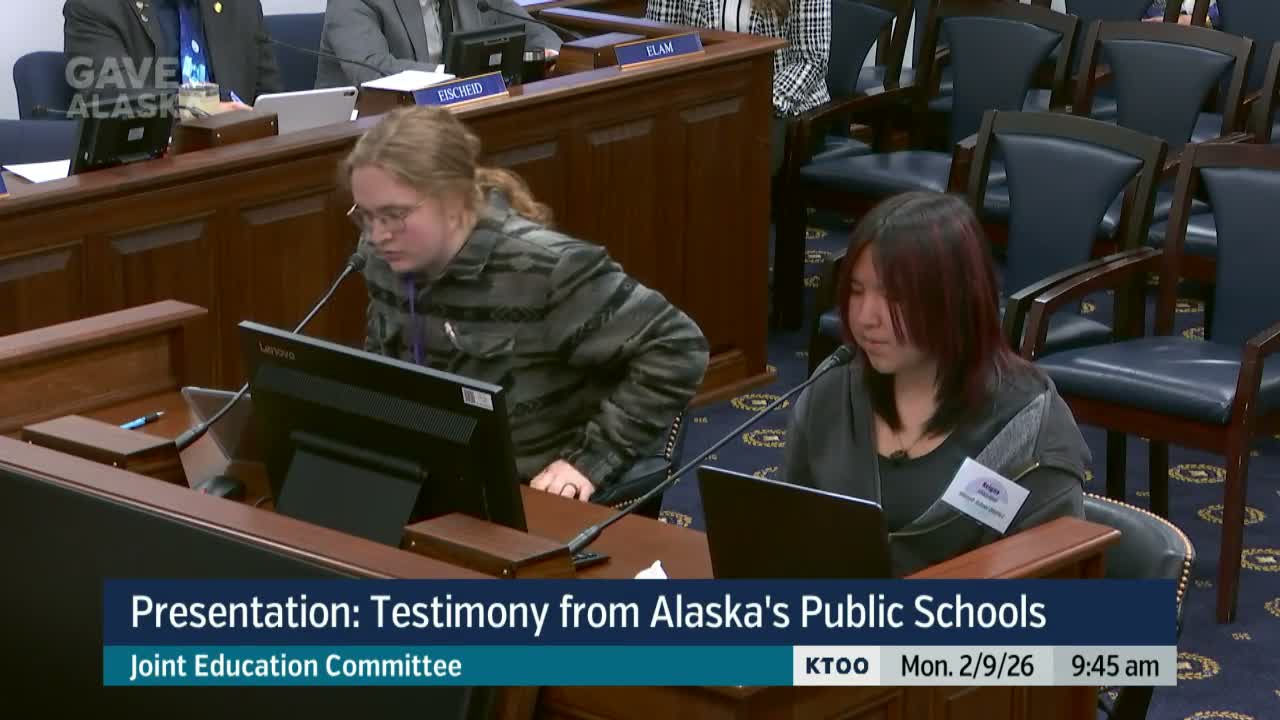
Two policy proposals prompted mixed testimony from students and educators. Paige Midgett, a student at CareerTech High School, said SB209—described as a proficiency confirmation tool—lacks detail on test design and consequences. "Would it be similar to a standardized test? Is passing the proficiency test a requirement to graduate?" she asked, warning the policy could add obstacles for students with disabilities and require funding for remediation programs that many districts have cut.
In Hoonah, student Reina Charlene opposed SB18, a proposal to restrict personal devices in schools, saying a statewide ban would remove local board and parental discretion and likely encourage students to find loopholes. "It just teaches kids to be sneaky, learn to hide from teachers, and rebel," she said, arguing phone privileges can be managed as part of classroom practice.
Educators and board members told the committee that any new assessment or device policy must be accompanied by clear funding, implementation guidance and attention to equity. The committee heard these concerns and recorded testimony for later consideration.
In Hoonah, student Reina Charlene opposed SB18, a proposal to restrict personal devices in schools, saying a statewide ban would remove local board and parental discretion and likely encourage students to find loopholes. "It just teaches kids to be sneaky, learn to hide from teachers, and rebel," she said, arguing phone privileges can be managed as part of classroom practice.
Educators and board members told the committee that any new assessment or device policy must be accompanied by clear funding, implementation guidance and attention to equity. The committee heard these concerns and recorded testimony for later consideration.
View the Full Meeting & All Its Details
This article offers just a summary. Unlock complete video, transcripts, and insights as a Founder Member.
✓
Watch full, unedited meeting videos
✓
Search every word spoken in unlimited transcripts
✓
AI summaries & real-time alerts (all government levels)
✓
Permanent access to expanding government content
30-day money-back guarantee
