Senate committee advances bill letting ARM board set employer pension rates; municipalities warn of cost shift
February 09, 2026 | 2026 Legislature Alaska, Alaska
This article was created by AI summarizing key points discussed. AI makes mistakes, so for full details and context, please refer to the video of the full meeting. Please report any errors so we can fix them. Report an error »
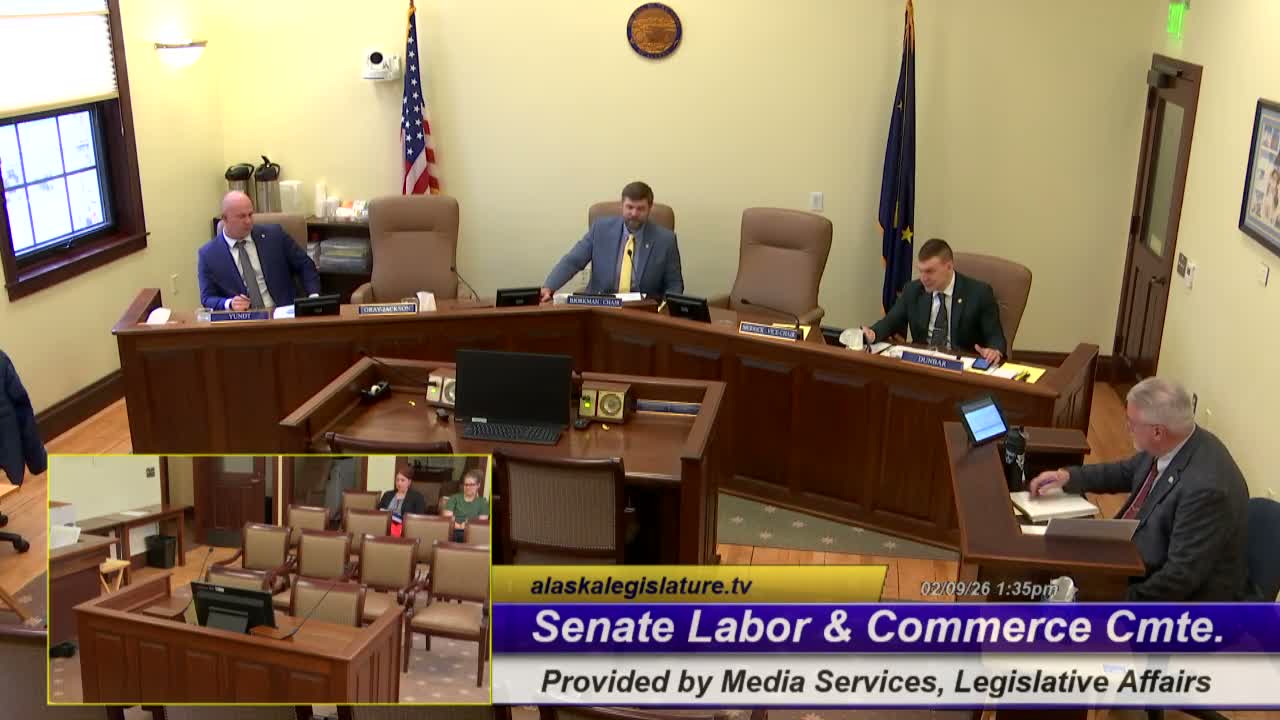
Senate Labor and Commerce held and then advanced Senate Bill 81 on Feb. 9, moving the measure from committee after members and witnesses debated whether the bill effectively removes a statutory 22% cap on employer contributions for public pensions.
Margo Youngberg, staff to Sen. Stedman, told the committee that “SB 81, in essence, would remove the existing 22% cap and, therefore, allow the flexibility for the ARM board to set a rate that would better match the actuarial rate that they currently set.” Legislative Legal counsel Dan Wayne said the bill uses “notwithstanding” language and requires an employer contribution that covers three specific items, including the rate certified under AS 37.10.2208 for liquidating past-service liability.
Why it matters: Municipal leaders told the committee the change would shift unfunded liability onto local governments and school districts at a time when many local budgets are already tight. Chris Moll, who identified himself as mayor of the Denali Borough, said his borough “has regularly advocated for maintaining the 22% employer contribution cap” and warned that changing to an ARM-adjusted contribution “would impose additional complexity and shift the unfunded liability onto municipalities.” Moll said the ARM-adjusted municipal rate is currently 28.33%, meaning the borough’s share above a 22% cap is about 6.33 percentage points — “about $30,000–$50,000 per year” for his borough, he said.
Legal and drafting questions: Sen. Dunbar pressed why the bill used an exception rather than repealing the 22% cap outright, saying the drafting “creates an exception… sufficient to make the 22% dead letter in a lot of… circumstances.” Dan Wayne responded that the cap would remain as a backstop but the bill ensures employer contributions must be at least enough to pay the three items listed on page 2 (normal cost, the certified rate for liquidating past-service liability, and employer contributions required under specified sections). Members suggested inviting the Division of Retirement and Benefits for technical clarification on remaining statutory language and rate components.
Fiscal note and scope: Chair Sen. Bjorkman read the Department of Retirement and Benefits fiscal note into the record, saying the bill “increases the annual employer contribution rate by requiring an additional employer contribution amount to be calculated at the rate certified under AS 37.10.2208 for both the Public Employees' Retirement System and the Teachers' Retirement System.” The chair noted that the bill’s language had removed a section affecting TERS because TERS is not subject to the 22% cap and said the bill would cause participating employers to pay more toward liquidating past-service costs; the fiscal note lists the bill’s effective date as immediate.
Committee action and next steps: Sen. Dunbar moved to report SB81 (version 34-LS0110 A) from committee with individual recommendations and an attached fiscal note and asked that Legislative Legal be granted authority to make technical and conforming changes. Chair Bjorkman asked for objections and, hearing none, stated the bill moved from committee as amended by unanimous consent. The committee will meet next on Feb. 11 to hear testimony on Alaska’s agricultural industry.
What the record shows: The committee record contains technical questions about statutory drafting and multiple statements warning of municipal fiscal impacts. No final floor vote occurred in this committee; the motion to report was approved without objection and the bill will proceed with the sponsor’s amendment and the attached fiscal note.
Margo Youngberg, staff to Sen. Stedman, told the committee that “SB 81, in essence, would remove the existing 22% cap and, therefore, allow the flexibility for the ARM board to set a rate that would better match the actuarial rate that they currently set.” Legislative Legal counsel Dan Wayne said the bill uses “notwithstanding” language and requires an employer contribution that covers three specific items, including the rate certified under AS 37.10.2208 for liquidating past-service liability.
Why it matters: Municipal leaders told the committee the change would shift unfunded liability onto local governments and school districts at a time when many local budgets are already tight. Chris Moll, who identified himself as mayor of the Denali Borough, said his borough “has regularly advocated for maintaining the 22% employer contribution cap” and warned that changing to an ARM-adjusted contribution “would impose additional complexity and shift the unfunded liability onto municipalities.” Moll said the ARM-adjusted municipal rate is currently 28.33%, meaning the borough’s share above a 22% cap is about 6.33 percentage points — “about $30,000–$50,000 per year” for his borough, he said.
Legal and drafting questions: Sen. Dunbar pressed why the bill used an exception rather than repealing the 22% cap outright, saying the drafting “creates an exception… sufficient to make the 22% dead letter in a lot of… circumstances.” Dan Wayne responded that the cap would remain as a backstop but the bill ensures employer contributions must be at least enough to pay the three items listed on page 2 (normal cost, the certified rate for liquidating past-service liability, and employer contributions required under specified sections). Members suggested inviting the Division of Retirement and Benefits for technical clarification on remaining statutory language and rate components.
Fiscal note and scope: Chair Sen. Bjorkman read the Department of Retirement and Benefits fiscal note into the record, saying the bill “increases the annual employer contribution rate by requiring an additional employer contribution amount to be calculated at the rate certified under AS 37.10.2208 for both the Public Employees' Retirement System and the Teachers' Retirement System.” The chair noted that the bill’s language had removed a section affecting TERS because TERS is not subject to the 22% cap and said the bill would cause participating employers to pay more toward liquidating past-service costs; the fiscal note lists the bill’s effective date as immediate.
Committee action and next steps: Sen. Dunbar moved to report SB81 (version 34-LS0110 A) from committee with individual recommendations and an attached fiscal note and asked that Legislative Legal be granted authority to make technical and conforming changes. Chair Bjorkman asked for objections and, hearing none, stated the bill moved from committee as amended by unanimous consent. The committee will meet next on Feb. 11 to hear testimony on Alaska’s agricultural industry.
What the record shows: The committee record contains technical questions about statutory drafting and multiple statements warning of municipal fiscal impacts. No final floor vote occurred in this committee; the motion to report was approved without objection and the bill will proceed with the sponsor’s amendment and the attached fiscal note.
Don't Miss a Word: See the Full Meeting!
Go beyond summaries. Unlock every video, transcript, and key insight with a Founder Membership.
✓
Get instant access to full meeting videos
✓
Search and clip any phrase from complete transcripts
✓
Receive AI-powered summaries & custom alerts
✓
Enjoy lifetime, unrestricted access to government data
30-day money-back guarantee
