Guidehouse recommends rebalancing Alaska Medicaid rates; DOH to phase in changes starting with behavioral health
February 09, 2026 | 2026 Legislature Alaska, Alaska
This article was created by AI summarizing key points discussed. AI makes mistakes, so for full details and context, please refer to the video of the full meeting. Please report any errors so we can fix them. Report an error »
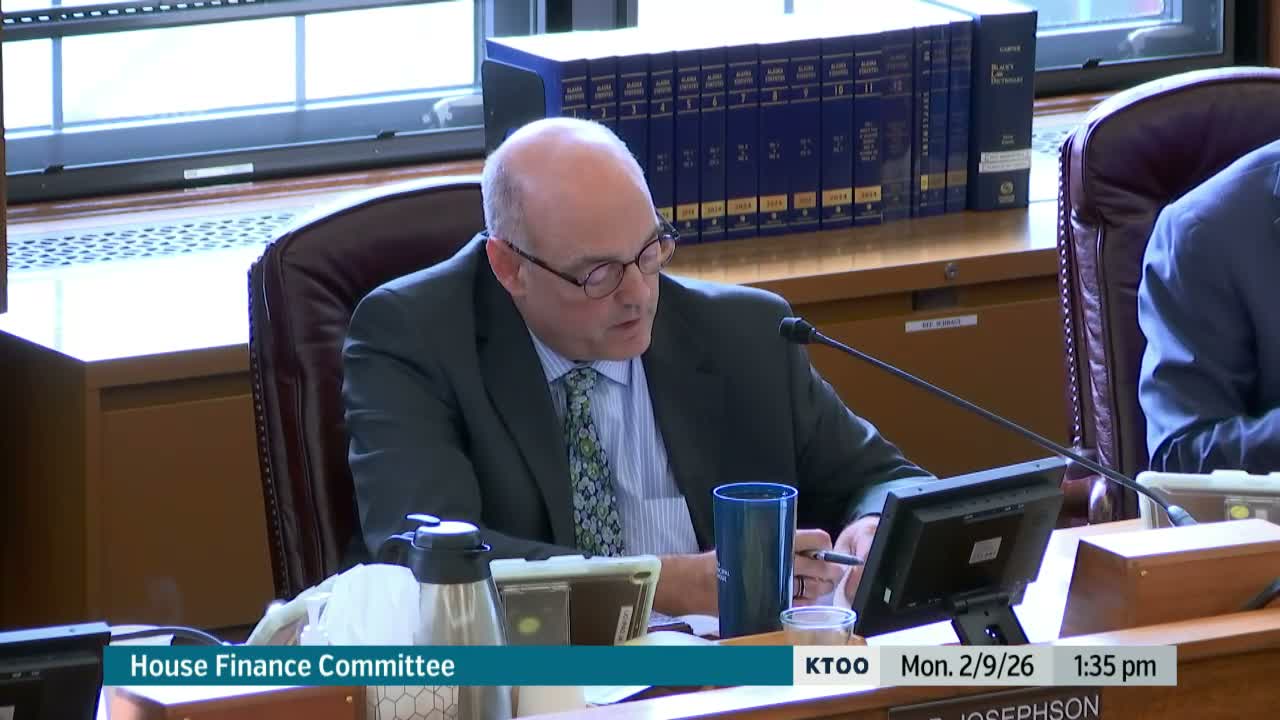
A contractor hired to evaluate Alaska’s Medicaid payment methods recommended targeted rate changes and system reforms on Monday, and the Department of Health said it will begin phased implementation focused first on behavioral health.
Guidehouse, which conducted a two‑phase rate methodology review for the state, briefed the House Finance Committee on findings that reimbursement is uneven across different Medicaid services and that indirect costs (overhead and program support) are disproportionately high in Alaska. "For every dollar you’re spending on behavioral health, about 40 cents of it goes to indirect costs," Guidehouse director Coy Jones told the committee, noting the share is higher than typical benchmarks of 20–30 percent in other states.
The report focused on four program streams: community‑based behavioral health (including mental health and substance‑use services), long‑term services and supports (home‑ and community‑based care), federally qualified health centers (FQHCs) and medical transportation (emergency and non‑emergency, including lodging and meals). Guidehouse said it used provider cost surveys, benchmarking and Alaska‑specific adjustments to construct "independent rate build‑ups" and produced line‑item fiscal estimates tied to the state fiscal year 2025 cost base.
Why it matters: Alaska’s Medicaid program insured more than 210,000 residents as of December 2025 and is a large component of the state budget. Guidehouse’s recommendations are intended to inform future appropriations and policy choices about how to align payments with desired outcomes for access and quality.
Key recommendations and estimated costs
- Adopt an independent rate‑build methodology and recalibrate rates across services to correct misalignments. Guidehouse said some services appear overcompensated relative to benchmarks while others—especially some behavioral health and personal care services—are significantly underpaid. Guidehouse proposed rebalancing rather than a simple across‑the‑board increase.
- Hold‑harmless transition: to reduce provider disruption, Guidehouse recommended a temporary risk‑corridor or hold‑harmless period of about two to three years while recalibration proceeds.
- Geographic differentials: because Alaska’s delivery costs vary greatly by region and community type, Guidehouse recommended geographic adjustments similar to existing LTSS differentials.
- Annual cost reporting: establish a cost‑reporting system that requires annual provider submissions so the state can measure indirect costs, adjust ceilings tied to Upper Payment Limit (UPL) rules and update rates administratively.
- Transportation and lodging: Guidehouse recommended raising certain ambulance and lodging rates (Guidehouse suggested aggregate increases up to about 125% of Medicare equivalents in some pockets) and exploring a statewide brokerage for non‑emergency medical transport.
Fiscal figures presented
Guidehouse presented line‑item estimates tied to FY‑25 magnitudes. For behavioral health, Guidehouse reported a package that the presenters summarized as roughly $7.2–$7.5 million in additional general‑fund investment (about $21 million total including federal match), with a state‑side additional investment figure read aloud of $13,000,000. For LTSS, Guidehouse flagged a notable recommended increase for personal care services—about 32%—and estimated state‑side costs in the $24–$30 million range to implement all LTSS recommendations. For FQHCs, converting or updating PPS rates could be $0.8–$1.5 million in general‑fund exposure (about $5.3 million total in a maximal scenario). For transportation, Guidehouse estimated a modest state investment of about $2.3–$2.4 million that could leverage roughly $16 million in federal dollars. Guidehouse also flagged a summary portfolio number cited by a committee member of approximately $43 million of additional state recommendations with about $110 million of federal match opportunity if fully implemented.
Data limits and methodology caveats
Guidehouse said its cost estimates relied on provider cost surveys that were not audited financial statements; survey response rates varied by program. Behavioral health responses covered roughly 60% of Medicaid dollars in that workstream, while Guidehouse said it generally aimed for about a 30% provider response rate. Guidehouse acknowledged it did not perform program‑integrity investigations or validate all submitted cost figures against audited records; the Department of Health’s program integrity unit works with the Department of Law on fraud investigations.
Department of Health response and next steps
Deputy Commissioner Emily Ritchie told the committee the department intends to promulgate regulations to begin implementing the behavioral health recommendations and a hold‑harmless approach while considering the state’s fiscal position. She said DOH would pursue phased implementation and cautioned that rate changes require alignment with legislative appropriations.
Committee concerns and exchanges
Members pressed Guidehouse and DOH on fraud risk, survey validation, regional representation in outreach (including remote hub and village visits), how indirect costs break down between administrative overhead and program support, and whether higher rates would increase utilization. Guidehouse and DOH said the study focused on methodology and cost build‑ups rather than long‑term utilization or claims‑level forecasting; they acknowledged some rate changes could raise service use by improving access, and that tracking downstream savings would require additional analysis.
What’s next
DOH said it is building regulatory and administrative steps for behavioral health rate changes and considering cost‑reporting design. The committee did not take formal votes; no motions or final legislative actions were recorded at this meeting. Committee members said they expect additional hearings and fiscal sessions as implementation details and appropriation decisions move forward.
Guidehouse, which conducted a two‑phase rate methodology review for the state, briefed the House Finance Committee on findings that reimbursement is uneven across different Medicaid services and that indirect costs (overhead and program support) are disproportionately high in Alaska. "For every dollar you’re spending on behavioral health, about 40 cents of it goes to indirect costs," Guidehouse director Coy Jones told the committee, noting the share is higher than typical benchmarks of 20–30 percent in other states.
The report focused on four program streams: community‑based behavioral health (including mental health and substance‑use services), long‑term services and supports (home‑ and community‑based care), federally qualified health centers (FQHCs) and medical transportation (emergency and non‑emergency, including lodging and meals). Guidehouse said it used provider cost surveys, benchmarking and Alaska‑specific adjustments to construct "independent rate build‑ups" and produced line‑item fiscal estimates tied to the state fiscal year 2025 cost base.
Why it matters: Alaska’s Medicaid program insured more than 210,000 residents as of December 2025 and is a large component of the state budget. Guidehouse’s recommendations are intended to inform future appropriations and policy choices about how to align payments with desired outcomes for access and quality.
Key recommendations and estimated costs
- Adopt an independent rate‑build methodology and recalibrate rates across services to correct misalignments. Guidehouse said some services appear overcompensated relative to benchmarks while others—especially some behavioral health and personal care services—are significantly underpaid. Guidehouse proposed rebalancing rather than a simple across‑the‑board increase.
- Hold‑harmless transition: to reduce provider disruption, Guidehouse recommended a temporary risk‑corridor or hold‑harmless period of about two to three years while recalibration proceeds.
- Geographic differentials: because Alaska’s delivery costs vary greatly by region and community type, Guidehouse recommended geographic adjustments similar to existing LTSS differentials.
- Annual cost reporting: establish a cost‑reporting system that requires annual provider submissions so the state can measure indirect costs, adjust ceilings tied to Upper Payment Limit (UPL) rules and update rates administratively.
- Transportation and lodging: Guidehouse recommended raising certain ambulance and lodging rates (Guidehouse suggested aggregate increases up to about 125% of Medicare equivalents in some pockets) and exploring a statewide brokerage for non‑emergency medical transport.
Fiscal figures presented
Guidehouse presented line‑item estimates tied to FY‑25 magnitudes. For behavioral health, Guidehouse reported a package that the presenters summarized as roughly $7.2–$7.5 million in additional general‑fund investment (about $21 million total including federal match), with a state‑side additional investment figure read aloud of $13,000,000. For LTSS, Guidehouse flagged a notable recommended increase for personal care services—about 32%—and estimated state‑side costs in the $24–$30 million range to implement all LTSS recommendations. For FQHCs, converting or updating PPS rates could be $0.8–$1.5 million in general‑fund exposure (about $5.3 million total in a maximal scenario). For transportation, Guidehouse estimated a modest state investment of about $2.3–$2.4 million that could leverage roughly $16 million in federal dollars. Guidehouse also flagged a summary portfolio number cited by a committee member of approximately $43 million of additional state recommendations with about $110 million of federal match opportunity if fully implemented.
Data limits and methodology caveats
Guidehouse said its cost estimates relied on provider cost surveys that were not audited financial statements; survey response rates varied by program. Behavioral health responses covered roughly 60% of Medicaid dollars in that workstream, while Guidehouse said it generally aimed for about a 30% provider response rate. Guidehouse acknowledged it did not perform program‑integrity investigations or validate all submitted cost figures against audited records; the Department of Health’s program integrity unit works with the Department of Law on fraud investigations.
Department of Health response and next steps
Deputy Commissioner Emily Ritchie told the committee the department intends to promulgate regulations to begin implementing the behavioral health recommendations and a hold‑harmless approach while considering the state’s fiscal position. She said DOH would pursue phased implementation and cautioned that rate changes require alignment with legislative appropriations.
Committee concerns and exchanges
Members pressed Guidehouse and DOH on fraud risk, survey validation, regional representation in outreach (including remote hub and village visits), how indirect costs break down between administrative overhead and program support, and whether higher rates would increase utilization. Guidehouse and DOH said the study focused on methodology and cost build‑ups rather than long‑term utilization or claims‑level forecasting; they acknowledged some rate changes could raise service use by improving access, and that tracking downstream savings would require additional analysis.
What’s next
DOH said it is building regulatory and administrative steps for behavioral health rate changes and considering cost‑reporting design. The committee did not take formal votes; no motions or final legislative actions were recorded at this meeting. Committee members said they expect additional hearings and fiscal sessions as implementation details and appropriation decisions move forward.
View the Full Meeting & All Its Details
This article offers just a summary. Unlock complete video, transcripts, and insights as a Founder Member.
✓
Watch full, unedited meeting videos
✓
Search every word spoken in unlimited transcripts
✓
AI summaries & real-time alerts (all government levels)
✓
Permanent access to expanding government content
30-day money-back guarantee
