Committee hears HB 293 to license genetic counselors, holds bill for further review
February 09, 2026 | 2026 Legislature Alaska, Alaska
This article was created by AI summarizing key points discussed. AI makes mistakes, so for full details and context, please refer to the video of the full meeting. Please report any errors so we can fix them. Report an error »
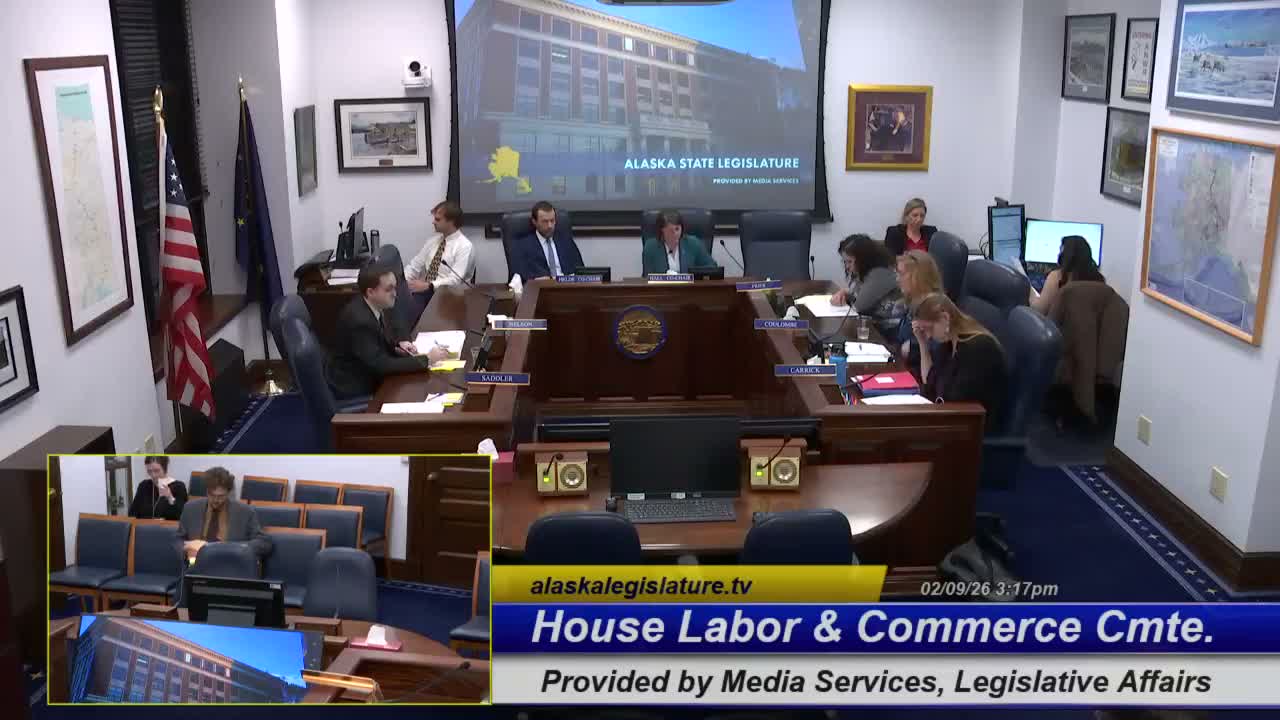
JUNEAU — The House Labor and Commerce Committee heard testimony Feb. 9 on HB 293, a bill to license genetic counselors in Alaska and add the profession to state-regulated health-care providers. Sponsor Co-chair Zach Fields said the proposal aims to make genetic counseling a sustainable profession in Alaska by enabling billing, improving recruitment and integrating counselors into care teams.
Supporters told the committee that licensure would reduce patient harm, broaden access and strengthen the workforce. Anna Johansen, a certified genetic counselor at South Central Foundation, described cases in which patients received incorrect genetic information and said licensure “helps ensure that patients receive guidance from professionals with verified specialized training in genetics.” She testified that licensure would help clinics justify hiring counselors and reduce long wait times for in-state services, particularly for Alaska Native and American Indian pediatric patients.
April O'Connor, a certified genetic counselor at Providence Cancer Center who is licensed in multiple states, told the committee licensing allows counselors to be recognized as independent providers for private insurers and to build professional billing codes. “Licensure enables billing because if you are a licensed health-care provider ... you are seen as a licensed profession, and you are able to build professional fees,” O'Connor said. She cautioned that Medicare currently does not reimburse genetic counselors and that Medicaid reimbursement varies by state.
The bill, as read into the record by staff, would create a new chapter in state law establishing licensure requirements, a temporary one‑year license pathway, a process for licensing counselors previously licensed in other states, and an advisory council under the State Medical Board. The advisory body is drafted for 3 to 5 members, a majority licensed genetic counselors and at least one physician; the State Medical Board would retain authority to adopt regulations and to impose disciplinary sanctions. The bill also includes exemptions for federal employees and Indian Health Service providers, a transition provision allowing currently certified counselors to practice until July 1, 2027, and a provision making violations a class B misdemeanor.
Committee members pressed witnesses on several issues. Rep. Sadler raised concern that an advisory council composed mainly of the profession’s small membership risks conflicts of interest, calling it “the fox guarding the hen house” and asking whether out‑of‑state counselors could serve. O'Connor and Johansen described practices in other states that allow licensed out‑of‑state counselors to serve on advisory panels and said multiple reviewers could help evaluate out‑of‑state credentials.
Members also questioned how interns would be supervised and whether interns could bill; O'Connor said students on clinical rotations may counsel patients under direct supervision but cannot bill, and temporary licenses are available for applicants awaiting exam results. The committee heard there are eight board‑certified genetic counselors associated with Alaska (seven practicing in the state), underscoring the small current workforce.
On data and privacy, O'Connor said laboratories report de‑identified variant information to national databases such as ClinVar (maintained by the National Institutes of Health) and that patients consent to testing; she noted federal protections under the Genetic Information Nondiscrimination Act (GINA) cover many health‑insurance contexts but do not extend to some situations such as certain military benefits or some life and long‑term disability policies.
Sponsor Fields said the bill’s structure can be amended to reduce cost — for example, by removing per diem and travel payments for the advisory council or by allowing remote meetings — and that staff could return with amendment options. Sylvan Robb, director of the Division of Corporations, Business and Professional Licensing, told the committee the division already regulates several small programs without boards and that the final structure is a policy choice for the sponsor and committee.
The committee did not take a final vote. After questions and closing remarks, the committee held HB 293 for further discussion later in the week and asked staff to invite representatives of the State Medical Board and the Alaska State Medical Association to testify at a future hearing. The committee scheduled its next meeting for Feb. 11 at 3:15 p.m.
Supporters told the committee that licensure would reduce patient harm, broaden access and strengthen the workforce. Anna Johansen, a certified genetic counselor at South Central Foundation, described cases in which patients received incorrect genetic information and said licensure “helps ensure that patients receive guidance from professionals with verified specialized training in genetics.” She testified that licensure would help clinics justify hiring counselors and reduce long wait times for in-state services, particularly for Alaska Native and American Indian pediatric patients.
April O'Connor, a certified genetic counselor at Providence Cancer Center who is licensed in multiple states, told the committee licensing allows counselors to be recognized as independent providers for private insurers and to build professional billing codes. “Licensure enables billing because if you are a licensed health-care provider ... you are seen as a licensed profession, and you are able to build professional fees,” O'Connor said. She cautioned that Medicare currently does not reimburse genetic counselors and that Medicaid reimbursement varies by state.
The bill, as read into the record by staff, would create a new chapter in state law establishing licensure requirements, a temporary one‑year license pathway, a process for licensing counselors previously licensed in other states, and an advisory council under the State Medical Board. The advisory body is drafted for 3 to 5 members, a majority licensed genetic counselors and at least one physician; the State Medical Board would retain authority to adopt regulations and to impose disciplinary sanctions. The bill also includes exemptions for federal employees and Indian Health Service providers, a transition provision allowing currently certified counselors to practice until July 1, 2027, and a provision making violations a class B misdemeanor.
Committee members pressed witnesses on several issues. Rep. Sadler raised concern that an advisory council composed mainly of the profession’s small membership risks conflicts of interest, calling it “the fox guarding the hen house” and asking whether out‑of‑state counselors could serve. O'Connor and Johansen described practices in other states that allow licensed out‑of‑state counselors to serve on advisory panels and said multiple reviewers could help evaluate out‑of‑state credentials.
Members also questioned how interns would be supervised and whether interns could bill; O'Connor said students on clinical rotations may counsel patients under direct supervision but cannot bill, and temporary licenses are available for applicants awaiting exam results. The committee heard there are eight board‑certified genetic counselors associated with Alaska (seven practicing in the state), underscoring the small current workforce.
On data and privacy, O'Connor said laboratories report de‑identified variant information to national databases such as ClinVar (maintained by the National Institutes of Health) and that patients consent to testing; she noted federal protections under the Genetic Information Nondiscrimination Act (GINA) cover many health‑insurance contexts but do not extend to some situations such as certain military benefits or some life and long‑term disability policies.
Sponsor Fields said the bill’s structure can be amended to reduce cost — for example, by removing per diem and travel payments for the advisory council or by allowing remote meetings — and that staff could return with amendment options. Sylvan Robb, director of the Division of Corporations, Business and Professional Licensing, told the committee the division already regulates several small programs without boards and that the final structure is a policy choice for the sponsor and committee.
The committee did not take a final vote. After questions and closing remarks, the committee held HB 293 for further discussion later in the week and asked staff to invite representatives of the State Medical Board and the Alaska State Medical Association to testify at a future hearing. The committee scheduled its next meeting for Feb. 11 at 3:15 p.m.
View the Full Meeting & All Its Details
This article offers just a summary. Unlock complete video, transcripts, and insights as a Founder Member.
✓
Watch full, unedited meeting videos
✓
Search every word spoken in unlimited transcripts
✓
AI summaries & real-time alerts (all government levels)
✓
Permanent access to expanding government content
30-day money-back guarantee
