Clackamas County authorizes up to $4 million to cover sheriff’s office shortfall
February 11, 2026 | Clackamas County, Oregon
This article was created by AI summarizing key points discussed. AI makes mistakes, so for full details and context, please refer to the video of the full meeting. Please report any errors so we can fix them. Report an error »
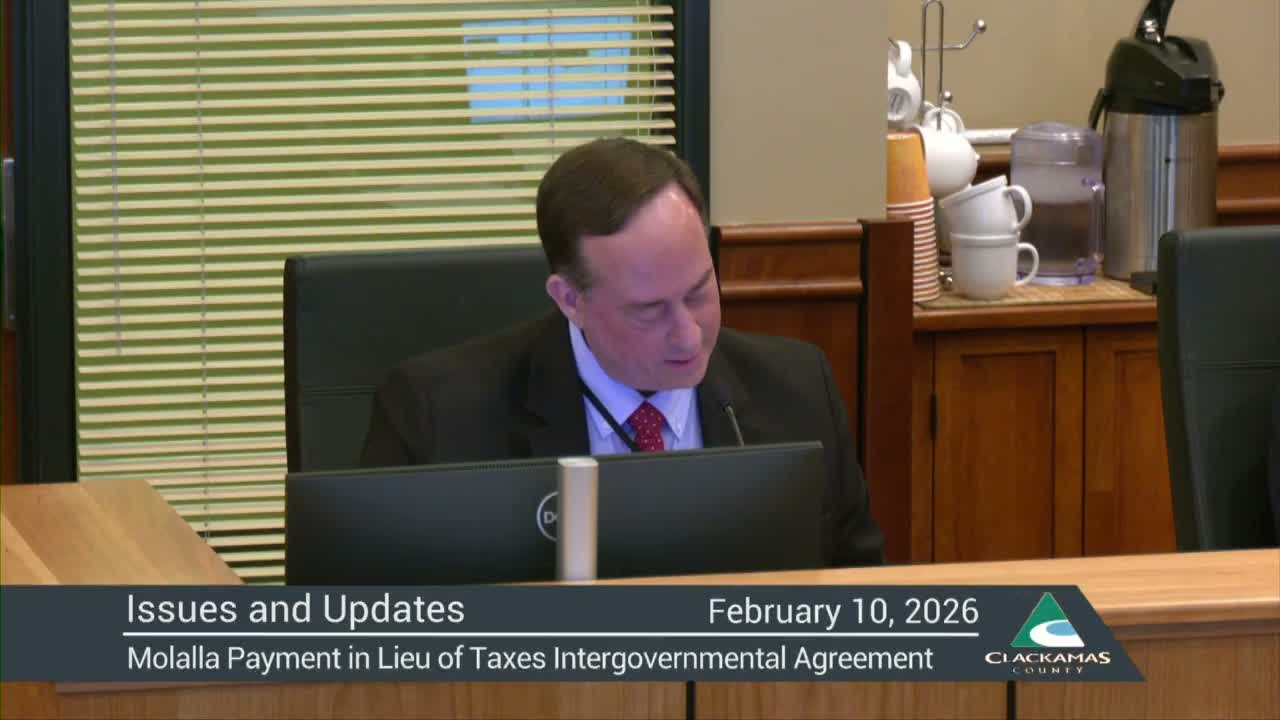
Clackamas County commissioners on Feb. 10 voted to provide up to $4,000,000 in one-time general-fund support to the Clackamas County Sheriff’s Office to cover an immediate fiscal-year shortfall and avoid planned reductions in services and personnel.
Sheriff Angela Brandenburg told the board that the office is projecting a $3.5 million to $4.0 million shortfall this fiscal year and warned, “I will not be able to make payroll in the fourth quarter” without additional funding. Brandenburg said the office has held 45 positions vacant (39 sworn) and cut overtime and materials and services to try to balance the budget, but remaining reductions would mean service and personnel losses.
County Administrator Gary Smith said a review found two practical steps to narrow the gap: properly funding 13 positions tied to the replacement courthouse (about $1.4 million) that had been underbudgeted, and restoring 50% of traffic-fine revenue collected in the county justice court to the sheriff’s office (about $600,000 annually). Smith proposed using contingency and general-fund resources to provide up to $4 million now so the sheriff can operate through June 30, 2026; any unused funds would be returned to the general fund.
Commissioners questioned long-term sustainability, vacancy assumptions, and whether levy adjustments would relieve general-fund pressure. Commissioner West and others said they supported the emergency funding to avoid layoffs, while pressing for a tighter budget review and a sheriff’s office finance work group to address long-term structural issues.
Commissioner West moved the funding authorization; Commissioner Schrader seconded. The board approved the motion (recorded poll: Helm Aye; Schrader Aye; West Aye; Chair Aye), authorizing up to $4,000,000 to be used if needed to cover the sheriff’s fiscal-year shortfall.
Next steps: county finance staff will incorporate the supplemental into the general-fund forecast and the board and sheriff’s finance work group will continue work to refine vacancy factors, levy interactions, and long-term funding assumptions.
Sheriff Angela Brandenburg told the board that the office is projecting a $3.5 million to $4.0 million shortfall this fiscal year and warned, “I will not be able to make payroll in the fourth quarter” without additional funding. Brandenburg said the office has held 45 positions vacant (39 sworn) and cut overtime and materials and services to try to balance the budget, but remaining reductions would mean service and personnel losses.
County Administrator Gary Smith said a review found two practical steps to narrow the gap: properly funding 13 positions tied to the replacement courthouse (about $1.4 million) that had been underbudgeted, and restoring 50% of traffic-fine revenue collected in the county justice court to the sheriff’s office (about $600,000 annually). Smith proposed using contingency and general-fund resources to provide up to $4 million now so the sheriff can operate through June 30, 2026; any unused funds would be returned to the general fund.
Commissioners questioned long-term sustainability, vacancy assumptions, and whether levy adjustments would relieve general-fund pressure. Commissioner West and others said they supported the emergency funding to avoid layoffs, while pressing for a tighter budget review and a sheriff’s office finance work group to address long-term structural issues.
Commissioner West moved the funding authorization; Commissioner Schrader seconded. The board approved the motion (recorded poll: Helm Aye; Schrader Aye; West Aye; Chair Aye), authorizing up to $4,000,000 to be used if needed to cover the sheriff’s fiscal-year shortfall.
Next steps: county finance staff will incorporate the supplemental into the general-fund forecast and the board and sheriff’s finance work group will continue work to refine vacancy factors, levy interactions, and long-term funding assumptions.
View the Full Meeting & All Its Details
This article offers just a summary. Unlock complete video, transcripts, and insights as a Founder Member.
✓
Watch full, unedited meeting videos
✓
Search every word spoken in unlimited transcripts
✓
AI summaries & real-time alerts (all government levels)
✓
Permanent access to expanding government content
30-day money-back guarantee
