Students and Sanders debate AI in classrooms and its wider effects on attention and the environment
February 11, 2026 | Senate Committee on Health, Education, Labor, and Pensions, Senate Committees, U.S. Senate, Legislative, Federal
This article was created by AI summarizing key points discussed. AI makes mistakes, so for full details and context, please refer to the video of the full meeting. Please report any errors so we can fix them. Report an error »
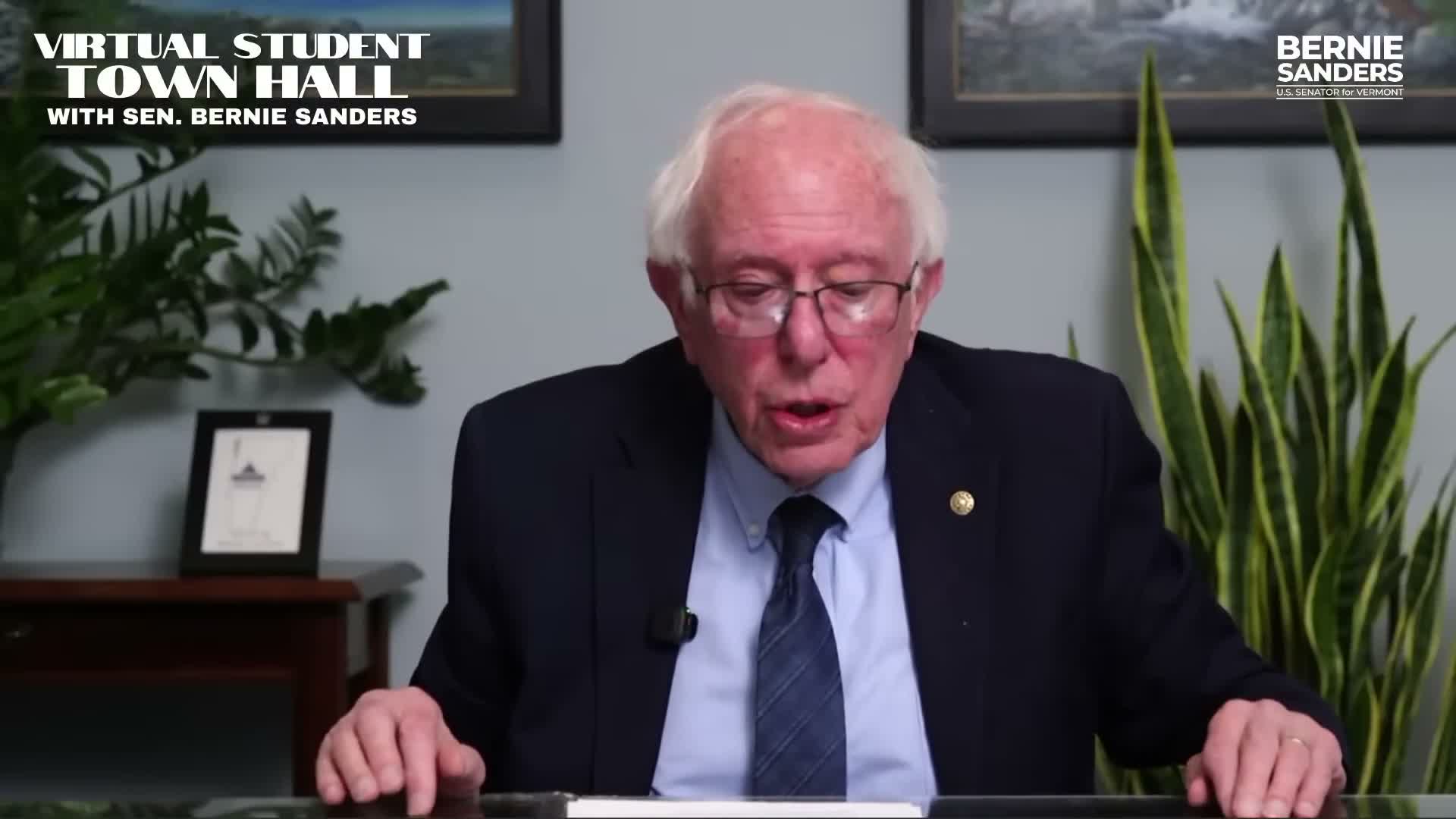
Students from multiple Vermont high schools questioned how artificial intelligence and short-form media are changing learning and attention spans.
Reese (Stowe) and others said AI makes it easier for students to bypass learning, raising concerns about lowered expectations and academic integrity. "So not only is the standard lower, but they're more likely to not do their own work," Reese said.
Sen. Bernie Sanders agreed that AI poses risks to learning and cautioned that overreliance on screens harms attention spans. He said students must learn critical thinking and discipline: "If your teacher assigns you something and you press a button and your AI gives you a good essay... what have you learned in the process other than you can press a button?" Sanders also indicated he planned to meet AI company executives soon to discuss these issues.
Panelists debated constructive approaches: teach students to use AI as a tool, strengthen assignments that require critical work, and expand hands-on or apprenticeship opportunities.
Separately, student Eden raised AI’s environmental footprint. Sanders said data centers demand large amounts of electricity and water and that he would oppose locating them in Vermont because of emissions and local rate impacts.
No policy decisions were announced; the discussion focused on educational practice, industry engagement and environmental considerations.
Reese (Stowe) and others said AI makes it easier for students to bypass learning, raising concerns about lowered expectations and academic integrity. "So not only is the standard lower, but they're more likely to not do their own work," Reese said.
Sen. Bernie Sanders agreed that AI poses risks to learning and cautioned that overreliance on screens harms attention spans. He said students must learn critical thinking and discipline: "If your teacher assigns you something and you press a button and your AI gives you a good essay... what have you learned in the process other than you can press a button?" Sanders also indicated he planned to meet AI company executives soon to discuss these issues.
Panelists debated constructive approaches: teach students to use AI as a tool, strengthen assignments that require critical work, and expand hands-on or apprenticeship opportunities.
Separately, student Eden raised AI’s environmental footprint. Sanders said data centers demand large amounts of electricity and water and that he would oppose locating them in Vermont because of emissions and local rate impacts.
No policy decisions were announced; the discussion focused on educational practice, industry engagement and environmental considerations.
View the Full Meeting & All Its Details
This article offers just a summary. Unlock complete video, transcripts, and insights as a Founder Member.
✓
Watch full, unedited meeting videos
✓
Search every word spoken in unlimited transcripts
✓
AI summaries & real-time alerts (all government levels)
✓
Permanent access to expanding government content
30-day money-back guarantee
