House Education hears testimony on chronic-absenteeism bill; committee agrees to soften alternative-education mandate
February 11, 2026 | Education, HOUSE OF REPRESENTATIVES, Committees, Legislative , Vermont
This article was created by AI summarizing key points discussed. AI makes mistakes, so for full details and context, please refer to the video of the full meeting. Please report any errors so we can fix them. Report an error »
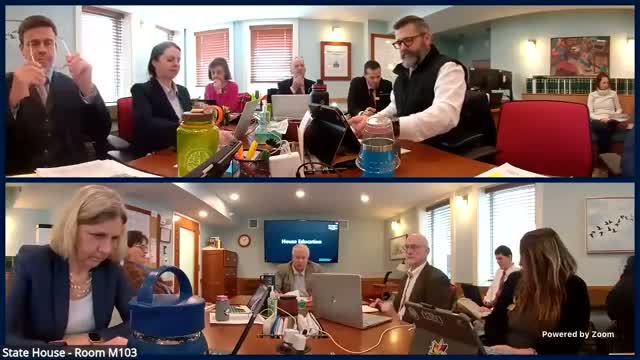
Jay Nichols, introduced in the transcript as the senior executive director of the Vermont Principles Association, told the House Education Committee on Feb. 10 that chronic absenteeism remains ‘‘a national and state-level issue’’ and urged a focus on early intervention and wraparound services rather than primarily punitive approaches. "Researchers constantly, consistently find chronic absenteeism is strongly, linked to lower standardized test scores and learning loss," Nichols said, and he emphasized that low-income and historically marginalized students are disproportionately affected.
Nichols summarized several evidence-based strategies the association supports, including family engagement, early intervention, proactive positive outreach and connections with human services. He cited a practice he said had reduced absences in some places: text messages from teachers or schools telling students and families, "We missed you yesterday," which Nichols said in his testimony reduced absenteeism by about 10 percent in the research he had seen.
Nichols raised a specific concern about proposed Section e of the draft language, which would require that schools "provide access to alternative education" for any suspension of three or more days. He asked that the mandatory "shall" be replaced with "may," arguing that many schools lack resources—substitute teachers, tutors, safe tutoring spaces—and that a strict mandate would amount to an unfunded requirement. "We would respectfully request that the word shall be replaced with may," Nichols said.
Committee members and Nichols discussed the legal obligation to continue special-education services during suspensions and expulsions; Nichols and members agreed that special-education IEP obligations remain in force, but that non-IEP students currently have no explicit statutory entitlement to tutoring or alternative instruction. The committee also questioned whether items on the draft list of approved absences should include short-term mental-health needs; Nichols recommended leaving day-to-day discretion with local superintendents rather than requiring secretary-of-education approvals.
Unidentified committee members sought clarity about whether the bill’s communications recommendations (for example, texting families) conflicted with last year’s phone-free law; Nichols said outreach before school or in the evening is typically allowable and that the evidence supports positive outreach rather than punitive measures.
Near the end of the discussion, the committee chair asked whether members were comfortable changing Section e from "shall" to "may" and making one listed absence (item 12) subject to LEA superintendent approval. Members verbally agreed and asked legislative counsel to draft the changes. The committee did not record a roll-call vote on those drafting directions during the hearing.
Nichols also noted several follow-up items he would review or send in writing, including whether the chronic-absenteeism draft already addresses attendance reporting and academic progress sharing for approved independent schools. The committee recessed for a break and expected to continue work on drafting with legislative counsel.
The next procedural step recorded in the hearing was that legislative counsel will incorporate the committee’s agreed drafting changes; no formal vote was recorded on the floor during this session.
Nichols summarized several evidence-based strategies the association supports, including family engagement, early intervention, proactive positive outreach and connections with human services. He cited a practice he said had reduced absences in some places: text messages from teachers or schools telling students and families, "We missed you yesterday," which Nichols said in his testimony reduced absenteeism by about 10 percent in the research he had seen.
Nichols raised a specific concern about proposed Section e of the draft language, which would require that schools "provide access to alternative education" for any suspension of three or more days. He asked that the mandatory "shall" be replaced with "may," arguing that many schools lack resources—substitute teachers, tutors, safe tutoring spaces—and that a strict mandate would amount to an unfunded requirement. "We would respectfully request that the word shall be replaced with may," Nichols said.
Committee members and Nichols discussed the legal obligation to continue special-education services during suspensions and expulsions; Nichols and members agreed that special-education IEP obligations remain in force, but that non-IEP students currently have no explicit statutory entitlement to tutoring or alternative instruction. The committee also questioned whether items on the draft list of approved absences should include short-term mental-health needs; Nichols recommended leaving day-to-day discretion with local superintendents rather than requiring secretary-of-education approvals.
Unidentified committee members sought clarity about whether the bill’s communications recommendations (for example, texting families) conflicted with last year’s phone-free law; Nichols said outreach before school or in the evening is typically allowable and that the evidence supports positive outreach rather than punitive measures.
Near the end of the discussion, the committee chair asked whether members were comfortable changing Section e from "shall" to "may" and making one listed absence (item 12) subject to LEA superintendent approval. Members verbally agreed and asked legislative counsel to draft the changes. The committee did not record a roll-call vote on those drafting directions during the hearing.
Nichols also noted several follow-up items he would review or send in writing, including whether the chronic-absenteeism draft already addresses attendance reporting and academic progress sharing for approved independent schools. The committee recessed for a break and expected to continue work on drafting with legislative counsel.
The next procedural step recorded in the hearing was that legislative counsel will incorporate the committee’s agreed drafting changes; no formal vote was recorded on the floor during this session.
Don't Miss a Word: See the Full Meeting!
Go beyond summaries. Unlock every video, transcript, and key insight with a Founder Membership.
✓
Get instant access to full meeting videos
✓
Search and clip any phrase from complete transcripts
✓
Receive AI-powered summaries & custom alerts
✓
Enjoy lifetime, unrestricted access to government data
30-day money-back guarantee
