UN warns Security Council of escalating violence, humanitarian collapse in South Sudan
February 11, 2026 | United Nations, International
This article was created by AI summarizing key points discussed. AI makes mistakes, so for full details and context, please refer to the video of the full meeting. Please report any errors so we can fix them. Report an error »
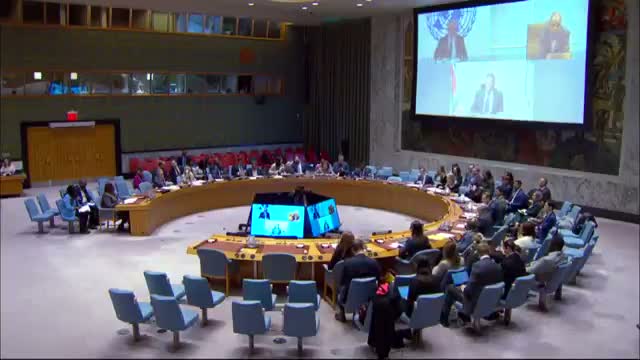
Unidentified Speaker, a representative speaking at the Security Council, warned that recent weeks have seen a sharp escalation of violence in South Sudan, with armed confrontations, reports of aerial bombardment and mass displacement concentrated in places the speaker identified as Zhongli and Upper Nile State. "Attacks on health facilities, medical personnel and humanitarian staff, infrastructure and assets are unacceptable," the representative said, urging safe, predictable humanitarian access nationwide.
The representative told the Council that government sources report more than 280,000 people displaced in Zhongli alone and described large‑scale incidents in which humanitarian barges were attacked and looted while carrying items intended for some 73,000 civilians. The briefing said the country is also facing its first cholera outbreak, with over 98,000 reported cases since the outbreak began in September 2024, and that flight restrictions and blocked movements are delaying medical evacuations and life‑saving assistance.
Why this matters: The speaker framed the deterioration as both a security and humanitarian emergency. The representative reported that UN peacekeeping operations are under pressure from cost‑reduction measures that have already cut patrols, cancelled human rights monitoring missions and closed bases, limiting the mission's ability to protect civilians and sustain humanitarian access.
The briefing described political drivers behind the violence: political deadlock among the main signatories to the revitalized peace agreement, unilateral proposals to amend the agreement (including proposals to defer constitution‑making until after elections) and continued exclusion of key signatories. The transcript reports that the Sudan People's Liberation Movement/Army–In Opposition (SPLM‑IO) said it could not participate in recent discussions while legal proceedings involving First Vice President Bek Michal continue.
The representative highlighted regional mediation efforts, including the African Union and the Intergovernmental Authority on Development (IGAD), and cited proposals for a leadership retreat in Pretoria and a 45‑day national consultative process on election questions that, the speaker said, excluded the mainstream SPLM‑IO. The speaker warned that unilateral changes to the revitalized agreement would undermine its primacy and jeopardize efforts toward credible national elections.
On operational impacts, the speaker said the mission (identified in the transcript as UNMISS) is "nearing completion of its cost reduction measures while endeavoring to implement its mandate," and that reductions have cut long‑duration ground patrols from three or four per month to one or two in some areas and cancelled about 40 human rights monitoring missions. The representative said UN presence in places such as Akobo and a temporary base in Dukpadyet north of Bor has at times served as a critical deterrent.
The briefing closed with an appeal for the Security Council and international community to press South Sudanese political actors to return to inclusive dialogue, support regional efforts and ensure the integrity and supremacy of the revitalized peace agreement so that credible, peaceful elections can proceed.
The representative concluded by asking for continued Council support for a fully operational UN peacekeeping presence to help address the challenges described.
The representative told the Council that government sources report more than 280,000 people displaced in Zhongli alone and described large‑scale incidents in which humanitarian barges were attacked and looted while carrying items intended for some 73,000 civilians. The briefing said the country is also facing its first cholera outbreak, with over 98,000 reported cases since the outbreak began in September 2024, and that flight restrictions and blocked movements are delaying medical evacuations and life‑saving assistance.
Why this matters: The speaker framed the deterioration as both a security and humanitarian emergency. The representative reported that UN peacekeeping operations are under pressure from cost‑reduction measures that have already cut patrols, cancelled human rights monitoring missions and closed bases, limiting the mission's ability to protect civilians and sustain humanitarian access.
The briefing described political drivers behind the violence: political deadlock among the main signatories to the revitalized peace agreement, unilateral proposals to amend the agreement (including proposals to defer constitution‑making until after elections) and continued exclusion of key signatories. The transcript reports that the Sudan People's Liberation Movement/Army–In Opposition (SPLM‑IO) said it could not participate in recent discussions while legal proceedings involving First Vice President Bek Michal continue.
The representative highlighted regional mediation efforts, including the African Union and the Intergovernmental Authority on Development (IGAD), and cited proposals for a leadership retreat in Pretoria and a 45‑day national consultative process on election questions that, the speaker said, excluded the mainstream SPLM‑IO. The speaker warned that unilateral changes to the revitalized agreement would undermine its primacy and jeopardize efforts toward credible national elections.
On operational impacts, the speaker said the mission (identified in the transcript as UNMISS) is "nearing completion of its cost reduction measures while endeavoring to implement its mandate," and that reductions have cut long‑duration ground patrols from three or four per month to one or two in some areas and cancelled about 40 human rights monitoring missions. The representative said UN presence in places such as Akobo and a temporary base in Dukpadyet north of Bor has at times served as a critical deterrent.
The briefing closed with an appeal for the Security Council and international community to press South Sudanese political actors to return to inclusive dialogue, support regional efforts and ensure the integrity and supremacy of the revitalized peace agreement so that credible, peaceful elections can proceed.
The representative concluded by asking for continued Council support for a fully operational UN peacekeeping presence to help address the challenges described.
View the Full Meeting & All Its Details
This article offers just a summary. Unlock complete video, transcripts, and insights as a Founder Member.
✓
Watch full, unedited meeting videos
✓
Search every word spoken in unlimited transcripts
✓
AI summaries & real-time alerts (all government levels)
✓
Permanent access to expanding government content
30-day money-back guarantee
