House Bill 2745 would cap local property-tax growth; Sedgwick County staff model $7.6M potential aid, commissioners weigh response
February 11, 2026 | Sedgwick County, Kansas
This article was created by AI summarizing key points discussed. AI makes mistakes, so for full details and context, please refer to the video of the full meeting. Please report any errors so we can fix them. Report an error »
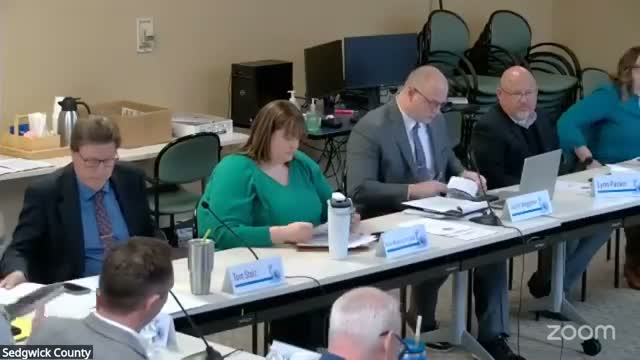
Sedgwick County staff and commissioners examined House Bill 2745, a state proposal to limit annual property-tax dollar growth and to create a $60 million property-tax relief fund, and debated whether the county should support, oppose or remain neutral with amendments.
Lindsay (county staff) summarized the bill: it would cap year-to-year property-tax revenue growth for cities, counties and special districts at 3%, with statutory adjustments for new construction and certain debt and project types; schools and the state would be excluded. The bill also establishes a $60 million property-tax relief fund, apportioned among counties (20% equally, 40% by population, 40% by assessed value), and includes a mechanism to increase the fund by 2% annually.
Using the worksheet provided by staff, Lindsay said Sedgwick County’s share—if it chose not to go to election to exceed the cap—would be roughly $7.6 million under the distribution formula described in the bill, but she cautioned that that amount depends on whether demand transfers (such as LAVTR and city–county revenue sharing) are funded. Staff modeled that, under the bill, Sedgwick County’s 2025 revenue would have been about $2.5 million lower and certain fire districts would face larger impacts.
Commissioners discussed practical and political effects: the League of Municipalities and some cities have signaled opposition or concern (notably on election timing and how the relief funds exclude cities); the Kansas Sheriffs Association had been asked to weigh in; and county leaders considered whether a coordinated "Big 5" county opposition statement should be drafted. One commissioner said a neutral position with suggested amendments might be the most practical short-term approach while others leaned toward more formal opposition.
Staff noted key operational details: an election to exceed the cap would have to be called in time for the primary (calendar-year 2026 details were discussed) and jurisdictions that go to election are not eligible for the state relief funds; under the bill, entities such as fire districts and city revenue-sharing arrangements would have to negotiate internal apportionments if relief flows to counties on behalf of other local governments.
Next steps: staff will refine fiscal modeling for the commission’s budget retreat and prepare options for whether Sedgwick County should support, oppose, or seek amendments to House Bill 2745.
Lindsay (county staff) summarized the bill: it would cap year-to-year property-tax revenue growth for cities, counties and special districts at 3%, with statutory adjustments for new construction and certain debt and project types; schools and the state would be excluded. The bill also establishes a $60 million property-tax relief fund, apportioned among counties (20% equally, 40% by population, 40% by assessed value), and includes a mechanism to increase the fund by 2% annually.
Using the worksheet provided by staff, Lindsay said Sedgwick County’s share—if it chose not to go to election to exceed the cap—would be roughly $7.6 million under the distribution formula described in the bill, but she cautioned that that amount depends on whether demand transfers (such as LAVTR and city–county revenue sharing) are funded. Staff modeled that, under the bill, Sedgwick County’s 2025 revenue would have been about $2.5 million lower and certain fire districts would face larger impacts.
Commissioners discussed practical and political effects: the League of Municipalities and some cities have signaled opposition or concern (notably on election timing and how the relief funds exclude cities); the Kansas Sheriffs Association had been asked to weigh in; and county leaders considered whether a coordinated "Big 5" county opposition statement should be drafted. One commissioner said a neutral position with suggested amendments might be the most practical short-term approach while others leaned toward more formal opposition.
Staff noted key operational details: an election to exceed the cap would have to be called in time for the primary (calendar-year 2026 details were discussed) and jurisdictions that go to election are not eligible for the state relief funds; under the bill, entities such as fire districts and city revenue-sharing arrangements would have to negotiate internal apportionments if relief flows to counties on behalf of other local governments.
Next steps: staff will refine fiscal modeling for the commission’s budget retreat and prepare options for whether Sedgwick County should support, oppose, or seek amendments to House Bill 2745.
View the Full Meeting & All Its Details
This article offers just a summary. Unlock complete video, transcripts, and insights as a Founder Member.
✓
Watch full, unedited meeting videos
✓
Search every word spoken in unlimited transcripts
✓
AI summaries & real-time alerts (all government levels)
✓
Permanent access to expanding government content
30-day money-back guarantee
