Wyoming House introduces wide slate of bills in budget session; key measures sent to committees
February 11, 2026 | House of Representative, Committees, Legislative, Wyoming
This article was created by AI summarizing key points discussed. AI makes mistakes, so for full details and context, please refer to the video of the full meeting. Please report any errors so we can fix them. Report an error »
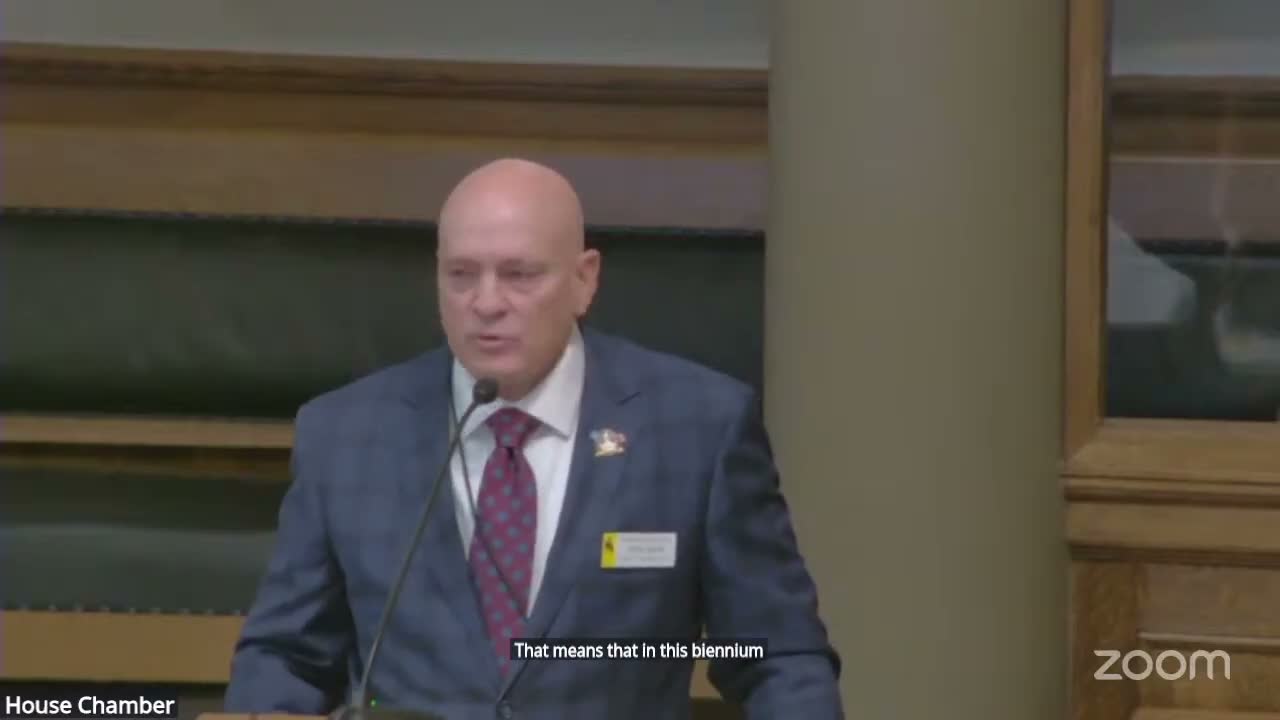
The Wyoming House of Representatives convened on Feb. 10 and moved to introduce a broad set of bills covering health, energy, taxation, public safety and consumer protections, with many measures receiving roll-call introductions and committee referrals.
Speaker (unnamed in the transcript) opened the session and the reading clerk presented numerous committee reports that recommended passage or passage with amendment for bills ranging from firefighters' retirement measures to property-tax and forest-health proposals. Members then heard floor presentations from bill sponsors before the clerk called roll for introductions and committee assignments.
Votes at a glance: the House recorded roll-call introductions and committee assignments on multiple bills, including: House Bill 22 (recall of municipal officers) — introduced, assigned to committee 9 (Minerals) (61 aye, 1 excused); House Bill 75 (virtual-currency kiosks) — introduced, assigned to committee 3 (Revenue) (59 aye, 2 no, 1 excused); House Bill 98 (red-flag penalty amendments) — introduced, assigned to committee 3 (Revenue) (55 aye, 6 no, 1 excused); House Bill 122 (Wyoming Rural Health Transformation Program) — introduced, assigned to committee 2 (Appropriations) (61 aye, 1 excused); House Bill 126 (Human Heartbeat Act) — introduced, assigned to committee 10 (Labor) (51 aye, 10 no, 1 excused); House Bill 117 (Stop Harm, informed-consent measure) — introduced, assigned to committee 10 (Labor) (53 aye, 8 no, 1 excused); House Bill 90 (state engineer water-use study) — introduced, assigned to committee 5 (Agriculture) (57 aye, 3 no, 2 excused). Several other bills were introduced and assigned to standing committees in the same manner.
The session mixed substantive debate and relatively brief sponsor explanations. Some measures generated sharp exchanges on policy and costs — for example, fiscal concerns about expanding veterans property-tax exemptions and constitutional and procedural objections on several social and regulatory bills — while other bills moved forward with little opposition.
What happens next: Introduced bills will be considered in committee hearings where members will review text and fiscal notes, hear testimony and adopt amendments before any hearing or vote on the chamber floor.
Provenance: This roundup is drawn from floor presentations and roll-call announcements across the day's proceedings, including sponsor remarks on multiple bills and the chief clerk's roll calls introducing and assigning bills to committees.
Speaker (unnamed in the transcript) opened the session and the reading clerk presented numerous committee reports that recommended passage or passage with amendment for bills ranging from firefighters' retirement measures to property-tax and forest-health proposals. Members then heard floor presentations from bill sponsors before the clerk called roll for introductions and committee assignments.
Votes at a glance: the House recorded roll-call introductions and committee assignments on multiple bills, including: House Bill 22 (recall of municipal officers) — introduced, assigned to committee 9 (Minerals) (61 aye, 1 excused); House Bill 75 (virtual-currency kiosks) — introduced, assigned to committee 3 (Revenue) (59 aye, 2 no, 1 excused); House Bill 98 (red-flag penalty amendments) — introduced, assigned to committee 3 (Revenue) (55 aye, 6 no, 1 excused); House Bill 122 (Wyoming Rural Health Transformation Program) — introduced, assigned to committee 2 (Appropriations) (61 aye, 1 excused); House Bill 126 (Human Heartbeat Act) — introduced, assigned to committee 10 (Labor) (51 aye, 10 no, 1 excused); House Bill 117 (Stop Harm, informed-consent measure) — introduced, assigned to committee 10 (Labor) (53 aye, 8 no, 1 excused); House Bill 90 (state engineer water-use study) — introduced, assigned to committee 5 (Agriculture) (57 aye, 3 no, 2 excused). Several other bills were introduced and assigned to standing committees in the same manner.
The session mixed substantive debate and relatively brief sponsor explanations. Some measures generated sharp exchanges on policy and costs — for example, fiscal concerns about expanding veterans property-tax exemptions and constitutional and procedural objections on several social and regulatory bills — while other bills moved forward with little opposition.
What happens next: Introduced bills will be considered in committee hearings where members will review text and fiscal notes, hear testimony and adopt amendments before any hearing or vote on the chamber floor.
Provenance: This roundup is drawn from floor presentations and roll-call announcements across the day's proceedings, including sponsor remarks on multiple bills and the chief clerk's roll calls introducing and assigning bills to committees.
Don't Miss a Word: See the Full Meeting!
Go beyond summaries. Unlock every video, transcript, and key insight with a Founder Membership.
✓
Get instant access to full meeting videos
✓
Search and clip any phrase from complete transcripts
✓
Receive AI-powered summaries & custom alerts
✓
Enjoy lifetime, unrestricted access to government data
30-day money-back guarantee
