Committee advances bill to let postsecondary institutions opt into Guardian program despite student opposition
February 10, 2026 | 2026 Legislature FL, Florida
This article was created by AI summarizing key points discussed. AI makes mistakes, so for full details and context, please refer to the video of the full meeting. Please report any errors so we can fix them. Report an error »
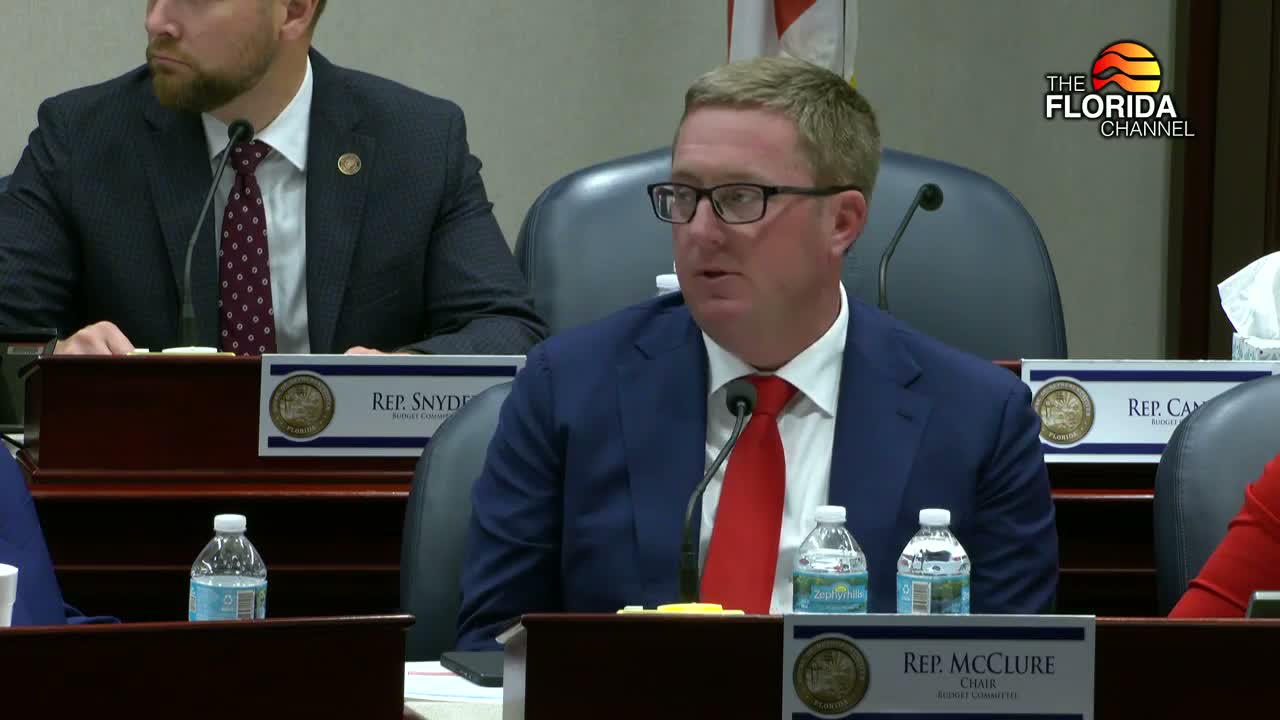
Representative Salzman, sponsor of PCS for CSHB 757, opened by recounting last April’s active‑shooter response at Florida State University and described the bill as an attempt to translate successful K‑12 safety measures to higher education. Salzman said the measure increases the presence of trained responders, requires threat assessment teams, mandates campus‑wide alert systems and reunification plans, provides grant funding for hardening and training (with institutional caps), and creates a 1,000‑foot buffer for firearms‑related penalties near campus boundaries.
Members adopted several friendly amendments that explicitly bar students from serving as guardians, expand who may provide certified guardian training to FDLE‑approved municipal or state agencies, and remove an initial limitation on which entities may train. Vice Chair Valdez explained the amendments as measures to ensure statewide access to training where sheriff’s offices are "overwhelmed." The amendments were adopted by voice votes.
Public testimony included several students and campus groups in opposition. Elise Christophe (Students Demand Action) said, "I will not feel safe in class if this is a reality," and urged members to invest in mental health and security upgrades instead of introducing firearms into classrooms. Shrini Vivekanasamy, a Florida State University student, testified that arming faculty and staff is not a proven or appropriate solution for complex campus environments and warned it would complicate law enforcement response during active emergencies.
Supporters and some members praised the bill’s prevention and hardening components. The sponsor repeatedly emphasized the bill is opt‑in, requires background checks and extensive training (sponsor referenced "almost 200 hours of rigorous training"), and includes registration with FDLE and local sheriffs so law enforcement will be able to identify participating guardians during incidents.
After debate and amendments, the committee took a roll call and reported CS for House Bill 757 favorably.
Members adopted several friendly amendments that explicitly bar students from serving as guardians, expand who may provide certified guardian training to FDLE‑approved municipal or state agencies, and remove an initial limitation on which entities may train. Vice Chair Valdez explained the amendments as measures to ensure statewide access to training where sheriff’s offices are "overwhelmed." The amendments were adopted by voice votes.
Public testimony included several students and campus groups in opposition. Elise Christophe (Students Demand Action) said, "I will not feel safe in class if this is a reality," and urged members to invest in mental health and security upgrades instead of introducing firearms into classrooms. Shrini Vivekanasamy, a Florida State University student, testified that arming faculty and staff is not a proven or appropriate solution for complex campus environments and warned it would complicate law enforcement response during active emergencies.
Supporters and some members praised the bill’s prevention and hardening components. The sponsor repeatedly emphasized the bill is opt‑in, requires background checks and extensive training (sponsor referenced "almost 200 hours of rigorous training"), and includes registration with FDLE and local sheriffs so law enforcement will be able to identify participating guardians during incidents.
After debate and amendments, the committee took a roll call and reported CS for House Bill 757 favorably.
Don't Miss a Word: See the Full Meeting!
Go beyond summaries. Unlock every video, transcript, and key insight with a Founder Membership.
✓
Get instant access to full meeting videos
✓
Search and clip any phrase from complete transcripts
✓
Receive AI-powered summaries & custom alerts
✓
Enjoy lifetime, unrestricted access to government data
30-day money-back guarantee
