Residents, survivors press Cleveland council on unsafe housing and displacement
February 10, 2026 | Cleveland, Cuyahoga County, Ohio
This article was created by AI summarizing key points discussed. AI makes mistakes, so for full details and context, please refer to the video of the full meeting. Please report any errors so we can fix them. Report an error »
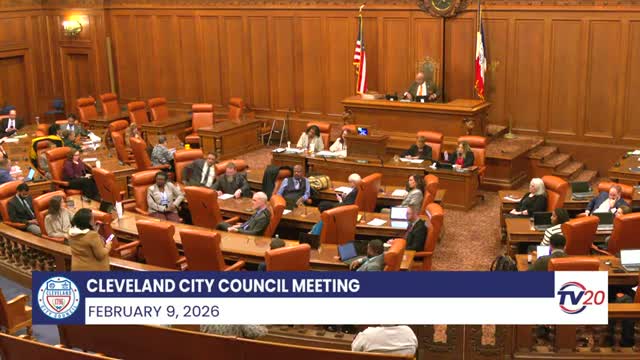
Residents and survivors of recent housing disasters pressed Cleveland City Council on what they described as a widening housing and public‑safety crisis, urging faster enforcement, accountability and safe placements for displaced families.
Bridget Smith Jackson, an East Cleveland resident, told the council the region’s housing crisis is “about humanity” and described families displaced by an explosion at an 85th Street apartment building and children living without heat, safe electricity and stable housing. “We must continue to say his name, Mr. Cordell Sheffield,” she said, referencing a life lost in a recent housing incident and urging urgent action from the council.
Yajane Moses, who identified herself as a survivor of a blast that destroyed a rental unit, said post‑displacement placements she and other victims received were unsafe and uninspected. “My child has now been found to have elevated lead levels,” Moses said, adding that she and other families have suffered rodent infestations and ongoing health and mental‑health consequences after the explosion.
Sonny Willis, who said she lives in Ward 9, described living without heat since September 2025 and without running water or reliable power for weeks. She said she had been forced to live in hotels, lost her job and had to create a GoFundMe to survive. “No heat, no water, no power since September,” Willis said.
Council members responded by acknowledging the scope of the problem and outlining next steps without recording a formal vote. Council President said he would engage the mayor and administration to seek accountability and requested housing advocates remain after the meeting for follow‑up. One council member identified tax delinquency on many properties as a complicating factor and urged coordination with county tax officials and housing court.
Councilman Christopher Harsh presented land‑bank figures, saying the city land bank lists 16,179 residential parcels, and argued the city needs new construction strategies to repopulate struggling neighborhoods. Harsh described modular construction pilots as a potential tool to reduce costs and speed housing production: “Modular brings down the price of construction,” he said.
Council members and speakers repeatedly called for a multifaceted approach including stronger code enforcement, prosecutions where appropriate, coordination with HUD and state agencies, and better communication to residents about available emergency help. A council member also expressed concern about the possible loss of $203,000,000 in lead‑related funding and urged audits and follow up with state and federal partners.
The council did not adopt a new ordinance on the floor at the meeting related to these public comments, but the president asked housing advocates to remain for further discussion and staff follow‑up.
What’s next: Council members said they will continue working with the mayor’s office, HUD representatives and local departments on enforcement, inspections and pilot programs; specific deadlines and funding sources were not specified during the meeting.
Bridget Smith Jackson, an East Cleveland resident, told the council the region’s housing crisis is “about humanity” and described families displaced by an explosion at an 85th Street apartment building and children living without heat, safe electricity and stable housing. “We must continue to say his name, Mr. Cordell Sheffield,” she said, referencing a life lost in a recent housing incident and urging urgent action from the council.
Yajane Moses, who identified herself as a survivor of a blast that destroyed a rental unit, said post‑displacement placements she and other victims received were unsafe and uninspected. “My child has now been found to have elevated lead levels,” Moses said, adding that she and other families have suffered rodent infestations and ongoing health and mental‑health consequences after the explosion.
Sonny Willis, who said she lives in Ward 9, described living without heat since September 2025 and without running water or reliable power for weeks. She said she had been forced to live in hotels, lost her job and had to create a GoFundMe to survive. “No heat, no water, no power since September,” Willis said.
Council members responded by acknowledging the scope of the problem and outlining next steps without recording a formal vote. Council President said he would engage the mayor and administration to seek accountability and requested housing advocates remain after the meeting for follow‑up. One council member identified tax delinquency on many properties as a complicating factor and urged coordination with county tax officials and housing court.
Councilman Christopher Harsh presented land‑bank figures, saying the city land bank lists 16,179 residential parcels, and argued the city needs new construction strategies to repopulate struggling neighborhoods. Harsh described modular construction pilots as a potential tool to reduce costs and speed housing production: “Modular brings down the price of construction,” he said.
Council members and speakers repeatedly called for a multifaceted approach including stronger code enforcement, prosecutions where appropriate, coordination with HUD and state agencies, and better communication to residents about available emergency help. A council member also expressed concern about the possible loss of $203,000,000 in lead‑related funding and urged audits and follow up with state and federal partners.
The council did not adopt a new ordinance on the floor at the meeting related to these public comments, but the president asked housing advocates to remain for further discussion and staff follow‑up.
What’s next: Council members said they will continue working with the mayor’s office, HUD representatives and local departments on enforcement, inspections and pilot programs; specific deadlines and funding sources were not specified during the meeting.
View the Full Meeting & All Its Details
This article offers just a summary. Unlock complete video, transcripts, and insights as a Founder Member.
✓
Watch full, unedited meeting videos
✓
Search every word spoken in unlimited transcripts
✓
AI summaries & real-time alerts (all government levels)
✓
Permanent access to expanding government content
30-day money-back guarantee
