Juneau residents urge Assembly to halt demolition plans, propose alternatives for Telephone Hill
February 10, 2026 | Juneau City and Borough, Alaska
This article was created by AI summarizing key points discussed. AI makes mistakes, so for full details and context, please refer to the video of the full meeting. Please report any errors so we can fix them. Report an error »
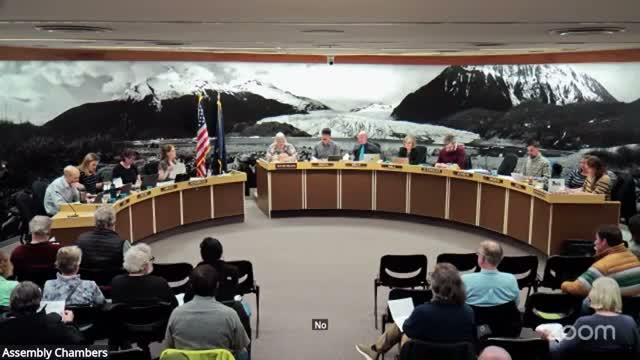
Dozens of residents pressed the Juneau City and Borough Assembly on Feb. 9 over the Telephone Hill redevelopment, urging officials to reconsider tearing down existing housing and to pursue alternatives that preserve homes while adding new units.
Residents outlined a range of concerns and alternatives during the public-comment period. Joshua Adams, an incremental developer, said the Historic Resources Advisory Committee’s technical recommendations are regularly ignored and asked the Assembly to “use it” — meaning to consider and explain on the record why the committee’s recommendations are accepted or rejected. “When you ask for its input, there should be a corresponding obligation to actually engage with what it provides,” Adams said (public comment).
Several speakers highlighted the project’s cost assumptions and the limited public understanding of prior ballot language. Mary Alice McKean told the Assembly that a city assumption that demolition would yield 155 new units (with 20% affordable) is “wrong” and argued the city could save $5,500,000 by not demolishing the 13 existing units. Larry Talley proposed a specific alternative to demolition: using two CBJ-owned vacant lots near Telephone Hill (about 25,000 sq ft combined) to build roughly 24–43 one-bedroom units with a $9,000,000 CBJ subsidy instead of spending on demolition and infrastructure relocation (public comment).
Other residents cited project costs and transparency. Susan Clark said consultant work and contract amendments for Telephone Hill planning have been expensive and repeatedly extended, noting in public testimony that consultant fees through successive contract amendments include an $884,000 additional amendment and that the initial work began in July 2023. Shannon Green argued that voters who approved a 1% sales-tax proposition in 2022 (Prop. 3) intended the $2,000,000 allocation to fund “the beginning stages of Telephone Hill redevelopment” and public process, not unlimited tens of millions in demolition and new construction (public comment).
Supporters of alternatives said preserving existing houses would conserve housing supply and historic value. Page Bridal, restoring a historic downtown house, urged the Assembly to let residents buy back or rent-to-own the homes and called the structures “very strong” and worth saving. Larry Talley and Mary Alice McKean both urged using CBJ-owned vacant land for targeted infill rather than wholesale demolition.
The Assembly heard a range of requests — from more transparent accounting of consultant fees to a public vote before committing tens of millions more — but took no immediate formal action on Telephone Hill during the meeting. Multiple speakers said they plan to continue engagement with staff and Assembly members as the project proceeds.
The Assembly’s packet and public testimony contain the budget figures, consultant amendment details and proposed alternatives discussed tonight; staff have flagged the Telephone Hill planning process and contract amendments in committee materials.
Residents outlined a range of concerns and alternatives during the public-comment period. Joshua Adams, an incremental developer, said the Historic Resources Advisory Committee’s technical recommendations are regularly ignored and asked the Assembly to “use it” — meaning to consider and explain on the record why the committee’s recommendations are accepted or rejected. “When you ask for its input, there should be a corresponding obligation to actually engage with what it provides,” Adams said (public comment).
Several speakers highlighted the project’s cost assumptions and the limited public understanding of prior ballot language. Mary Alice McKean told the Assembly that a city assumption that demolition would yield 155 new units (with 20% affordable) is “wrong” and argued the city could save $5,500,000 by not demolishing the 13 existing units. Larry Talley proposed a specific alternative to demolition: using two CBJ-owned vacant lots near Telephone Hill (about 25,000 sq ft combined) to build roughly 24–43 one-bedroom units with a $9,000,000 CBJ subsidy instead of spending on demolition and infrastructure relocation (public comment).
Other residents cited project costs and transparency. Susan Clark said consultant work and contract amendments for Telephone Hill planning have been expensive and repeatedly extended, noting in public testimony that consultant fees through successive contract amendments include an $884,000 additional amendment and that the initial work began in July 2023. Shannon Green argued that voters who approved a 1% sales-tax proposition in 2022 (Prop. 3) intended the $2,000,000 allocation to fund “the beginning stages of Telephone Hill redevelopment” and public process, not unlimited tens of millions in demolition and new construction (public comment).
Supporters of alternatives said preserving existing houses would conserve housing supply and historic value. Page Bridal, restoring a historic downtown house, urged the Assembly to let residents buy back or rent-to-own the homes and called the structures “very strong” and worth saving. Larry Talley and Mary Alice McKean both urged using CBJ-owned vacant land for targeted infill rather than wholesale demolition.
The Assembly heard a range of requests — from more transparent accounting of consultant fees to a public vote before committing tens of millions more — but took no immediate formal action on Telephone Hill during the meeting. Multiple speakers said they plan to continue engagement with staff and Assembly members as the project proceeds.
The Assembly’s packet and public testimony contain the budget figures, consultant amendment details and proposed alternatives discussed tonight; staff have flagged the Telephone Hill planning process and contract amendments in committee materials.
View the Full Meeting & All Its Details
This article offers just a summary. Unlock complete video, transcripts, and insights as a Founder Member.
✓
Watch full, unedited meeting videos
✓
Search every word spoken in unlimited transcripts
✓
AI summaries & real-time alerts (all government levels)
✓
Permanent access to expanding government content
30-day money-back guarantee
