MiniBond pitches app to let residents micro‑invest in Douglas County projects
February 09, 2026 | Douglas County, Nebraska
This article was created by AI summarizing key points discussed. AI makes mistakes, so for full details and context, please refer to the video of the full meeting. Please report any errors so we can fix them. Report an error »
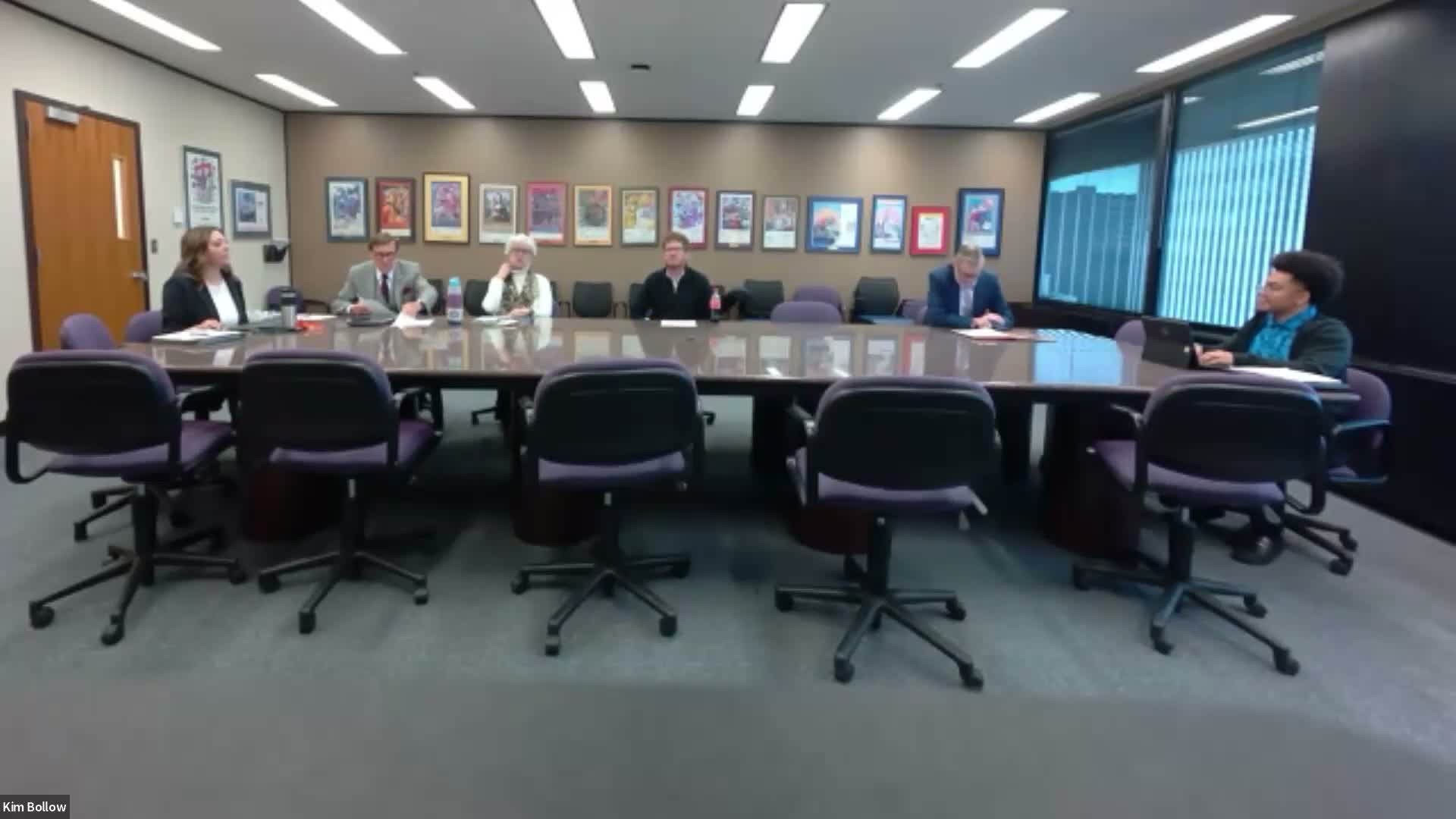
Arthur Scott, co‑founder of MiniBond, demonstrated a platform for "micro" municipal investing during a Douglas County board meeting, saying it allows residents to back local capital projects through small, pooled investments.
Scott told the board that two barriers keep ordinary residents from buying municipal bonds: the capital minimums (many offerings sell in $5,000 increments) and the difficulty of extracting a compelling project narrative from long official statements. "MiniBond is a platform that empowers local governments to peel back all of this stuff ... to get to the core of the story behind the capital," he said.
He walked the board through searching the Electronic Municipal Market Access (EMMA) portal for Douglas County issuers, showing an example Elkhorn Public Schools $40,000,000 general obligation bond and noting that project details are typically buried across many pages of municipal disclosure. Scott said MiniBond lets local governments publish short project pages — with images, links and descriptions — and assigns each posting an FBO (for‑benefit‑of) ledger so dollars from micro investors are tracked to the named project.
The platform, Scott said, relies on bank partners (he named 5 Star Bank) to hold funds in FDIC‑insured money‑market accounts while micro investors complete KYC/AML checks via Plaid and keep funds liquid until a project reaches its raise goal. "If you reach your raise goal, 100% of the capital that you raised for that project is then transferred in one transfer from the FBO account to your local government's bank account," he said.
Scott cited prior examples to illustrate demand and administrative tradeoffs. He said the City and County of Denver sold about $12 million in small‑denomination sales that were restricted to residents and "sold out in three hours," which also produced complaints from residents who could not access purchase points. He described MiniBond's goal as automating the administrative burdens that make those efforts difficult to scale.
Commissioners and staff raised implementation and regulatory questions. Commissioner Mike Friend asked whether MiniBond would duplicate services in the county's ERP and cloud migration; Scott replied that the company has not yet worked with local governments post‑launch and that its technology is intended to interoperate with existing financial tools rather than supplant them.
Board members also asked about securities and tax consequences. Scott said the platform includes a 16‑question screening step after a successful raise to help determine whether an offering qualifies for tax‑exempt status and that MiniBond "can automate about 80%" of the IRS paperwork commonly needed to file for tax‑exempt treatment (the platform prepares most of the information for an issuer to review and submit). He confirmed MiniBond had no secondary market at launch but plans to explore resale functionality later.
County bond counsel and finance staff raised suitability concerns for lower‑income investors, noting that tax‑exempt yields favor higher‑bracket taxpayers and regulators will scrutinize sales to less‑sophisticated buyers. Scott said the issuer — not MiniBond — decides whether to pursue a tax‑exempt or taxable structure and that the platform is neutral on that question while offering administrative support.
Commissioner Mary Anne Borgeson thanked Scott for presenting in person, said the board would keep MiniBond under consideration for future projects and noted the company planned further outreach at the National Association of Counties conference; the meeting closed with no vote or formal action on the platform.
Scott told the board that two barriers keep ordinary residents from buying municipal bonds: the capital minimums (many offerings sell in $5,000 increments) and the difficulty of extracting a compelling project narrative from long official statements. "MiniBond is a platform that empowers local governments to peel back all of this stuff ... to get to the core of the story behind the capital," he said.
He walked the board through searching the Electronic Municipal Market Access (EMMA) portal for Douglas County issuers, showing an example Elkhorn Public Schools $40,000,000 general obligation bond and noting that project details are typically buried across many pages of municipal disclosure. Scott said MiniBond lets local governments publish short project pages — with images, links and descriptions — and assigns each posting an FBO (for‑benefit‑of) ledger so dollars from micro investors are tracked to the named project.
The platform, Scott said, relies on bank partners (he named 5 Star Bank) to hold funds in FDIC‑insured money‑market accounts while micro investors complete KYC/AML checks via Plaid and keep funds liquid until a project reaches its raise goal. "If you reach your raise goal, 100% of the capital that you raised for that project is then transferred in one transfer from the FBO account to your local government's bank account," he said.
Scott cited prior examples to illustrate demand and administrative tradeoffs. He said the City and County of Denver sold about $12 million in small‑denomination sales that were restricted to residents and "sold out in three hours," which also produced complaints from residents who could not access purchase points. He described MiniBond's goal as automating the administrative burdens that make those efforts difficult to scale.
Commissioners and staff raised implementation and regulatory questions. Commissioner Mike Friend asked whether MiniBond would duplicate services in the county's ERP and cloud migration; Scott replied that the company has not yet worked with local governments post‑launch and that its technology is intended to interoperate with existing financial tools rather than supplant them.
Board members also asked about securities and tax consequences. Scott said the platform includes a 16‑question screening step after a successful raise to help determine whether an offering qualifies for tax‑exempt status and that MiniBond "can automate about 80%" of the IRS paperwork commonly needed to file for tax‑exempt treatment (the platform prepares most of the information for an issuer to review and submit). He confirmed MiniBond had no secondary market at launch but plans to explore resale functionality later.
County bond counsel and finance staff raised suitability concerns for lower‑income investors, noting that tax‑exempt yields favor higher‑bracket taxpayers and regulators will scrutinize sales to less‑sophisticated buyers. Scott said the issuer — not MiniBond — decides whether to pursue a tax‑exempt or taxable structure and that the platform is neutral on that question while offering administrative support.
Commissioner Mary Anne Borgeson thanked Scott for presenting in person, said the board would keep MiniBond under consideration for future projects and noted the company planned further outreach at the National Association of Counties conference; the meeting closed with no vote or formal action on the platform.
Don't Miss a Word: See the Full Meeting!
Go beyond summaries. Unlock every video, transcript, and key insight with a Founder Membership.
✓
Get instant access to full meeting videos
✓
Search and clip any phrase from complete transcripts
✓
Receive AI-powered summaries & custom alerts
✓
Enjoy lifetime, unrestricted access to government data
30-day money-back guarantee
