MMSD staff warn 2026–27 budget will be tighter as revenues lag inflation
February 10, 2026 | Madison Metropolitan School District, School Districts, Wisconsin
This article was created by AI summarizing key points discussed. AI makes mistakes, so for full details and context, please refer to the video of the full meeting. Please report any errors so we can fix them. Report an error »
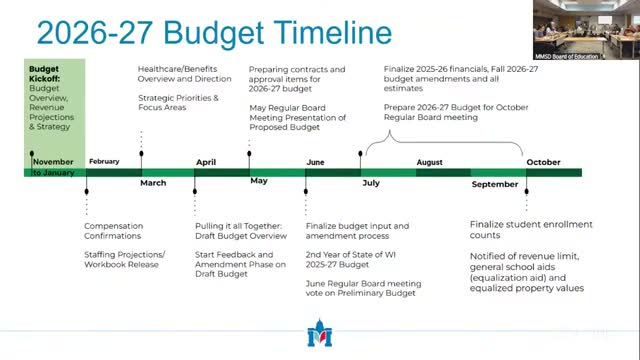
District finance leaders told the operations work group on Feb. 9 that the 2026–27 budget will present material challenges: projected revenue increases under current rules are small (CPI/WERC figures cited in the meeting) while salary and benefit costs continue to rise. Staff said they are using three‑year rolling averages and state count dates to model revenues and expect a slight enrollment decline affecting revenue‑limit calculations.
Finance staff described several pressure points: certified CPI percentages used for revenue limits (WERC certified CPI and district citations in the meeting), anticipated double‑digit increases in health insurance costs pending a Request for Proposal outcome, the cost of an approved district‑wide compensation study (presented as a range) and a parental‑leave expansion the district is still estimating. Staff said those items combined could widen a budget gap even as federal revenues are expected to remain level.
The presenters also explained how private school choice (voucher) payments and independent charter enrollments interact with state aid and levy calculations: staff said vouchers are funded differently than independent charter schools and that DPI reduces state aid by voucher amounts; the district will continue to present levy options that aim to preserve local operations. On special education, staff said current reimbursements fall short of total costs and that a higher state reimbursement percentage (if enacted) would materially reduce local general‑fund pressure.
Next steps: finance staff will update enrollment projections and present an imposed budget draft and revenue projections at the March operations meeting, and they recommended continued board attention to compensation and benefit decisions that will materially affect 2026–27 expenditures.
Finance staff described several pressure points: certified CPI percentages used for revenue limits (WERC certified CPI and district citations in the meeting), anticipated double‑digit increases in health insurance costs pending a Request for Proposal outcome, the cost of an approved district‑wide compensation study (presented as a range) and a parental‑leave expansion the district is still estimating. Staff said those items combined could widen a budget gap even as federal revenues are expected to remain level.
The presenters also explained how private school choice (voucher) payments and independent charter enrollments interact with state aid and levy calculations: staff said vouchers are funded differently than independent charter schools and that DPI reduces state aid by voucher amounts; the district will continue to present levy options that aim to preserve local operations. On special education, staff said current reimbursements fall short of total costs and that a higher state reimbursement percentage (if enacted) would materially reduce local general‑fund pressure.
Next steps: finance staff will update enrollment projections and present an imposed budget draft and revenue projections at the March operations meeting, and they recommended continued board attention to compensation and benefit decisions that will materially affect 2026–27 expenditures.
Don't Miss a Word: See the Full Meeting!
Go beyond summaries. Unlock every video, transcript, and key insight with a Founder Membership.
✓
Get instant access to full meeting videos
✓
Search and clip any phrase from complete transcripts
✓
Receive AI-powered summaries & custom alerts
✓
Enjoy lifetime, unrestricted access to government data
30-day money-back guarantee
