UN brief urges more funding and access as crises worsen in South Sudan, Gaza, Syria, Mozambique and Venezuela
February 10, 2026 | United Nations, International
This article was created by AI summarizing key points discussed. AI makes mistakes, so for full details and context, please refer to the video of the full meeting. Please report any errors so we can fix them. Report an error »
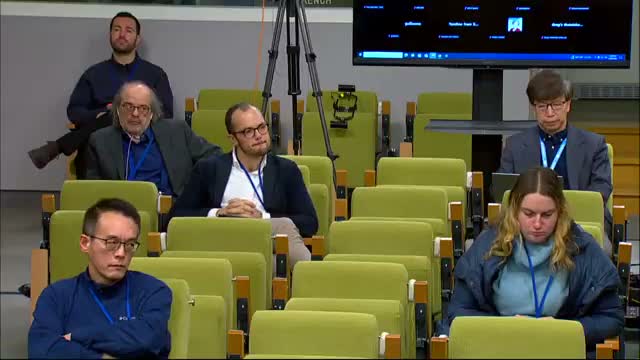
At a United Nations press briefing, the Spokesperson said the UN and its humanitarian partners are ready to scale up operations across multiple crises but need more funding and unrestricted access.
The Spokesperson highlighted South Sudan, saying renewed violence since last December has uprooted an estimated 280,000 people and that aid deliveries have been disrupted. He warned of rising cholera risk, giving figures the UN received from authorities: "already 55 cases and 7 deaths" in one week in Ayog, Ayod and Duke counties, and "more than 98,000 cholera cases, including more than 1,600 deaths across nine states" since September.
On northern Syria, the briefing said a UN assessment mission entered Ayn al‑Arab (Kobani) for the first time since clashes began in January and that UN colleagues had previously delivered "46 trucks of aid and one mobile clinic." The Spokesperson cautioned that goods and fuel continue to enter only through limited commercial routes and "basic services remain severely disrupted."
Discussing Gaza, the Spokesperson said the Office for the Coordination of Humanitarian Affairs (OCHA) reported airstrikes, shelling, naval fire and shootings in the prior 24 hours, including strikes in residential areas that endanger civilians. He noted that partner teams have reopened a health center providing primary and maternal care but that "thousands of patients remain without opportunities for treatment" and that scaling up rehabilitation requires permission to bring in machinery and materials.
The briefing also covered Mozambique, where the government prepared for an offshore storm and the Central Emergency Response Fund released $4,500,000 to UN agencies to assist more than 300,000 people in southern Mozambique. The Spokesperson said roughly 142,140 people have received some assistance following recent floods in central and southern parts of the country.
On Venezuela, the Spokesperson said last year’s humanitarian response plan was funded at 19% (US$115 million of US$606 million requested) but that partners reached more than 2,000,000 people—about 40% of the 5,000,000 target—through food, health, nutrition and protection programming.
The Spokesperson reiterated the UN's central asks: more sustained flexible funding from member states and removal of restrictions that block humanitarian operations and deliveries. "All of our humanitarian partners must be allowed to operate without obstruction and bring in critically needed supplies and equipment," he said.
The briefing noted that additional assessment missions are planned and that the UN will keep the public updated on needs and access issues.
The Spokesperson highlighted South Sudan, saying renewed violence since last December has uprooted an estimated 280,000 people and that aid deliveries have been disrupted. He warned of rising cholera risk, giving figures the UN received from authorities: "already 55 cases and 7 deaths" in one week in Ayog, Ayod and Duke counties, and "more than 98,000 cholera cases, including more than 1,600 deaths across nine states" since September.
On northern Syria, the briefing said a UN assessment mission entered Ayn al‑Arab (Kobani) for the first time since clashes began in January and that UN colleagues had previously delivered "46 trucks of aid and one mobile clinic." The Spokesperson cautioned that goods and fuel continue to enter only through limited commercial routes and "basic services remain severely disrupted."
Discussing Gaza, the Spokesperson said the Office for the Coordination of Humanitarian Affairs (OCHA) reported airstrikes, shelling, naval fire and shootings in the prior 24 hours, including strikes in residential areas that endanger civilians. He noted that partner teams have reopened a health center providing primary and maternal care but that "thousands of patients remain without opportunities for treatment" and that scaling up rehabilitation requires permission to bring in machinery and materials.
The briefing also covered Mozambique, where the government prepared for an offshore storm and the Central Emergency Response Fund released $4,500,000 to UN agencies to assist more than 300,000 people in southern Mozambique. The Spokesperson said roughly 142,140 people have received some assistance following recent floods in central and southern parts of the country.
On Venezuela, the Spokesperson said last year’s humanitarian response plan was funded at 19% (US$115 million of US$606 million requested) but that partners reached more than 2,000,000 people—about 40% of the 5,000,000 target—through food, health, nutrition and protection programming.
The Spokesperson reiterated the UN's central asks: more sustained flexible funding from member states and removal of restrictions that block humanitarian operations and deliveries. "All of our humanitarian partners must be allowed to operate without obstruction and bring in critically needed supplies and equipment," he said.
The briefing noted that additional assessment missions are planned and that the UN will keep the public updated on needs and access issues.
Don't Miss a Word: See the Full Meeting!
Go beyond summaries. Unlock every video, transcript, and key insight with a Founder Membership.
✓
Get instant access to full meeting videos
✓
Search and clip any phrase from complete transcripts
✓
Receive AI-powered summaries & custom alerts
✓
Enjoy lifetime, unrestricted access to government data
30-day money-back guarantee
