Connecticut licensing board denies multiple reciprocity applications, upholds 4‑year engineering‑degree baseline
February 10, 2026 | Consumer Protection Department, Departments and Agencies, Organizations, Executive, Connecticut
This article was created by AI summarizing key points discussed. AI makes mistakes, so for full details and context, please refer to the video of the full meeting. Please report any errors so we can fix them. Report an error »
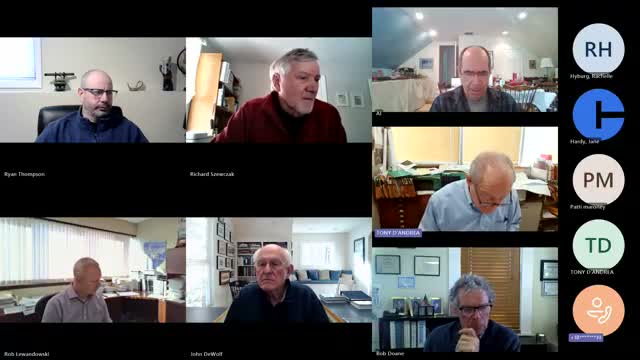
The board convened Feb. 10 and moved through dozens of licensure and reciprocity files, repeatedly applying a policy that requires a qualifying four‑year undergraduate engineering or engineering‑technology curriculum (or an equivalent as determined by NCEES/NCES evaluations). After deliberation, the board approved multiple clustered motions to grant exam credit and reciprocity for applicants whose records showed adequate accredited coursework and experience, and it denied multiple applications where the undergraduate record was judged deficient.
The meeting record shows several clustered approvals for class 1 exam credit and for class 4 reciprocity applicants after reviewers recommended them for approval (motions and seconds were made and carried by voice vote). Where NCEES evaluations or transcripts showed shortfalls in engineering design credits—examples cited included 41 of 48 required engineering hours or missing math/science courses—board members moved to deny reciprocity. The chair framed the standard as the board’s effort to remain “consistent with the model law” requiring education, examination and experience.
Board members repeatedly debated whether graduate coursework or long professional experience should cure undergraduate deficiencies. Board member John DeWolf (first introduced during roll call) argued the baseline must preserve breadth: “The starting point has to be consistent,” he said, emphasizing that an undergraduate engineering curriculum provides breadth engineers need. Other members, including Rob Lewandowski and at least one member who identified long professional work, urged the panel to consider demonstrated competence in particular cases but ultimately voted in line with the board’s stated policy.
Motions to deny particular applicants (motions and votes recorded during the meeting) were made where NCES/NCEES evaluations indicated the undergraduate degree was not equivalent to Connecticut’s required engineering curriculum. At least one applicant whose undergraduate was in environmental science with a later civil‑engineering master’s (discussed at length) was denied for lack of a qualifying undergraduate engineering degree; several foreign‑degree applicants were approved after NCEES evaluations indicated equivalency or sufficient engineering design credits.
The board also addressed procedural questions about how to report denials back to applicants when an NCEES evaluation appears to show equivalence but the board’s review disagrees (the board instructed staff to explain the board’s interpretation of design‑credit requirements and, where appropriate, point applicants to options for clarification). The meeting adjourned after members agreed to continue applying the current baseline while pursuing legislative/regulatory avenues for change.
The meeting record shows several clustered approvals for class 1 exam credit and for class 4 reciprocity applicants after reviewers recommended them for approval (motions and seconds were made and carried by voice vote). Where NCEES evaluations or transcripts showed shortfalls in engineering design credits—examples cited included 41 of 48 required engineering hours or missing math/science courses—board members moved to deny reciprocity. The chair framed the standard as the board’s effort to remain “consistent with the model law” requiring education, examination and experience.
Board members repeatedly debated whether graduate coursework or long professional experience should cure undergraduate deficiencies. Board member John DeWolf (first introduced during roll call) argued the baseline must preserve breadth: “The starting point has to be consistent,” he said, emphasizing that an undergraduate engineering curriculum provides breadth engineers need. Other members, including Rob Lewandowski and at least one member who identified long professional work, urged the panel to consider demonstrated competence in particular cases but ultimately voted in line with the board’s stated policy.
Motions to deny particular applicants (motions and votes recorded during the meeting) were made where NCES/NCEES evaluations indicated the undergraduate degree was not equivalent to Connecticut’s required engineering curriculum. At least one applicant whose undergraduate was in environmental science with a later civil‑engineering master’s (discussed at length) was denied for lack of a qualifying undergraduate engineering degree; several foreign‑degree applicants were approved after NCEES evaluations indicated equivalency or sufficient engineering design credits.
The board also addressed procedural questions about how to report denials back to applicants when an NCEES evaluation appears to show equivalence but the board’s review disagrees (the board instructed staff to explain the board’s interpretation of design‑credit requirements and, where appropriate, point applicants to options for clarification). The meeting adjourned after members agreed to continue applying the current baseline while pursuing legislative/regulatory avenues for change.
Don't Miss a Word: See the Full Meeting!
Go beyond summaries. Unlock every video, transcript, and key insight with a Founder Membership.
✓
Get instant access to full meeting videos
✓
Search and clip any phrase from complete transcripts
✓
Receive AI-powered summaries & custom alerts
✓
Enjoy lifetime, unrestricted access to government data
30-day money-back guarantee
