Commission denies Busch Light wall sign on Stockyards water tower, citing historic-character conflict
February 10, 2026 | Fort Worth, Tarrant County, Texas
This article was created by AI summarizing key points discussed. AI makes mistakes, so for full details and context, please refer to the video of the full meeting. Please report any errors so we can fix them. Report an error »
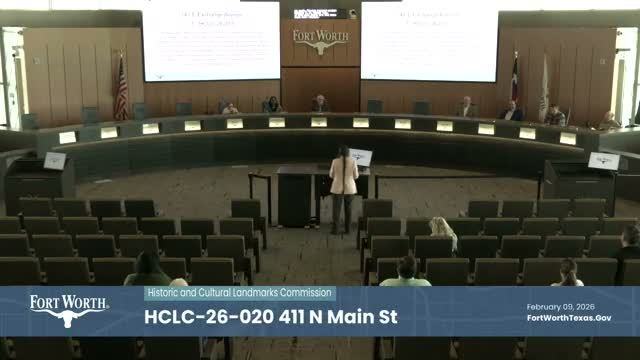
The Historic and Cultural Landmarks Commission unanimously denied with prejudice a request to install a Busch Light wall sign on a water tower in the Stockyards historic district.
Staff presented case HCLC26013 and recommended denial, saying the proposal exceeded the Stockyards Form Based Code size limit (36 square feet) and the maximum wall-sign height (24 feet). Staff said the proposed sign would total 105.9 square feet (proposed dimensions: 135 inches tall by 113 inches wide) and be placed about 37.25 feet above the sidewalk — exceeding the height limit by roughly 13.25 feet — creating a billboard-like effect that is incompatible with the corridor’s historic character.
Michael Gary of Giant Sign, representing the sign fabricator, told the commission he was representing the sign company hired by the client and said he and the applicant were “willing to work in terms of color and, you know, materials” to reduce visual impact. He also said the existing electronic sign in place had been nonworking for months.
Opposition speakers included Melissa Wade Hunter, a longtime Stockyards volunteer with the North Fort Worth Historical Society, who urged denial and said the proposal failed multiple elements of the form-based code and would not protect the district’s historic integrity. Jerry Tracy of Historic Fort Worth echoed that request and urged the commission to deny the application with prejudice.
Commissioners emphasized the commission’s role to uphold the adopted design guidelines for the historic core. Commissioner Brian Ketchum moved to deny with prejudice on the grounds identified in the staff report; Commissioner Stephanie Musi seconded. The motion passed unanimously, 7-0.
The staff report referenced Secretary of the Interior standards and preservation briefs when concluding that using the water tower for business branding is inappropriate for that view corridor. The applicant and property managers may pursue changes, but a denial with prejudice prevents this particular waiver from being reconsidered in the same form without substantial change.
Next steps: the denial closes this application as submitted; applicants were told they may consult with staff on alternative designs or locations that would better align with the district’s form-based code and design guidelines.
Staff presented case HCLC26013 and recommended denial, saying the proposal exceeded the Stockyards Form Based Code size limit (36 square feet) and the maximum wall-sign height (24 feet). Staff said the proposed sign would total 105.9 square feet (proposed dimensions: 135 inches tall by 113 inches wide) and be placed about 37.25 feet above the sidewalk — exceeding the height limit by roughly 13.25 feet — creating a billboard-like effect that is incompatible with the corridor’s historic character.
Michael Gary of Giant Sign, representing the sign fabricator, told the commission he was representing the sign company hired by the client and said he and the applicant were “willing to work in terms of color and, you know, materials” to reduce visual impact. He also said the existing electronic sign in place had been nonworking for months.
Opposition speakers included Melissa Wade Hunter, a longtime Stockyards volunteer with the North Fort Worth Historical Society, who urged denial and said the proposal failed multiple elements of the form-based code and would not protect the district’s historic integrity. Jerry Tracy of Historic Fort Worth echoed that request and urged the commission to deny the application with prejudice.
Commissioners emphasized the commission’s role to uphold the adopted design guidelines for the historic core. Commissioner Brian Ketchum moved to deny with prejudice on the grounds identified in the staff report; Commissioner Stephanie Musi seconded. The motion passed unanimously, 7-0.
The staff report referenced Secretary of the Interior standards and preservation briefs when concluding that using the water tower for business branding is inappropriate for that view corridor. The applicant and property managers may pursue changes, but a denial with prejudice prevents this particular waiver from being reconsidered in the same form without substantial change.
Next steps: the denial closes this application as submitted; applicants were told they may consult with staff on alternative designs or locations that would better align with the district’s form-based code and design guidelines.
View the Full Meeting & All Its Details
This article offers just a summary. Unlock complete video, transcripts, and insights as a Founder Member.
✓
Watch full, unedited meeting videos
✓
Search every word spoken in unlimited transcripts
✓
AI summaries & real-time alerts (all government levels)
✓
Permanent access to expanding government content
30-day money-back guarantee
