State bill ending local 287(g) agreements cleared legislature; Harford delegation voices concern
February 09, 2026 | Harford County, Maryland
This article was created by AI summarizing key points discussed. AI makes mistakes, so for full details and context, please refer to the video of the full meeting. Please report any errors so we can fix them. Report an error »
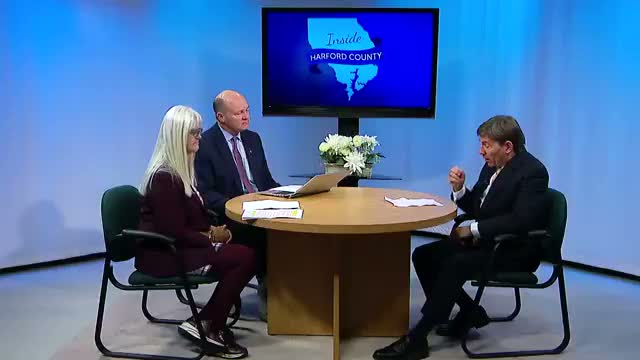
Delegate Teresa Riley, chair of the Harford County House Delegation, said the Maryland General Assembly has approved a measure that eliminates contracts between local law-enforcement agencies and federal immigration authorities commonly described in the transcript as "287(g)." Riley said amendments proposed by minority-party legislators to narrow the bill were rejected and that the measure passed both chambers before going to the governor for signature.
Why it matters: Local officials said the change will alter how county correctional and law-enforcement contracts with federal immigration authorities operate and could affect public-safety practices. "By eliminating the 287(g) contracts, you are removing a tool that helped detain individuals charged with continuing violent crimes," Riley said on Harford County TV. "We put up amendments to try to keep aspects of the program that we thought worked, but they were rejected."
Riley told the program the transcript recorded vote tallies of 32-to-12 in the Senate and 99-to-40 in the House of Delegates; she said the bill will take effect after the governor signs it. The county executive, Bob Casley, said local governments must now adjust to the change in state law and emphasized public-safety concerns raised during debate.
Details and local response: Riley described efforts by minority legislators to add exceptions for serious criminal charges and child-abuse allegations; she said those amendments were not adopted. Casley said the county will continue to press for public-safety resources at the state level as responsibilities shift. "This makes us less safe," Casley said on the program when discussing the elimination of the contracts; he described the county's preference to retain targeted tools for detaining persons charged with violent or sexual offenses.
What is not specified: The transcript contained some numeric testimony and hearing-count details that are unclear in places; counts cited on the program were reported by speakers and have not been independently verified for this article.
Next steps: According to the speakers, the change will become law if the governor signs the measure. Local officials said they will work to adapt county practices and request state support where needed.
Why it matters: Local officials said the change will alter how county correctional and law-enforcement contracts with federal immigration authorities operate and could affect public-safety practices. "By eliminating the 287(g) contracts, you are removing a tool that helped detain individuals charged with continuing violent crimes," Riley said on Harford County TV. "We put up amendments to try to keep aspects of the program that we thought worked, but they were rejected."
Riley told the program the transcript recorded vote tallies of 32-to-12 in the Senate and 99-to-40 in the House of Delegates; she said the bill will take effect after the governor signs it. The county executive, Bob Casley, said local governments must now adjust to the change in state law and emphasized public-safety concerns raised during debate.
Details and local response: Riley described efforts by minority legislators to add exceptions for serious criminal charges and child-abuse allegations; she said those amendments were not adopted. Casley said the county will continue to press for public-safety resources at the state level as responsibilities shift. "This makes us less safe," Casley said on the program when discussing the elimination of the contracts; he described the county's preference to retain targeted tools for detaining persons charged with violent or sexual offenses.
What is not specified: The transcript contained some numeric testimony and hearing-count details that are unclear in places; counts cited on the program were reported by speakers and have not been independently verified for this article.
Next steps: According to the speakers, the change will become law if the governor signs the measure. Local officials said they will work to adapt county practices and request state support where needed.
View the Full Meeting & All Its Details
This article offers just a summary. Unlock complete video, transcripts, and insights as a Founder Member.
✓
Watch full, unedited meeting videos
✓
Search every word spoken in unlimited transcripts
✓
AI summaries & real-time alerts (all government levels)
✓
Permanent access to expanding government content
30-day money-back guarantee
