UNC expert tells Forsyth County commissioners what counties can — and cannot — do about affordable housing
February 10, 2026 | Forsyth County, North Carolina
This article was created by AI summarizing key points discussed. AI makes mistakes, so for full details and context, please refer to the video of the full meeting. Please report any errors so we can fix them. Report an error »
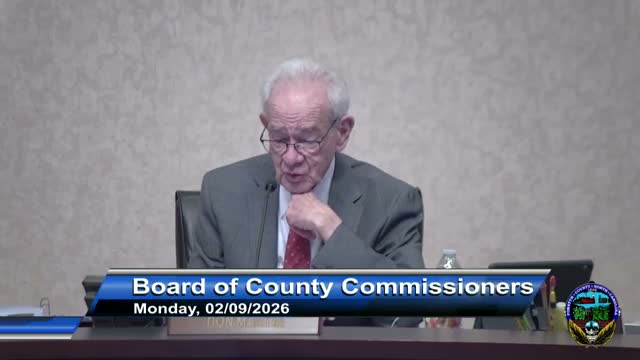
Tyler Mulligan, faculty lead of the Development Finance Initiative at the UNC School of Government, told Forsyth County commissioners on Feb. 9 that counties face a financing gap when building affordable housing and have limited legal authority to provide direct subsidy without a referendum or non-local funds.
Mulligan opened by defining two categories of affordability: income-restricted housing, which depends on contracts that set income eligibility and transfer controls, and naturally occurring affordable housing, which remains affordable for market reasons but is not legally restricted. He stressed the federal definition that a household paying more than 30% of income for housing is considered cost‑burdened and used Forsyth County data to illustrate the point: 100% area median income (AMI) shown on his slides was $67,165, with 60% AMI roughly $40,000 — the common eligibility threshold for many federal programs.
Why it matters: Mulligan said private financing drives most housing development, and lower affordable rents weaken the capital stack. In a 60‑unit example he presented, market‑rate rents supported much larger bank loans and investor equity than rents set at affordable levels. That financing shortfall, he said, is why the low income housing tax credit (LIHTC) and other federal subsidies are central to producing rental affordability.
County powers and limits: Mulligan summarized decades of state law and court decisions, explaining that housing authorities historically were created as separate bodies with broad powers (land acquisition, grants, loans, construction). Counties, by contrast, have been given more limited authority. He said counties generally may only provide subsidies that resemble housing‑authority financial assistance (grants, loans, interest supplements) if the money is non‑state/non‑local (for example federal funds or private donations) or if the county first holds a public referendum. He noted a population threshold: certain county rehab programs tied to state-administered resources may require a referendum until a county reaches a 400,000 census population; Mulligan observed Forsyth was reported around 390,000.
Practical options Mulligan outlined that do not require a referendum include intensified code enforcement to preserve naturally affordable stock, strategic bidding in tax‑foreclosure auctions and resale at fair market value with deed restrictions that reserve property for low/moderate‑income households, conditional zoning that negotiates affordable commitments when a developer requests special terms, and provision of public infrastructure (water/sewer) to enable affordable development.
On building new ownership housing, Mulligan said demand‑side interventions (credit repair, down‑payment assistance) can help households access existing homes, but subsidies that promote homeownership typically do not preserve affordability for subsequent buyers unless legal restrictions are imposed.
Q&A highlights: Commissioners probed whether an expenditure referendum must specify an amount (Mulligan said most referendums include an amount but he would confirm legal detail), whether matching funds for federal rehab grants could be local revenues (he said matching funds rules are constrained and could trigger referendum rules), and whether the county could actively bid on tax‑foreclosed properties for housing reuse (he described the auction process and cautioned about taking on vacant properties without a plan).
On rent control, Mulligan reminded the board that rent control is prohibited under state law; local governments may impose income or rent restrictions only when a contract with the housing owner authorizes it as part of a subsidy.
What happens next: County staff thanked Mulligan and said they will follow up with a briefing to translate these options into staff recommendations and to seek direction from the board.
Sources and attributions: Direct quotes and program specifics in this article are drawn from Tyler Mulligan’s Feb. 9 presentation to the Forsyth County Board of Commissioners. "If a household is spending more than 30% of their income on housing, they are cost burdened," Mulligan said during the presentation. "Rent control is prohibited in North Carolina," he added when asked about alternative regulatory approaches.
Mulligan opened by defining two categories of affordability: income-restricted housing, which depends on contracts that set income eligibility and transfer controls, and naturally occurring affordable housing, which remains affordable for market reasons but is not legally restricted. He stressed the federal definition that a household paying more than 30% of income for housing is considered cost‑burdened and used Forsyth County data to illustrate the point: 100% area median income (AMI) shown on his slides was $67,165, with 60% AMI roughly $40,000 — the common eligibility threshold for many federal programs.
Why it matters: Mulligan said private financing drives most housing development, and lower affordable rents weaken the capital stack. In a 60‑unit example he presented, market‑rate rents supported much larger bank loans and investor equity than rents set at affordable levels. That financing shortfall, he said, is why the low income housing tax credit (LIHTC) and other federal subsidies are central to producing rental affordability.
County powers and limits: Mulligan summarized decades of state law and court decisions, explaining that housing authorities historically were created as separate bodies with broad powers (land acquisition, grants, loans, construction). Counties, by contrast, have been given more limited authority. He said counties generally may only provide subsidies that resemble housing‑authority financial assistance (grants, loans, interest supplements) if the money is non‑state/non‑local (for example federal funds or private donations) or if the county first holds a public referendum. He noted a population threshold: certain county rehab programs tied to state-administered resources may require a referendum until a county reaches a 400,000 census population; Mulligan observed Forsyth was reported around 390,000.
Practical options Mulligan outlined that do not require a referendum include intensified code enforcement to preserve naturally affordable stock, strategic bidding in tax‑foreclosure auctions and resale at fair market value with deed restrictions that reserve property for low/moderate‑income households, conditional zoning that negotiates affordable commitments when a developer requests special terms, and provision of public infrastructure (water/sewer) to enable affordable development.
On building new ownership housing, Mulligan said demand‑side interventions (credit repair, down‑payment assistance) can help households access existing homes, but subsidies that promote homeownership typically do not preserve affordability for subsequent buyers unless legal restrictions are imposed.
Q&A highlights: Commissioners probed whether an expenditure referendum must specify an amount (Mulligan said most referendums include an amount but he would confirm legal detail), whether matching funds for federal rehab grants could be local revenues (he said matching funds rules are constrained and could trigger referendum rules), and whether the county could actively bid on tax‑foreclosed properties for housing reuse (he described the auction process and cautioned about taking on vacant properties without a plan).
On rent control, Mulligan reminded the board that rent control is prohibited under state law; local governments may impose income or rent restrictions only when a contract with the housing owner authorizes it as part of a subsidy.
What happens next: County staff thanked Mulligan and said they will follow up with a briefing to translate these options into staff recommendations and to seek direction from the board.
Sources and attributions: Direct quotes and program specifics in this article are drawn from Tyler Mulligan’s Feb. 9 presentation to the Forsyth County Board of Commissioners. "If a household is spending more than 30% of their income on housing, they are cost burdened," Mulligan said during the presentation. "Rent control is prohibited in North Carolina," he added when asked about alternative regulatory approaches.
View the Full Meeting & All Its Details
This article offers just a summary. Unlock complete video, transcripts, and insights as a Founder Member.
✓
Watch full, unedited meeting videos
✓
Search every word spoken in unlimited transcripts
✓
AI summaries & real-time alerts (all government levels)
✓
Permanent access to expanding government content
30-day money-back guarantee
