Committee advances bill to expand manslaughter language to include online 'directed communications' targeting minors
February 09, 2026 | 2026 Legislature Arizona, Arizona
This article was created by AI summarizing key points discussed. AI makes mistakes, so for full details and context, please refer to the video of the full meeting. Please report any errors so we can fix them. Report an error »
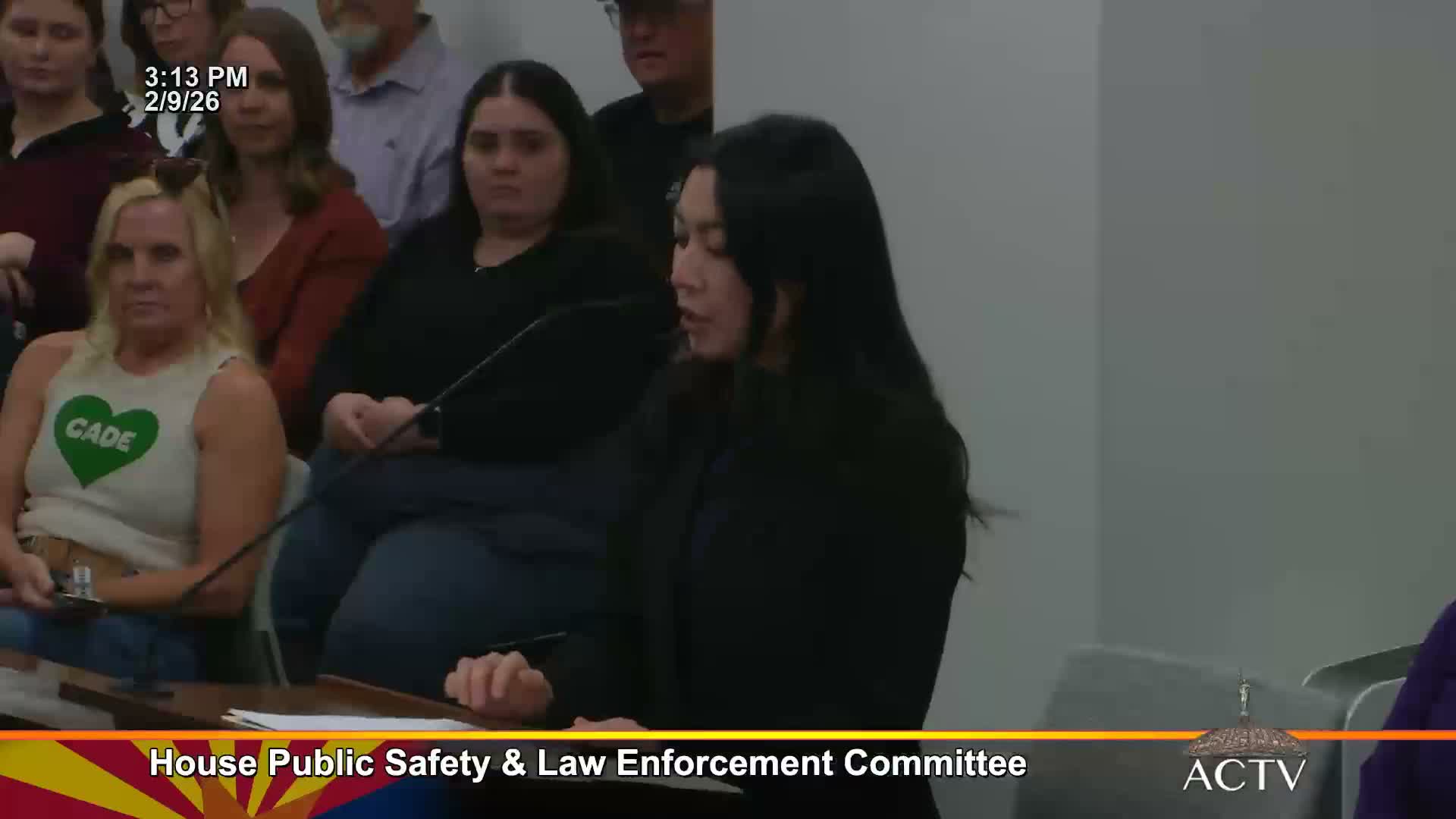
Vice Chair Representative Carter sponsored House Bill 2665, named in honor of Cade Keller, to broaden Arizona manslaughter language so adults who intentionally use directed communications to encourage a minor to die by suicide can be charged. Carter said the bill modernizes existing law to explicitly include online platforms, chat rooms and text messages and is intended to target adults who exploit minors online.
Family testimony framed the bill’s intent. Megan Keller, Cade’s mother, told the committee her 16‑year‑old son posted videos stating his intent and sent them to a group chat that included both minors and adults; she said some recipients recorded the videos and none intervened. Keller described forming a foundation and scholarship program in Cade’s name and asked the committee to support HB2665.
Suicide‑prevention practitioners urged careful drafting to avoid chilling life‑saving peer support. Morgan Hines, director of crisis services at Teen Lifeline, told the committee suicide is complex and that trained peer‑to‑peer intervention can save lives; she noted Teen Lifeline trains volunteers ages 15–19 alongside adults and said the bill’s language should not prevent qualified, supportive conversations.
Longtime advocate Leanne Hall recounted earlier legislative work and pushed for precise statutory language, citing spikes in youth suicide in the East Valley and arguing words matter when protecting children.
Committee members pressed the sponsor on scope and age thresholds. Several members asked whether the bill could criminalize peer‑to‑peer support or charge minors; sponsor and staff repeatedly stated the bill targets adults (18+) who intentionally provide encouragement or advice to a minor and that the text excludes general public commentary, artistic expression, and indirect discussion that is not specifically directed at the minor who later dies by suicide.
A verbal amendment was offered and adopted to insert language clarifying inclusion “in the form of a directed communication,” which proponents said explicitly captures social media and transient messaging forms. After discussion and several members explaining cautious or present votes pending written amendment language, the committee returned HB2665 with a due‑pass recommendation. The chair reported a committee tally of 10 ayes, 4 present, and 1 absent.
The committee record shows members reserved the right to amend further on the floor; several asked for written amendment language to ensure peer support and bona fide mental‑health conversations are not inadvertently criminalized.
Family testimony framed the bill’s intent. Megan Keller, Cade’s mother, told the committee her 16‑year‑old son posted videos stating his intent and sent them to a group chat that included both minors and adults; she said some recipients recorded the videos and none intervened. Keller described forming a foundation and scholarship program in Cade’s name and asked the committee to support HB2665.
Suicide‑prevention practitioners urged careful drafting to avoid chilling life‑saving peer support. Morgan Hines, director of crisis services at Teen Lifeline, told the committee suicide is complex and that trained peer‑to‑peer intervention can save lives; she noted Teen Lifeline trains volunteers ages 15–19 alongside adults and said the bill’s language should not prevent qualified, supportive conversations.
Longtime advocate Leanne Hall recounted earlier legislative work and pushed for precise statutory language, citing spikes in youth suicide in the East Valley and arguing words matter when protecting children.
Committee members pressed the sponsor on scope and age thresholds. Several members asked whether the bill could criminalize peer‑to‑peer support or charge minors; sponsor and staff repeatedly stated the bill targets adults (18+) who intentionally provide encouragement or advice to a minor and that the text excludes general public commentary, artistic expression, and indirect discussion that is not specifically directed at the minor who later dies by suicide.
A verbal amendment was offered and adopted to insert language clarifying inclusion “in the form of a directed communication,” which proponents said explicitly captures social media and transient messaging forms. After discussion and several members explaining cautious or present votes pending written amendment language, the committee returned HB2665 with a due‑pass recommendation. The chair reported a committee tally of 10 ayes, 4 present, and 1 absent.
The committee record shows members reserved the right to amend further on the floor; several asked for written amendment language to ensure peer support and bona fide mental‑health conversations are not inadvertently criminalized.
Don't Miss a Word: See the Full Meeting!
Go beyond summaries. Unlock every video, transcript, and key insight with a Founder Membership.
✓
Get instant access to full meeting videos
✓
Search and clip any phrase from complete transcripts
✓
Receive AI-powered summaries & custom alerts
✓
Enjoy lifetime, unrestricted access to government data
30-day money-back guarantee
