Senate committee advances bill to restrict proxy voting to fiduciary economic interest
February 09, 2026 | 2026 Legislature Arizona, Arizona
This article was created by AI summarizing key points discussed. AI makes mistakes, so for full details and context, please refer to the video of the full meeting. Please report any errors so we can fix them. Report an error »
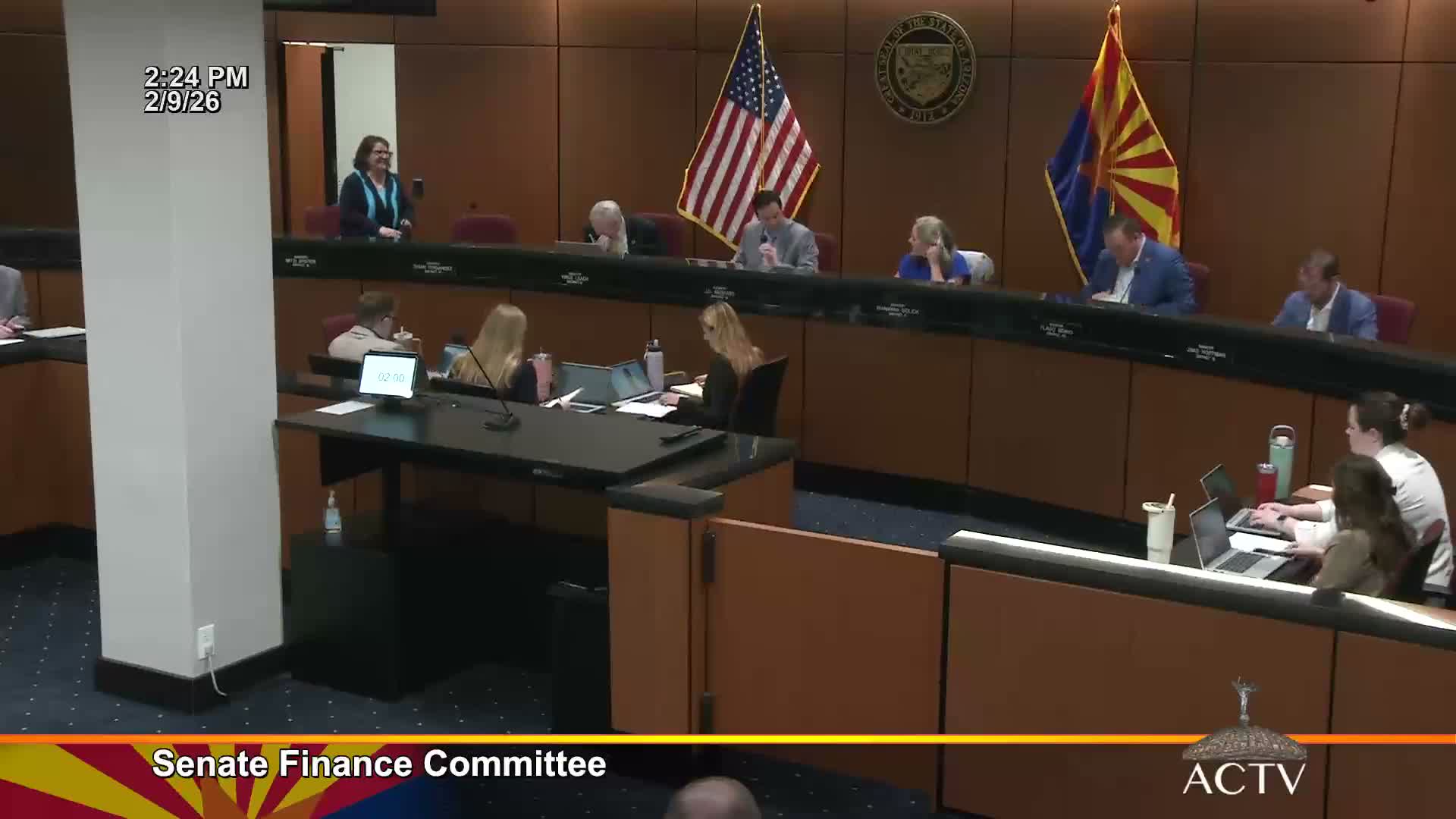
The Arizona Senate Government Committee advanced Senate Bill 15-03 after hearings in which supporters said the measure would realign pension proxy voting with fiduciary duties while retirement systems warned of operational burdens.
Sponsor Senator Gowen told the committee the bill mirrors recent federal action, requiring proxy voting decisions be based on the ‘‘sole economic interest’’ of plan participants and beneficiaries and increasing transparency around proxy advisory firms’ methodologies and conflicts of interest. ‘‘Proxy voting decisions must be grounded in economic benefit for beneficiaries, and not political or social agenda,’’ Gowen said.
Jim Copeland, a senior fellow at the Manhattan Institute, testified in support and criticized the market dominance and opacity of proxy advisory firms such as ISS and Glass Lewis, saying their recommendations do not demonstrably increase shareholder value. ‘‘These proxy advisory firms lack clearly defined fiduciary duties, have conflicts of interest, and display behavior consistent with acting upon those conflicts,’’ Copeland said.
Representatives of public retirement systems said they are neutral on the bill but described significant concerns. Jessica Thomas, legislative liaison for the Arizona State Retirement System (ASRS), said the measure would require each inconsistent vote to be backed by an economic analysis and estimated roughly 70,000 proxy votes across 7,000 companies annually, creating substantial monetary and staff costs. ‘‘This standard is duplicative of and possibly contradictory to the board’s overarching fiduciary duty,’’ Thomas said.
Diane McAllister of the Public Safety Personnel Retirement System (PSPRS) warned the bill’s statutory language could invite litigation. McAllister said PSPRS already has board-adopted proxy voting agreements and constitutional fiduciary duties and estimated the bill could require from 400 to 1,000 economic analyses per year and include a three-year lookback that raises liability concerns.
Supporters and the sponsor suggested amendments to narrow reporting and analysis requirements so the bill would not require an economic analysis for every routine vote and to clarify enforcement is limited to the attorney general rather than creating a private right of action.
Vice Chairman moved to return SB 15-03 with a do-pass recommendation. A roll call followed; the committee reported the measure do-pass by a recorded tally of 4 ayes and 3 noes. Senator Epstein explained a no vote, saying the bill risks politicizing proxy voting and could endanger pension returns and beneficiaries’ interests.
The bill will proceed with the committee’s recommendation and subject to the sponsor’s further work with stakeholders on clarifying amendments.
Sponsor Senator Gowen told the committee the bill mirrors recent federal action, requiring proxy voting decisions be based on the ‘‘sole economic interest’’ of plan participants and beneficiaries and increasing transparency around proxy advisory firms’ methodologies and conflicts of interest. ‘‘Proxy voting decisions must be grounded in economic benefit for beneficiaries, and not political or social agenda,’’ Gowen said.
Jim Copeland, a senior fellow at the Manhattan Institute, testified in support and criticized the market dominance and opacity of proxy advisory firms such as ISS and Glass Lewis, saying their recommendations do not demonstrably increase shareholder value. ‘‘These proxy advisory firms lack clearly defined fiduciary duties, have conflicts of interest, and display behavior consistent with acting upon those conflicts,’’ Copeland said.
Representatives of public retirement systems said they are neutral on the bill but described significant concerns. Jessica Thomas, legislative liaison for the Arizona State Retirement System (ASRS), said the measure would require each inconsistent vote to be backed by an economic analysis and estimated roughly 70,000 proxy votes across 7,000 companies annually, creating substantial monetary and staff costs. ‘‘This standard is duplicative of and possibly contradictory to the board’s overarching fiduciary duty,’’ Thomas said.
Diane McAllister of the Public Safety Personnel Retirement System (PSPRS) warned the bill’s statutory language could invite litigation. McAllister said PSPRS already has board-adopted proxy voting agreements and constitutional fiduciary duties and estimated the bill could require from 400 to 1,000 economic analyses per year and include a three-year lookback that raises liability concerns.
Supporters and the sponsor suggested amendments to narrow reporting and analysis requirements so the bill would not require an economic analysis for every routine vote and to clarify enforcement is limited to the attorney general rather than creating a private right of action.
Vice Chairman moved to return SB 15-03 with a do-pass recommendation. A roll call followed; the committee reported the measure do-pass by a recorded tally of 4 ayes and 3 noes. Senator Epstein explained a no vote, saying the bill risks politicizing proxy voting and could endanger pension returns and beneficiaries’ interests.
The bill will proceed with the committee’s recommendation and subject to the sponsor’s further work with stakeholders on clarifying amendments.
View the Full Meeting & All Its Details
This article offers just a summary. Unlock complete video, transcripts, and insights as a Founder Member.
✓
Watch full, unedited meeting videos
✓
Search every word spoken in unlimited transcripts
✓
AI summaries & real-time alerts (all government levels)
✓
Permanent access to expanding government content
30-day money-back guarantee
