Arizona House passes HCR 2,001 after floor amendments, adds voter‑ID and election timing provisions to proposed constitutional amendment
February 09, 2026 | 2026 Legislature Arizona, Arizona
This article was created by AI summarizing key points discussed. AI makes mistakes, so for full details and context, please refer to the video of the full meeting. Please report any errors so we can fix them. Report an error »
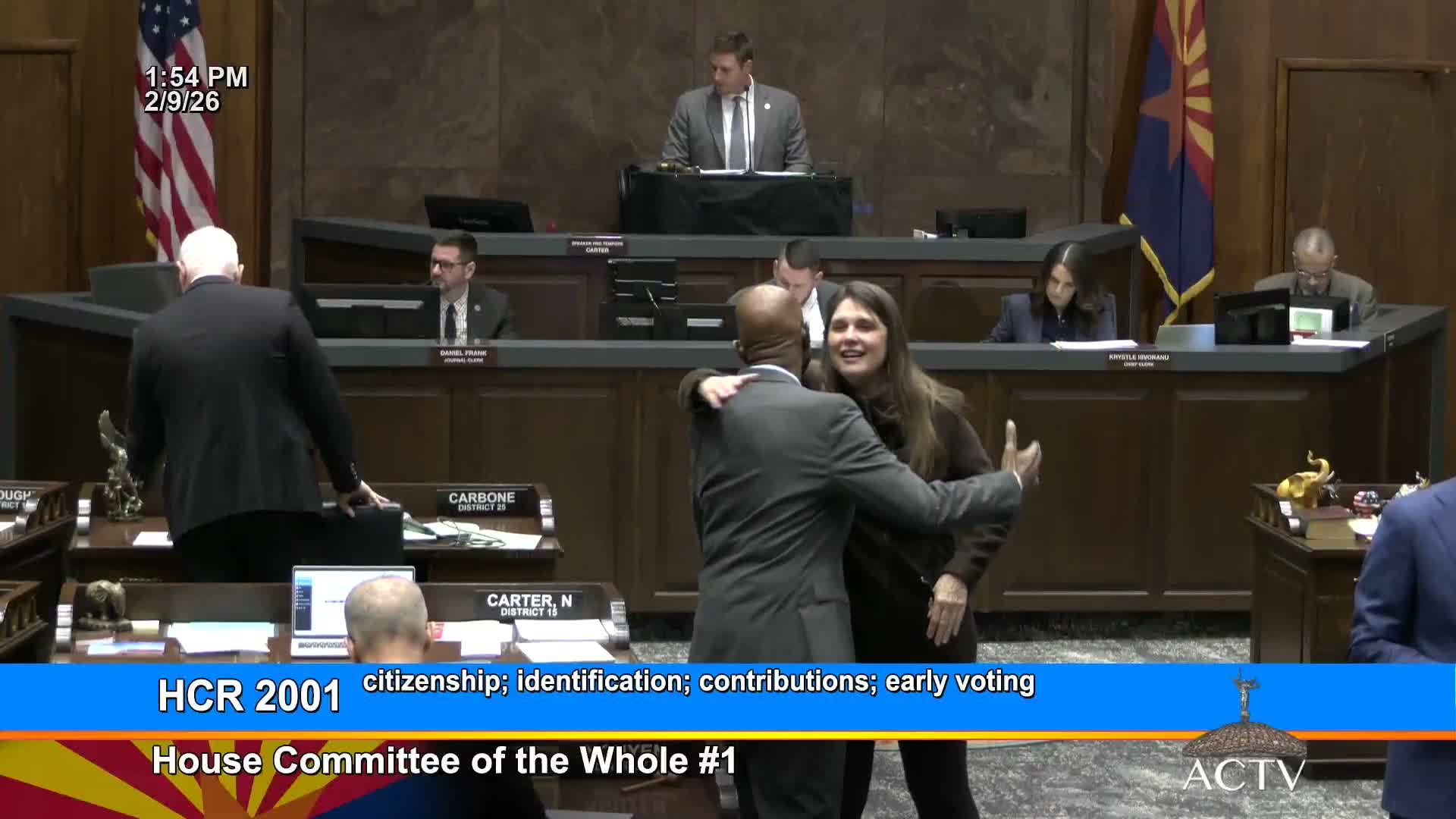
House Concurrent Resolution 2,001 — a proposed amendment to the Arizona Constitution that would add a new Section 19 addressing election requirements — cleared the Arizona House on Feb. 6 after extended floor debate and adoption of a substitute floor amendment.
Representative Collin, the measure’s sponsor, told colleagues the resolution was the product of two years of work in the House Elections Committee and that it “gives our state an election system that is secure, efficient, and that we can be proud of.” Collin said the amended measure includes a government‑issued ID requirement for voting and clarified rules about when mail‑in ballots are counted, and urged members to adopt it.
Opponents called the process and timing of last‑minute amendments into question. Representative De Los Santos said the deadline for amendments had been extended by less than 40 minutes and argued that adding constitutional changes with limited time to review was inappropriate. De Los Santos also said the measure “should be called the bill to kill vote by mail,” arguing that about 80% of Arizonans vote by mail and that the amendment would undermine that practice.
Representative Gillette, a member of the Elections Committee, summarized the core provisions of the amended measure during debate: it bans foreign contributions in elections, requires presentation of a government ID to vote, and shortens or limits certain early‑voting mail processes. Gillette said those changes reflected what voters in Arizona had asked for and described the measure as necessary election reform.
The House adopted the substitute floor amendment and voted to pass HCR 2,001 as amended. The clerk recorded the final tally as 32 ayes, 27 nays, 1 not voting. The resolution is a proposed constitutional amendment and, if approved by both chambers and referred to voters under Arizona law, would appear on a future ballot for voter approval.
Next steps: The House clerk was instructed to convey HCR 2,001 to the State Senate for its consideration.
Sources and constraints: The article reports statements made on the House floor and the recorded final vote. Where members disputed the measure’s effects (for example, whether it would “kill” vote‑by‑mail), the article attributes those claims to the members who made them and records the sponsor’s response; it does not adjudicate competing factual assertions.
Representative Collin, the measure’s sponsor, told colleagues the resolution was the product of two years of work in the House Elections Committee and that it “gives our state an election system that is secure, efficient, and that we can be proud of.” Collin said the amended measure includes a government‑issued ID requirement for voting and clarified rules about when mail‑in ballots are counted, and urged members to adopt it.
Opponents called the process and timing of last‑minute amendments into question. Representative De Los Santos said the deadline for amendments had been extended by less than 40 minutes and argued that adding constitutional changes with limited time to review was inappropriate. De Los Santos also said the measure “should be called the bill to kill vote by mail,” arguing that about 80% of Arizonans vote by mail and that the amendment would undermine that practice.
Representative Gillette, a member of the Elections Committee, summarized the core provisions of the amended measure during debate: it bans foreign contributions in elections, requires presentation of a government ID to vote, and shortens or limits certain early‑voting mail processes. Gillette said those changes reflected what voters in Arizona had asked for and described the measure as necessary election reform.
The House adopted the substitute floor amendment and voted to pass HCR 2,001 as amended. The clerk recorded the final tally as 32 ayes, 27 nays, 1 not voting. The resolution is a proposed constitutional amendment and, if approved by both chambers and referred to voters under Arizona law, would appear on a future ballot for voter approval.
Next steps: The House clerk was instructed to convey HCR 2,001 to the State Senate for its consideration.
Sources and constraints: The article reports statements made on the House floor and the recorded final vote. Where members disputed the measure’s effects (for example, whether it would “kill” vote‑by‑mail), the article attributes those claims to the members who made them and records the sponsor’s response; it does not adjudicate competing factual assertions.
View the Full Meeting & All Its Details
This article offers just a summary. Unlock complete video, transcripts, and insights as a Founder Member.
✓
Watch full, unedited meeting videos
✓
Search every word spoken in unlimited transcripts
✓
AI summaries & real-time alerts (all government levels)
✓
Permanent access to expanding government content
30-day money-back guarantee
