Senate committee advances bill to limit out-of-state and nonlaw-enforcement use of license-plate reader data
February 09, 2026 | Senate, Committees, Legislative, New Mexico
This article was created by AI summarizing key points discussed. AI makes mistakes, so for full details and context, please refer to the video of the full meeting. Please report any errors so we can fix them. Report an error »
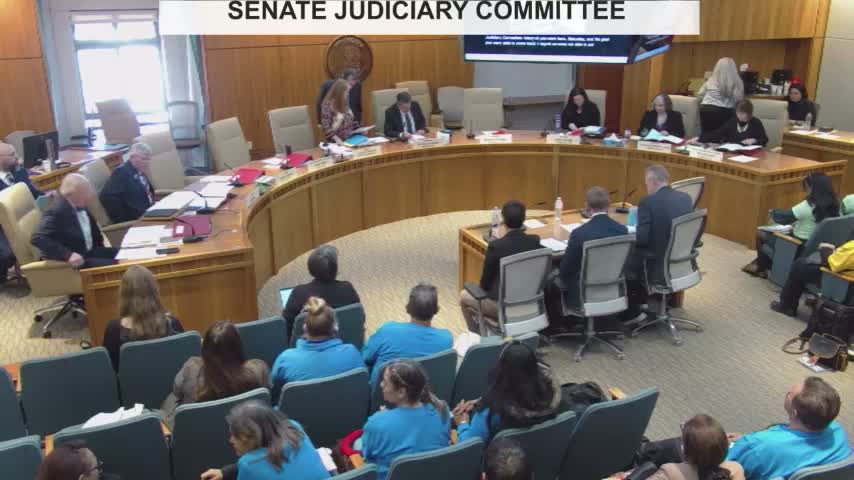
Senate Judiciary Committee members on Monday advanced a committee substitute to Senate Bill 40, a measure designed to set state-level limits on how automated license plate reader (ALPR) data can be shared and used.
Sponsor Senator Wirth told the panel the technology is “a tool for law enforcement that has a very important purpose,” but said the bill is intended to place guardrails on how long data may be retained and with whom it may be shared. The bill’s approach, he said, was informed by work with law enforcement and civil-rights groups and modeled in part on Illinois law.
Proponents included Troy Whisler, chief of the New Mexico State Police, who said the agency has seen “many amazing successes” from ALPRs, including locating kidnapped children and tracking violent offenders. Survivors’ advocates also testified: Jess Clark of the New Mexico Coalition of Sexual Assault Programs said stronger safeguards would protect confidentiality and access to services for people impacted by sexual and domestic violence.
The 0.3 committee substitute narrows an exception so that an ALPR user in New Mexico shall not share or sell information when there is a reasonable belief it would be used to investigate or prosecute protected health-care activity; it clarifies vendor access for system maintenance; and it allows privately collected ALPR data to be accessed either with express consent of the private entity or pursuant to a valid court order. Sponsor Wirth said the draft also moves reporting responsibility from the Department of Justice to the Department of Public Safety and grants that department administrative enforcement authority.
Members pressed the sponsor about scope. Critics said singling out immigration and certain health-care activities risks limiting cooperation when federal or out-of-state investigators seek assistance; backers responded that states may set policies about whether they will assist federal immigration enforcement and that the bill seeks to prevent out-of-state third parties from using New Mexico-collected data for immigration or to investigate activity that is legal in New Mexico. Wirth cited public-record findings that private entities outside New Mexico had accessed ALPR feeds for immigration and health-related uses.
Senators also debated penalties and enforcement mechanics. The sponsor said a 0.4 technical draft would make civil penalties applicable to intentional violations and tie potential damages for violations to section 3 of the statute, with a stated floor amount discussed in committee.
After a motion and amendment process, the committee adopted an amendment to remove surplus statutory language and approved a committee substitute to be filed as a 0.5 version. The chair announced the committee’s "do pass" recommendation on the substitute.
What happens next: the bill will be carried forward in the committee’s report as the 0.5 substitute for further floor action; sponsors and stakeholders said they expect additional drafting as the measure moves through the process.
Sponsor Senator Wirth told the panel the technology is “a tool for law enforcement that has a very important purpose,” but said the bill is intended to place guardrails on how long data may be retained and with whom it may be shared. The bill’s approach, he said, was informed by work with law enforcement and civil-rights groups and modeled in part on Illinois law.
Proponents included Troy Whisler, chief of the New Mexico State Police, who said the agency has seen “many amazing successes” from ALPRs, including locating kidnapped children and tracking violent offenders. Survivors’ advocates also testified: Jess Clark of the New Mexico Coalition of Sexual Assault Programs said stronger safeguards would protect confidentiality and access to services for people impacted by sexual and domestic violence.
The 0.3 committee substitute narrows an exception so that an ALPR user in New Mexico shall not share or sell information when there is a reasonable belief it would be used to investigate or prosecute protected health-care activity; it clarifies vendor access for system maintenance; and it allows privately collected ALPR data to be accessed either with express consent of the private entity or pursuant to a valid court order. Sponsor Wirth said the draft also moves reporting responsibility from the Department of Justice to the Department of Public Safety and grants that department administrative enforcement authority.
Members pressed the sponsor about scope. Critics said singling out immigration and certain health-care activities risks limiting cooperation when federal or out-of-state investigators seek assistance; backers responded that states may set policies about whether they will assist federal immigration enforcement and that the bill seeks to prevent out-of-state third parties from using New Mexico-collected data for immigration or to investigate activity that is legal in New Mexico. Wirth cited public-record findings that private entities outside New Mexico had accessed ALPR feeds for immigration and health-related uses.
Senators also debated penalties and enforcement mechanics. The sponsor said a 0.4 technical draft would make civil penalties applicable to intentional violations and tie potential damages for violations to section 3 of the statute, with a stated floor amount discussed in committee.
After a motion and amendment process, the committee adopted an amendment to remove surplus statutory language and approved a committee substitute to be filed as a 0.5 version. The chair announced the committee’s "do pass" recommendation on the substitute.
What happens next: the bill will be carried forward in the committee’s report as the 0.5 substitute for further floor action; sponsors and stakeholders said they expect additional drafting as the measure moves through the process.
View the Full Meeting & All Its Details
This article offers just a summary. Unlock complete video, transcripts, and insights as a Founder Member.
✓
Watch full, unedited meeting videos
✓
Search every word spoken in unlimited transcripts
✓
AI summaries & real-time alerts (all government levels)
✓
Permanent access to expanding government content
30-day money-back guarantee
