Senate committee debates sweeping housing‑zoning bill, adopts amendment and then tables measure
February 09, 2026 | Senate, Committees, Legislative, New Mexico
This article was created by AI summarizing key points discussed. AI makes mistakes, so for full details and context, please refer to the video of the full meeting. Please report any errors so we can fix them. Report an error »
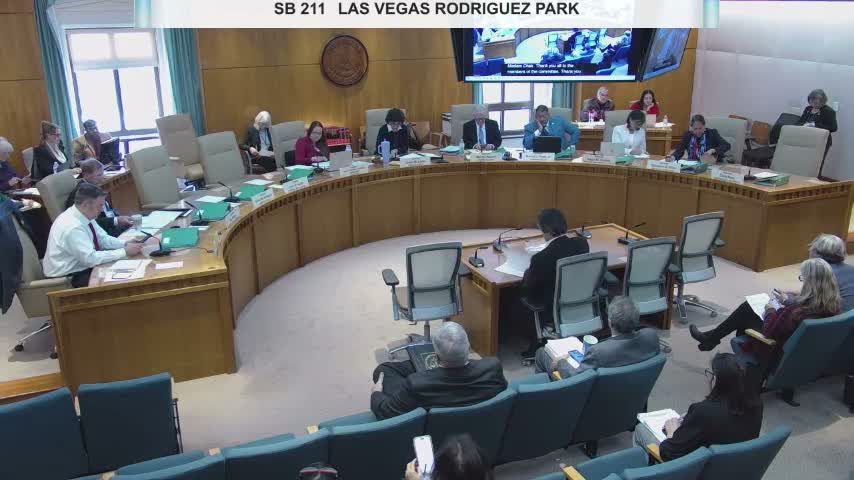
Senate Bill 131, a sweeping housing‑zoning reform sponsored by Senator Maestas, drew hours of testimony on Feb. 10 before the Senate Health and Public Affairs Committee, where members adopted an amendment but then voted to table the measure for further work.
The bill would allow a broader range of housing types to be built by right — including accessory dwelling units (ADUs or “casitas”), duplexes and townhomes in residential zones, and apartments in commercially zoned areas. It would also streamline approvals by limiting discretionary permits and remove minimum parking mandates, proponents said.
“Allowing more housing types such as apartments, duplexes and townhomes will lower development costs and enable private investment without new public spending,” Lisonbee Riley, speaking for the New Mexico Chamber of Commerce and the Greater Albuquerque Chamber of Commerce, told the committee. “This legislation is a smart, market‑enabling process.”
Sponsor Senator Maestas framed the bill as a response to a statewide shortage of housing. “This hopes to solve that problem in a big way,” he said, citing national and regional permit shortfalls and arguing that zoning reform is needed because housing markets cross local borders.
Alex Horowitz, housing policy director at the Pew Charitable Trusts (via Zoom), testified that New Mexico lags peer states on permitting and that many states have enacted similar reforms to reduce regulatory barriers. “Housing is regional,” Horowitz said, and reforms that remove unnecessary barriers have been associated with increased housing stock in other jurisdictions.
Supporters from affordable‑housing advocates, builders’ groups and some municipal housing officials told the committee that the bill would increase supply, spur reinvestment in urban areas and make it easier to add smaller, lower‑cost units. “Removing parking mandates means developers can reduce building costs and thus rents if the development is near public transit,” Alyssa Kenny Geier of the statewide affordable housing coalition said.
Opponents — including the New Mexico Association of Realtors and the Municipal League — warned that the bill would preempt local planning and zoning authority and could create problems for communities that lack infrastructure, public transit or water capacity. “Local governments are best positioned to make planning and zoning decisions because they can account for community‑specific needs,” Rebecca Martinez of the Municipal League testified.
Committee members pressed on specific impacts. Senator Scott asked whether the bill could allow a 100‑unit apartment without parking; sponsors and experts said the measure eliminates minimums but does not ban parking and that market and locality conditions typically result in parking being provided where needed. Several senators urged narrowing or tailoring the bill geographically, suggesting it could be limited to larger counties or reworked to address impact fees.
The committee approved a friendly amendment submitted by Senator Hickey that adjusted statutory language (the chair recorded the amendment as adopted). After further debate over scope and local control, Senator Block moved to table SB 131. The chair called the roll on the tabling motion and the committee carried it; the bill was set aside for further revision and potential resubmission.
What’s next: Committee members signaled willingness to work on revisions — including limiting certain provisions geographically or removing the parking minimums section — before reintroducing the idea. The measure was not advanced to the next committee or floor in its current form.
The bill would allow a broader range of housing types to be built by right — including accessory dwelling units (ADUs or “casitas”), duplexes and townhomes in residential zones, and apartments in commercially zoned areas. It would also streamline approvals by limiting discretionary permits and remove minimum parking mandates, proponents said.
“Allowing more housing types such as apartments, duplexes and townhomes will lower development costs and enable private investment without new public spending,” Lisonbee Riley, speaking for the New Mexico Chamber of Commerce and the Greater Albuquerque Chamber of Commerce, told the committee. “This legislation is a smart, market‑enabling process.”
Sponsor Senator Maestas framed the bill as a response to a statewide shortage of housing. “This hopes to solve that problem in a big way,” he said, citing national and regional permit shortfalls and arguing that zoning reform is needed because housing markets cross local borders.
Alex Horowitz, housing policy director at the Pew Charitable Trusts (via Zoom), testified that New Mexico lags peer states on permitting and that many states have enacted similar reforms to reduce regulatory barriers. “Housing is regional,” Horowitz said, and reforms that remove unnecessary barriers have been associated with increased housing stock in other jurisdictions.
Supporters from affordable‑housing advocates, builders’ groups and some municipal housing officials told the committee that the bill would increase supply, spur reinvestment in urban areas and make it easier to add smaller, lower‑cost units. “Removing parking mandates means developers can reduce building costs and thus rents if the development is near public transit,” Alyssa Kenny Geier of the statewide affordable housing coalition said.
Opponents — including the New Mexico Association of Realtors and the Municipal League — warned that the bill would preempt local planning and zoning authority and could create problems for communities that lack infrastructure, public transit or water capacity. “Local governments are best positioned to make planning and zoning decisions because they can account for community‑specific needs,” Rebecca Martinez of the Municipal League testified.
Committee members pressed on specific impacts. Senator Scott asked whether the bill could allow a 100‑unit apartment without parking; sponsors and experts said the measure eliminates minimums but does not ban parking and that market and locality conditions typically result in parking being provided where needed. Several senators urged narrowing or tailoring the bill geographically, suggesting it could be limited to larger counties or reworked to address impact fees.
The committee approved a friendly amendment submitted by Senator Hickey that adjusted statutory language (the chair recorded the amendment as adopted). After further debate over scope and local control, Senator Block moved to table SB 131. The chair called the roll on the tabling motion and the committee carried it; the bill was set aside for further revision and potential resubmission.
What’s next: Committee members signaled willingness to work on revisions — including limiting certain provisions geographically or removing the parking minimums section — before reintroducing the idea. The measure was not advanced to the next committee or floor in its current form.
View the Full Meeting & All Its Details
This article offers just a summary. Unlock complete video, transcripts, and insights as a Founder Member.
✓
Watch full, unedited meeting videos
✓
Search every word spoken in unlimited transcripts
✓
AI summaries & real-time alerts (all government levels)
✓
Permanent access to expanding government content
30-day money-back guarantee
