Counties tell Senate Finance bill to end ICE contracts would strip millions from rural budgets
February 09, 2026 | Senate, Committees, Legislative, New Mexico
This article was created by AI summarizing key points discussed. AI makes mistakes, so for full details and context, please refer to the video of the full meeting. Please report any errors so we can fix them. Report an error »
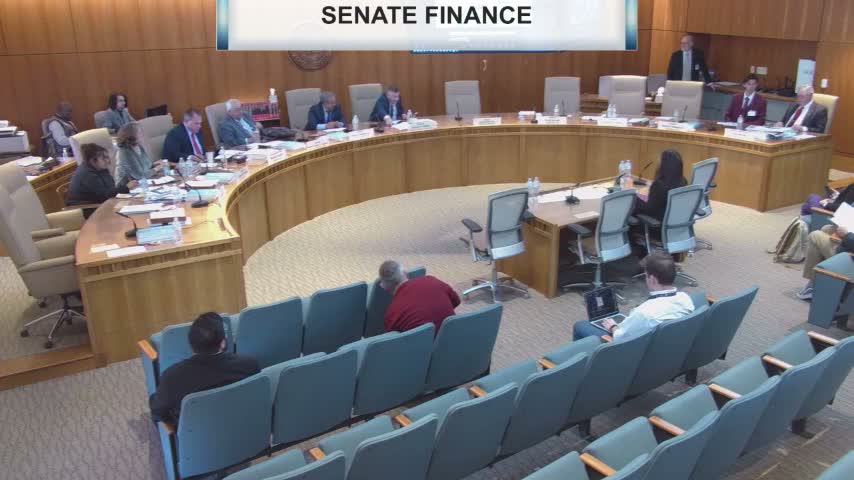
A state corrections official and county leaders told the Senate Finance Committee on Feb. 9 that House Bill 9, which will end certain ICE detention contracts, could sharply reduce local revenues and raise operating costs for rural New Mexico counties that host private detention facilities.
"The New Mexico Corrections Department does not oversee these facilities," Secretary Alicia Tafoya Lucero told the panel, but said her agency and partner departments stand ready to help with workforce transition and site reuse. "We would be very much involved . . . holding job fairs, things of that nature," she said.
County finance officers and municipal managers detailed projected losses and operational impacts. Kate Fletcher, county manager for Cibola County, introduced a finance presentation showing constrained reserves and warned that the county could face significant reductions to its general fund and capital capacity if detention-related payments stop. Paul Ludy, Cibola’s finance director, said local unassigned investments total about $1.8 million and described how depleted cash balances would jeopardize the county’s ability to front costs for reimbursable capital projects.
Michelle Jones, deputy county manager representing Torrance County and the town of Estancia, said Estancia receives roughly $75,000 a month in gross receipts taxes tied to the prison population and estimated Torrance County’s total annual economic impact at about $3.0 million. "The overall economic impact to Torrance County would be approximately $3,000,000 annually," Jones said, noting the wide ripple effects on police, EMTs, schools and local retail.
An Otero County representative told the committee the Otero facility employs 284 people with an annual payroll of about $20.8 million and that the county expects to lose roughly $3 million in gross receipts tax and $475,000 in contract revenue if the ICE contract ends. The speaker warned of outstanding bonds of approximately $21 million and said bondholders had told county officials that default could lead to foreclosure and sale of a roughly $68 million facility. "Despite what has been said by elected officials in the media, this is an ICE only facility," the representative said.
Committee members pressed for more precise numbers and scenarios. Staff and presenters discussed current CoreCivic bed rates ($70 per night under existing contracts) and possible doubled rates and transport costs if detainees must be relocated to multiple facilities; presenters said CoreCivic currently accounts for a large share of the public administration GRT in the industry reporting.
Senators, county officials and agency leaders discussed short-term and longer-term responses. Secretary Tafoya Lucero and workforce officials noted scheduled workforce events (Feb. 17–19) organized by America’s Job Center/New Mexico to explore alternative employment and economic options for affected communities. Multiple senators urged a coordinated, cross-agency recovery plan that would combine immediate revenue-replacement measures and longer-term economic diversification.
The committee directed staff to gather labor, revenue and transport-cost data from counties and to help draft emergency hold-harmless language and a short-term funding plan. The chair asked economic development and workforce staff to meet with county officials the next morning for an urgent briefing; no formal vote was taken.
What happens next: committee staff will compile county budgets, employee counts and transport-cost scenarios to model immediate fiscal impacts and possible offsets. Lawmakers signaled intent to pursue emergency language to limit short-term harm while agencies and counties explore site reuse and workforce transition options.
"The New Mexico Corrections Department does not oversee these facilities," Secretary Alicia Tafoya Lucero told the panel, but said her agency and partner departments stand ready to help with workforce transition and site reuse. "We would be very much involved . . . holding job fairs, things of that nature," she said.
County finance officers and municipal managers detailed projected losses and operational impacts. Kate Fletcher, county manager for Cibola County, introduced a finance presentation showing constrained reserves and warned that the county could face significant reductions to its general fund and capital capacity if detention-related payments stop. Paul Ludy, Cibola’s finance director, said local unassigned investments total about $1.8 million and described how depleted cash balances would jeopardize the county’s ability to front costs for reimbursable capital projects.
Michelle Jones, deputy county manager representing Torrance County and the town of Estancia, said Estancia receives roughly $75,000 a month in gross receipts taxes tied to the prison population and estimated Torrance County’s total annual economic impact at about $3.0 million. "The overall economic impact to Torrance County would be approximately $3,000,000 annually," Jones said, noting the wide ripple effects on police, EMTs, schools and local retail.
An Otero County representative told the committee the Otero facility employs 284 people with an annual payroll of about $20.8 million and that the county expects to lose roughly $3 million in gross receipts tax and $475,000 in contract revenue if the ICE contract ends. The speaker warned of outstanding bonds of approximately $21 million and said bondholders had told county officials that default could lead to foreclosure and sale of a roughly $68 million facility. "Despite what has been said by elected officials in the media, this is an ICE only facility," the representative said.
Committee members pressed for more precise numbers and scenarios. Staff and presenters discussed current CoreCivic bed rates ($70 per night under existing contracts) and possible doubled rates and transport costs if detainees must be relocated to multiple facilities; presenters said CoreCivic currently accounts for a large share of the public administration GRT in the industry reporting.
Senators, county officials and agency leaders discussed short-term and longer-term responses. Secretary Tafoya Lucero and workforce officials noted scheduled workforce events (Feb. 17–19) organized by America’s Job Center/New Mexico to explore alternative employment and economic options for affected communities. Multiple senators urged a coordinated, cross-agency recovery plan that would combine immediate revenue-replacement measures and longer-term economic diversification.
The committee directed staff to gather labor, revenue and transport-cost data from counties and to help draft emergency hold-harmless language and a short-term funding plan. The chair asked economic development and workforce staff to meet with county officials the next morning for an urgent briefing; no formal vote was taken.
What happens next: committee staff will compile county budgets, employee counts and transport-cost scenarios to model immediate fiscal impacts and possible offsets. Lawmakers signaled intent to pursue emergency language to limit short-term harm while agencies and counties explore site reuse and workforce transition options.
Don't Miss a Word: See the Full Meeting!
Go beyond summaries. Unlock every video, transcript, and key insight with a Founder Membership.
✓
Get instant access to full meeting videos
✓
Search and clip any phrase from complete transcripts
✓
Receive AI-powered summaries & custom alerts
✓
Enjoy lifetime, unrestricted access to government data
30-day money-back guarantee
