Committee advances substitute on state–tribal government relationship after rejecting two carve-out amendments
February 09, 2026 | Legislative Sessions, Washington
This article was created by AI summarizing key points discussed. AI makes mistakes, so for full details and context, please refer to the video of the full meeting. Please report any errors so we can fix them. Report an error »
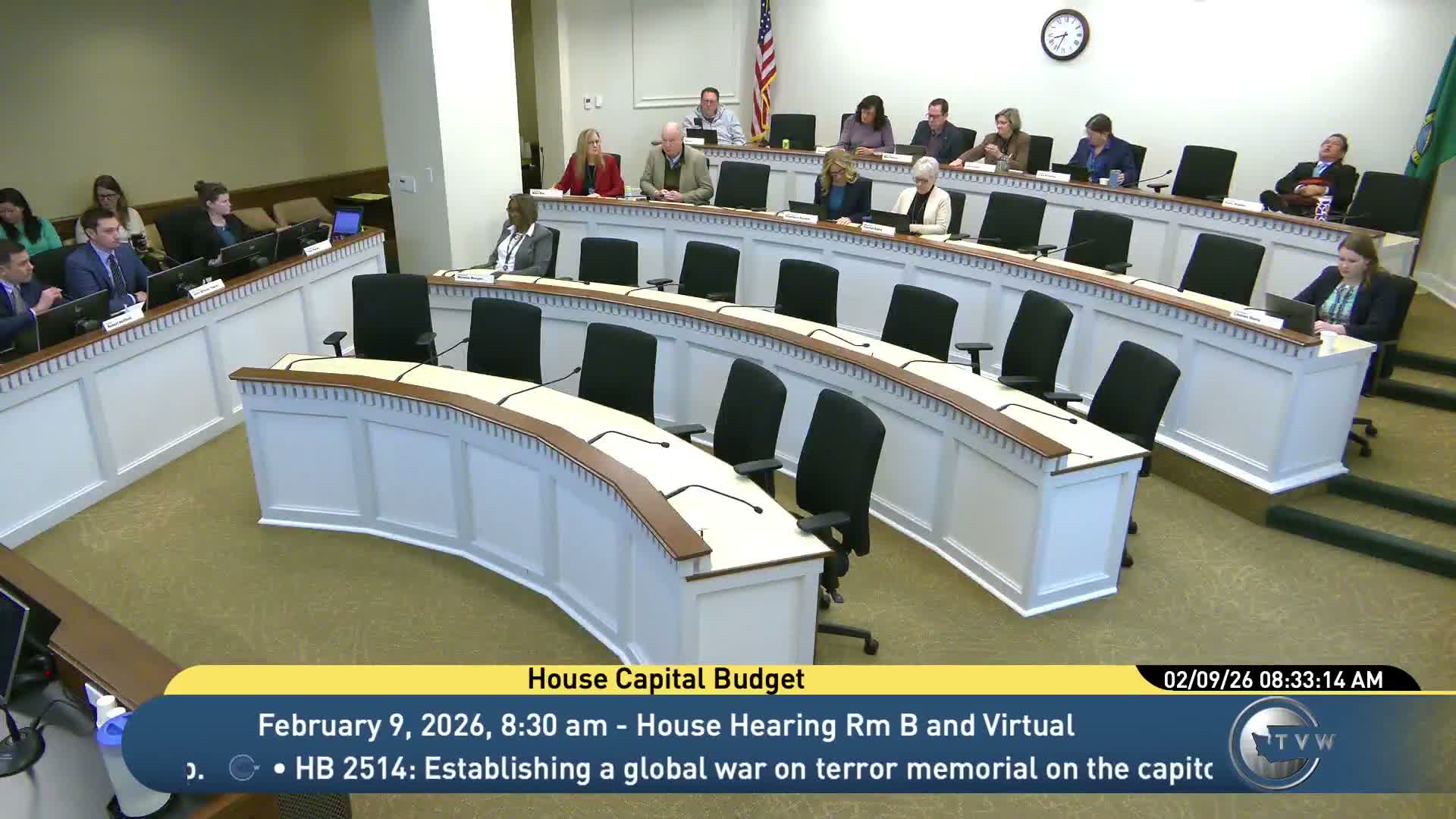
Substitute House Bill 2,281, addressing the state–tribal government-to-government relationship, was reported out of the Capital Budget Committee with a due-pass recommendation after debate and two failed amendment attempts.
Rob Hatfield, staff to the committee, summarized the substitute, saying it keeps the underlying structure but removes the codification of various requirements related to tribal consultation. Two amendments (Hatfield 203 and Hatfield 202), offered in the committee record as attempts to protect essential infrastructure projects and to preserve access and revenue from timber and other natural-resource activities, were moved and debated.
Representative Welch (as recorded in the transcript) offered Hatfield 203, which he said "specifies with greater clarity the essential projects that we would like to keep moving" so they would not be delayed by the bill. Representative Stern urged a no vote on that amendment, arguing that creating exceptions would put the bill’s uniform approach at risk. The amendment was defeated on a voice vote.
Representative Walsh moved Hatfield 202 to clarify that nothing in the proposal would restrict timber-harvest activities or other natural-resource uses; he argued preserving those non-tax revenue sources was important for funding local infrastructure and school districts. Opponents, including Representative Stern, warned that creating timber exceptions echoes past Supreme Court cases and could weaken tribal protections. That amendment also failed to pass.
After debate, staff called the roll; the clerk announced a final tally of 10 yeas, 8 nays, and 1 excused. By that vote, substitute House Bill 2,281 was reported out of committee with a due-pass recommendation.
Rob Hatfield, staff to the committee, summarized the substitute, saying it keeps the underlying structure but removes the codification of various requirements related to tribal consultation. Two amendments (Hatfield 203 and Hatfield 202), offered in the committee record as attempts to protect essential infrastructure projects and to preserve access and revenue from timber and other natural-resource activities, were moved and debated.
Representative Welch (as recorded in the transcript) offered Hatfield 203, which he said "specifies with greater clarity the essential projects that we would like to keep moving" so they would not be delayed by the bill. Representative Stern urged a no vote on that amendment, arguing that creating exceptions would put the bill’s uniform approach at risk. The amendment was defeated on a voice vote.
Representative Walsh moved Hatfield 202 to clarify that nothing in the proposal would restrict timber-harvest activities or other natural-resource uses; he argued preserving those non-tax revenue sources was important for funding local infrastructure and school districts. Opponents, including Representative Stern, warned that creating timber exceptions echoes past Supreme Court cases and could weaken tribal protections. That amendment also failed to pass.
After debate, staff called the roll; the clerk announced a final tally of 10 yeas, 8 nays, and 1 excused. By that vote, substitute House Bill 2,281 was reported out of committee with a due-pass recommendation.
Don't Miss a Word: See the Full Meeting!
Go beyond summaries. Unlock every video, transcript, and key insight with a Founder Membership.
✓
Get instant access to full meeting videos
✓
Search and clip any phrase from complete transcripts
✓
Receive AI-powered summaries & custom alerts
✓
Enjoy lifetime, unrestricted access to government data
30-day money-back guarantee
