Appropriations Committee advances first batch of bills, reporting several with do-pass recommendations
February 09, 2026 | Legislative Sessions, Washington
This article was created by AI summarizing key points discussed. AI makes mistakes, so for full details and context, please refer to the video of the full meeting. Please report any errors so we can fix them. Report an error »
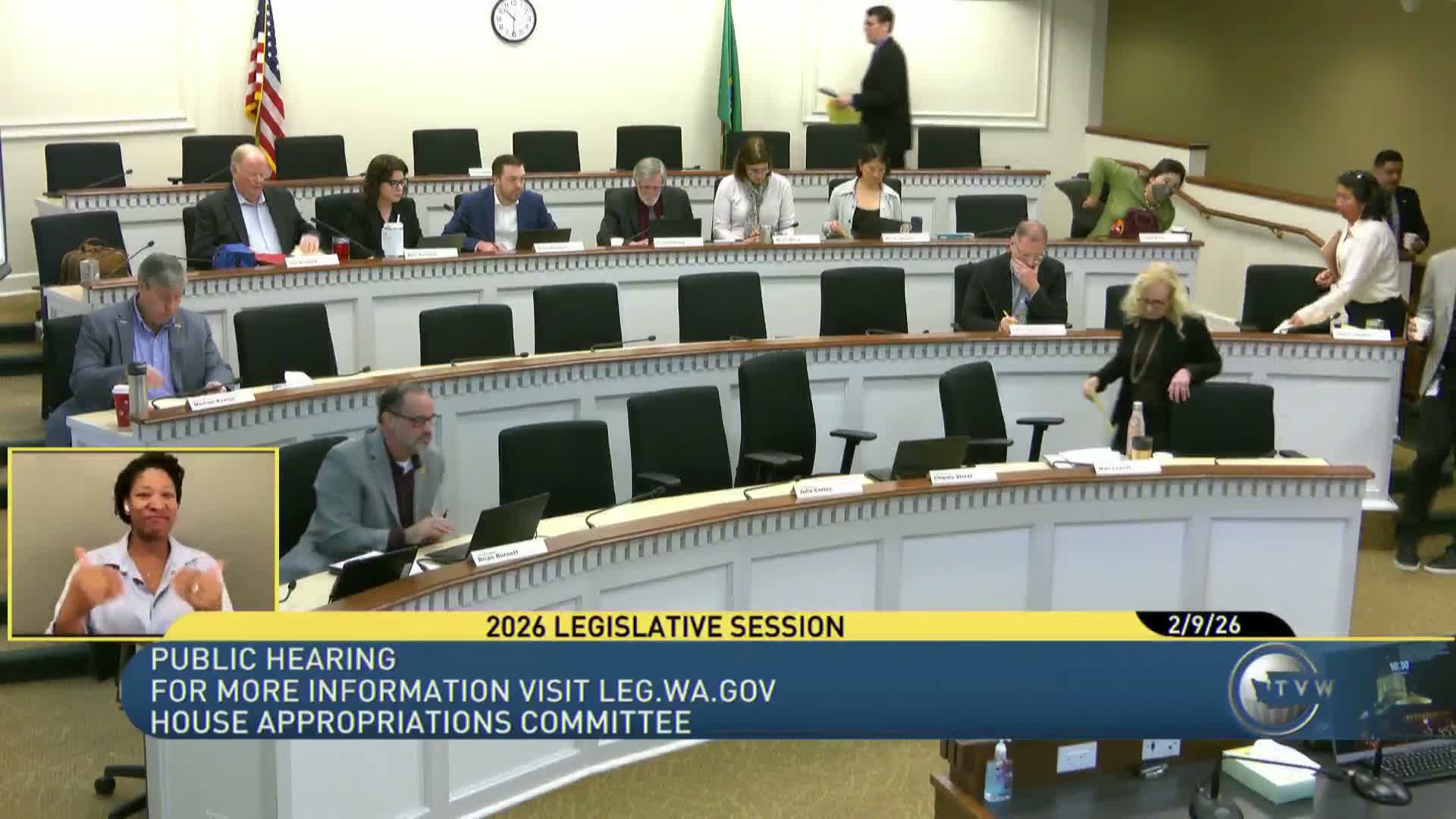
The Washington House Appropriations Committee on the morning agenda briefed staff summaries for the first 20 bills scheduled for possible executive session and then moved to report many of them out of committee with do-pass recommendations.
The committee heard staff briefings on each bill in turn, including substitute House Bill 11-28 (Child Care Workforce Standards Board), House Bill 13-16 (students experiencing homelessness), House Bill 14-08 (community preservation and development authorities), substitute House Bill 15-91 (remedies for defendants who are survivors), and others. Staff summarized the proposed substitutes, line amendments and estimated fiscal impacts.
Votes at a glance (selected items from the first 20):
- HB 1073: reported from committee with a due-pass recommendation (oral vote tally: 28 ayes, 0 nays, 3 excused).
- Proposed second substitute HB 11-28 (child care workforce): amendment LEON 245 (exempting private K–12 licensed childcare programs from the childcare-employer definition) adopted; final report from committee (tally announced: 18 ayes, 11 nays, 2 excused).
- Substitute HB 13-16 (students experiencing homelessness): reported from committee with a due-pass recommendation (tally announced: 29 ayes, 2 excused).
- HB 14-08 (community preservation authorities) with an adopted emergency clause amendment: reported from committee (tally announced: 29 ayes, 0 nays, 2 excused).
- Substitute HB 15-91 (criminal relief provisions): reported from committee after multiple amendment votes (tally announced: 18 ayes, 11 nays, 2 excused).
Many other bills in the first block were briefed and then reported with do-pass recommendations after amendment votes or adoption of standard null-and-void technical amendments. Committee members used both oral roll-call and recorded roll-call procedures; several items drew extended floor-style debate during the report stage. Where amendments narrowed a bill’s scope or removed fiscal impacts, staff noted the changes and flagged indeterminate fiscal effects in a number of cases.
What happens next: Bills reported from Appropriations with a do-pass recommendation move to the next step in the process (floor action and further consideration in the House). The committee recessed for caucus and returned to conduct further votes and executive-session business later in the day.
Sources: staff briefings and roll-call tallies read on the record during the Appropriations Committee meeting.
The committee heard staff briefings on each bill in turn, including substitute House Bill 11-28 (Child Care Workforce Standards Board), House Bill 13-16 (students experiencing homelessness), House Bill 14-08 (community preservation and development authorities), substitute House Bill 15-91 (remedies for defendants who are survivors), and others. Staff summarized the proposed substitutes, line amendments and estimated fiscal impacts.
Votes at a glance (selected items from the first 20):
- HB 1073: reported from committee with a due-pass recommendation (oral vote tally: 28 ayes, 0 nays, 3 excused).
- Proposed second substitute HB 11-28 (child care workforce): amendment LEON 245 (exempting private K–12 licensed childcare programs from the childcare-employer definition) adopted; final report from committee (tally announced: 18 ayes, 11 nays, 2 excused).
- Substitute HB 13-16 (students experiencing homelessness): reported from committee with a due-pass recommendation (tally announced: 29 ayes, 2 excused).
- HB 14-08 (community preservation authorities) with an adopted emergency clause amendment: reported from committee (tally announced: 29 ayes, 0 nays, 2 excused).
- Substitute HB 15-91 (criminal relief provisions): reported from committee after multiple amendment votes (tally announced: 18 ayes, 11 nays, 2 excused).
Many other bills in the first block were briefed and then reported with do-pass recommendations after amendment votes or adoption of standard null-and-void technical amendments. Committee members used both oral roll-call and recorded roll-call procedures; several items drew extended floor-style debate during the report stage. Where amendments narrowed a bill’s scope or removed fiscal impacts, staff noted the changes and flagged indeterminate fiscal effects in a number of cases.
What happens next: Bills reported from Appropriations with a do-pass recommendation move to the next step in the process (floor action and further consideration in the House). The committee recessed for caucus and returned to conduct further votes and executive-session business later in the day.
Sources: staff briefings and roll-call tallies read on the record during the Appropriations Committee meeting.
View the Full Meeting & All Its Details
This article offers just a summary. Unlock complete video, transcripts, and insights as a Founder Member.
✓
Watch full, unedited meeting videos
✓
Search every word spoken in unlimited transcripts
✓
AI summaries & real-time alerts (all government levels)
✓
Permanent access to expanding government content
30-day money-back guarantee
