Ways and Means moves dozens of bills across budget, housing, health and justice policy to Rules
February 09, 2026 | Legislative Sessions, Washington
This article was created by AI summarizing key points discussed. AI makes mistakes, so for full details and context, please refer to the video of the full meeting. Please report any errors so we can fix them. Report an error »
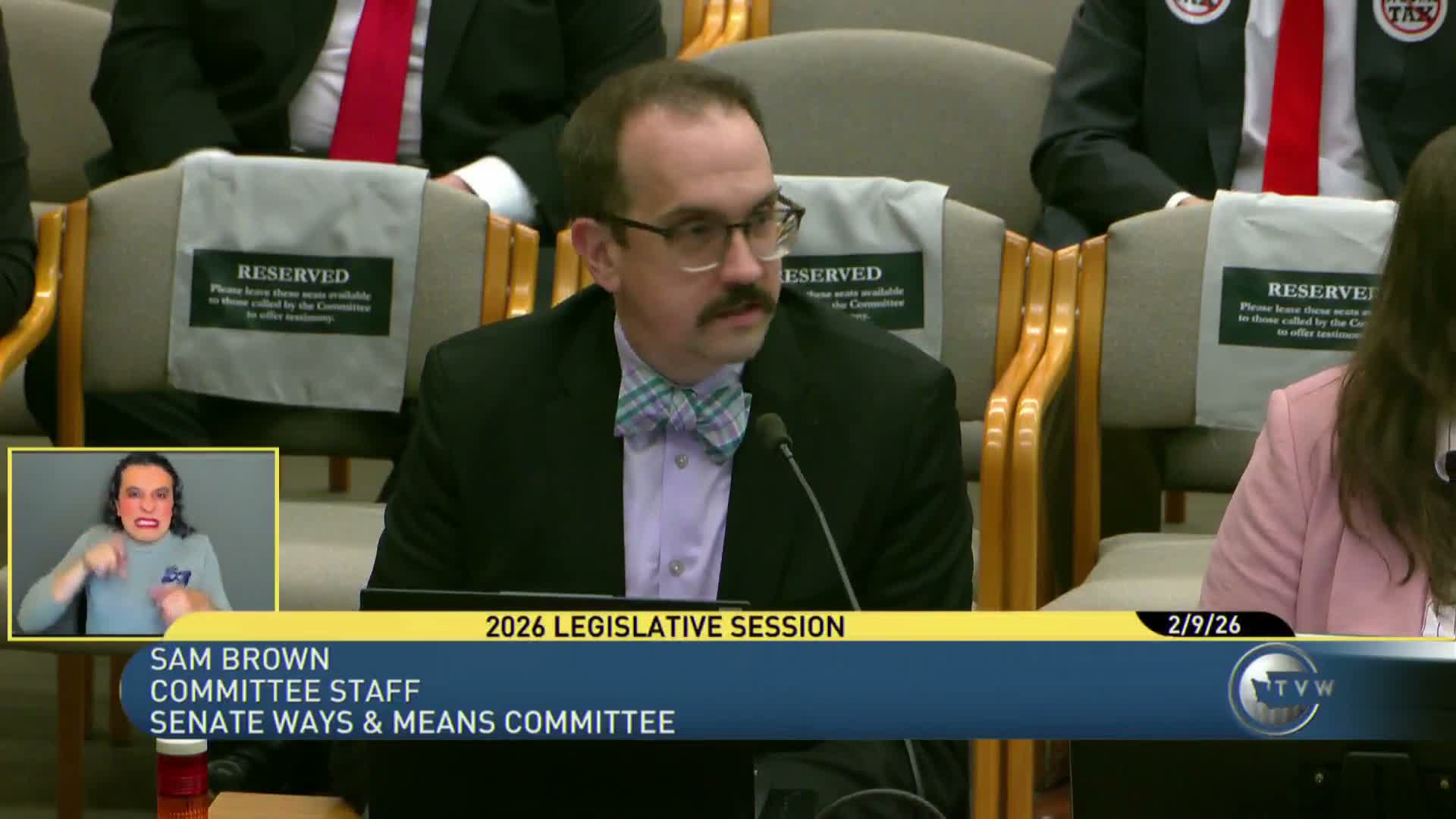
The Senate Ways and Means Committee spent Feb. 9 briefing and deciding dozens of bills across five groups of packeted legislation, moving numerous substitutes and amendments to the Rules Committee.
Early in the day the committee heard a staff briefing on Senate Bill 6,147, which would require grocery establishments in designated food‑desert or low‑income census tracts to provide notice to the public, local officials and the attorney general prior to closure and to engage in a good‑faith consultation to attempt to continue service. Staff described substitute 1 (Senator Conway) as narrowing coverage to larger stores (raising the square‑foot threshold from 10,000 to 15,000) and exempting retailers with 25 or fewer locations.
The committee advanced several other high‑profile measures: substitute SB 6,035 (voting services for military overseas, Native American and disabled voters) — which authorizes an electronic ballot return portal subject to rulemaking and initially removed a National Guard cybersecurity review in committee — received a due pass recommendation to Rules; substitute SB 6,239 (arbitration for certain tort claims) was amended to require legislative hearings for settlements above $5 million and advanced; and substitute SB 6,017 (victim and witness protections) was refined to increase victim‑centered safeguards and also advanced.
Group 2 and subsequent groups covered a broad set of revenue and policy bills including property tax consolidation and exemptions (consolidated state school levy adjustments), changes to exemptions for low‑income housing during construction, a proposal to allow counties and cities to impose a cannabis excise tax, and bills addressing estate tax changes, hazardous substance tax exemptions, and aviation fuel revenue redirection. Group 3 and 4 included child welfare and public health measures, PFML rate setting, an abortion savings program substitute, and bills to support housing and transmission infrastructure; many of these received committee substitutes and were recommended to Rules.
Across the afternoon and evening the committee adopted and rolled in multiple amendments, adopted substitutes (some by unanimous voice vote), rejected some amendments on voice votes and a few by roll call, and recorded a number of detailed fiscal notes. The chair closed the session, reminded members of signature procedures for processed packets, and adjourned at the end of the evening following the last votes and the 'Happy fiscal cutoff' announcement.
Early in the day the committee heard a staff briefing on Senate Bill 6,147, which would require grocery establishments in designated food‑desert or low‑income census tracts to provide notice to the public, local officials and the attorney general prior to closure and to engage in a good‑faith consultation to attempt to continue service. Staff described substitute 1 (Senator Conway) as narrowing coverage to larger stores (raising the square‑foot threshold from 10,000 to 15,000) and exempting retailers with 25 or fewer locations.
The committee advanced several other high‑profile measures: substitute SB 6,035 (voting services for military overseas, Native American and disabled voters) — which authorizes an electronic ballot return portal subject to rulemaking and initially removed a National Guard cybersecurity review in committee — received a due pass recommendation to Rules; substitute SB 6,239 (arbitration for certain tort claims) was amended to require legislative hearings for settlements above $5 million and advanced; and substitute SB 6,017 (victim and witness protections) was refined to increase victim‑centered safeguards and also advanced.
Group 2 and subsequent groups covered a broad set of revenue and policy bills including property tax consolidation and exemptions (consolidated state school levy adjustments), changes to exemptions for low‑income housing during construction, a proposal to allow counties and cities to impose a cannabis excise tax, and bills addressing estate tax changes, hazardous substance tax exemptions, and aviation fuel revenue redirection. Group 3 and 4 included child welfare and public health measures, PFML rate setting, an abortion savings program substitute, and bills to support housing and transmission infrastructure; many of these received committee substitutes and were recommended to Rules.
Across the afternoon and evening the committee adopted and rolled in multiple amendments, adopted substitutes (some by unanimous voice vote), rejected some amendments on voice votes and a few by roll call, and recorded a number of detailed fiscal notes. The chair closed the session, reminded members of signature procedures for processed packets, and adjourned at the end of the evening following the last votes and the 'Happy fiscal cutoff' announcement.
Don't Miss a Word: See the Full Meeting!
Go beyond summaries. Unlock every video, transcript, and key insight with a Founder Membership.
✓
Get instant access to full meeting videos
✓
Search and clip any phrase from complete transcripts
✓
Receive AI-powered summaries & custom alerts
✓
Enjoy lifetime, unrestricted access to government data
30-day money-back guarantee
