Subcommittee highlights EV battery fire risks and directs NHTSA research in Motor Vehicle Modernization Act provision
February 10, 2026 | House Committee on Energy and Commerce, House Committee, House, Legislative, Federal
This article was created by AI summarizing key points discussed. AI makes mistakes, so for full details and context, please refer to the video of the full meeting. Please report any errors so we can fix them. Report an error »
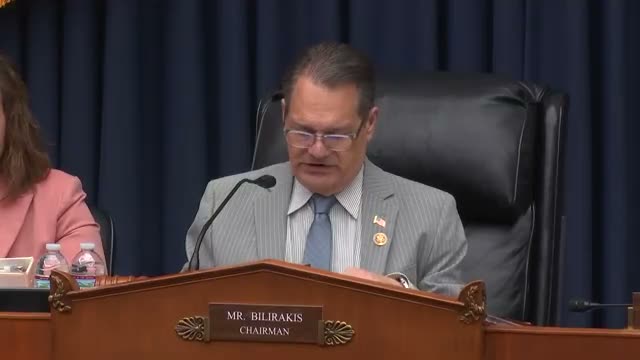
At a House Committee on Energy and Commerce subcommittee hearing, the chairman said the Motor Vehicle Modernization Act will include provisions aimed at improving responses to electric-vehicle battery fires and at directing the National Highway Traffic Safety Administration (NHTSA) to study automated wheelchair securement systems.
The chairman told the subcommittee: "In 2024, nearly 40,000 people died on our roadways," and said that reality should drive practical solutions to strengthen motor-vehicle safety and empower NHTSA. He identified three priorities in the bill, opening with battery-fire response: "We must address the growing risks that electric vehicle battery fires present to vehicle occupants, firefighters, and the public at large," he said, adding that inconsistent vehicle designs and a lack of standardized response protocols have made firefighting more dangerous.
The provision described by the chairman would, according to his statement, strengthen fire-rescue capabilities for first responders confronting EV battery incidents. He thanked Representative Meg Weinberger for leadership in bringing attention to the issue and said he partnered with the committee chairman to include the measure in the Motor Vehicle Modernization Act.
Accessibility provisions are also included in the Motor Vehicle Modernization Act, the chairman said. He said "millions of wheelchair users rely on outdated and non standardized securement systems that are often unreliable," a condition that has led to preventable injuries and restricted travel. The act, the chairman said, directs NHTSA to prioritize research into automated wheelchair securing systems intended to improve safety and independence for people who use wheelchairs.
The chairman framed the package as balanced between safety, innovation and affordability and said he looks forward to moving the legislation to the next stage of the legislative process. No formal vote or action on the bill was recorded in the transcript; the statement described planned provisions and intended direction for staff and agencies.
Next steps: the chairman said he expects the subcommittee to advance the bills to the next legislative stage; the chairman then yielded time to the ranking member.
The chairman told the subcommittee: "In 2024, nearly 40,000 people died on our roadways," and said that reality should drive practical solutions to strengthen motor-vehicle safety and empower NHTSA. He identified three priorities in the bill, opening with battery-fire response: "We must address the growing risks that electric vehicle battery fires present to vehicle occupants, firefighters, and the public at large," he said, adding that inconsistent vehicle designs and a lack of standardized response protocols have made firefighting more dangerous.
The provision described by the chairman would, according to his statement, strengthen fire-rescue capabilities for first responders confronting EV battery incidents. He thanked Representative Meg Weinberger for leadership in bringing attention to the issue and said he partnered with the committee chairman to include the measure in the Motor Vehicle Modernization Act.
Accessibility provisions are also included in the Motor Vehicle Modernization Act, the chairman said. He said "millions of wheelchair users rely on outdated and non standardized securement systems that are often unreliable," a condition that has led to preventable injuries and restricted travel. The act, the chairman said, directs NHTSA to prioritize research into automated wheelchair securing systems intended to improve safety and independence for people who use wheelchairs.
The chairman framed the package as balanced between safety, innovation and affordability and said he looks forward to moving the legislation to the next stage of the legislative process. No formal vote or action on the bill was recorded in the transcript; the statement described planned provisions and intended direction for staff and agencies.
Next steps: the chairman said he expects the subcommittee to advance the bills to the next legislative stage; the chairman then yielded time to the ranking member.
Don't Miss a Word: See the Full Meeting!
Go beyond summaries. Unlock every video, transcript, and key insight with a Founder Membership.
✓
Get instant access to full meeting videos
✓
Search and clip any phrase from complete transcripts
✓
Receive AI-powered summaries & custom alerts
✓
Enjoy lifetime, unrestricted access to government data
30-day money-back guarantee
