Council approves nuisance‑abatement lien on AutoMax property after contested hearing
February 10, 2026 | Bellflower, Los Angeles County, California
This article was created by AI summarizing key points discussed. AI makes mistakes, so for full details and context, please refer to the video of the full meeting. Please report any errors so we can fix them. Report an error »
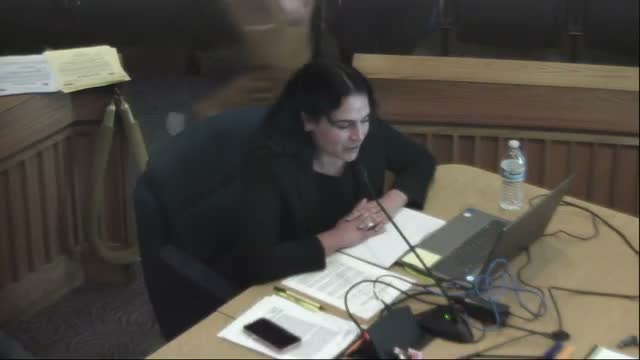
Bellflower — After a public hearing that included attorneys for the property owner and detailed staff presentations on years of code enforcement, the City Council on Feb. 9 adopted Resolution 26‑04 to record a special assessment for nuisance‑abatement costs at 9111–9119 Artesia Boulevard (the AutoMax property).
Deputy City Attorney Solange Fortenbach summarized the enforcement history dating to 2022: inspection warrants, notices of nonconformity, planning commission and council denials of appeals, a hearing officer
batement order and, after continued noncompliance, a judge‑signed abatement warrant with city abatement actions. Fortenbach told the council the resolution seeks to recoup code‑enforcement and city attorney costs associated with bringing the property into compliance.
The property owner
nd counsel challenged the notice of costs. Counsel argued the city did not provide a statement of costs within the 20‑day period required by the municipal code and asked for detailed or redacted invoices to permit a meaningful contest. "We want redacted invoices that give us a description of what was built," the owner's counsel said, citing constitutional procedural‑due‑process protections and case law requiring sufficient detail to contest abatement charges.
Fortenbach and the city attorney's office said much of the requested detail is attorney‑client privileged while noting staff had provided responsive materials via public‑records requests and could produce redacted invoices where appropriate. The city attorney also advised the council that litigation over state housing mandates has in many cases been costly for municipalities.
Despite the owner's objections, council members voted to adopt the resolution. The roll call showed Council member Dunton Aye, Council member Coops No, Council member Morse No, Mayor Pro Tem Sanchez Aye and Mayor Sonny Arzante Inez Aye. The council also discussed options to give the owner additional procedural material or to perform an expanded audit of city costs, but the resolution as posted was approved to place the assessment on the property record.
Nut graf: The decision formalizes the city
ttempt to recoup enforcement and attorney costs after a multi‑year compliance effort; the property owner signaled continued disagreement and sought more detailed billing records and a continuance.
What happens next: The owner may pursue the available contest procedures identified in the municipal code; councilmembers and staff discussed producing redacted documentation and the potential for further procedural steps if the contest proceeds.
Deputy City Attorney Solange Fortenbach summarized the enforcement history dating to 2022: inspection warrants, notices of nonconformity, planning commission and council denials of appeals, a hearing officer
batement order and, after continued noncompliance, a judge‑signed abatement warrant with city abatement actions. Fortenbach told the council the resolution seeks to recoup code‑enforcement and city attorney costs associated with bringing the property into compliance.
The property owner
nd counsel challenged the notice of costs. Counsel argued the city did not provide a statement of costs within the 20‑day period required by the municipal code and asked for detailed or redacted invoices to permit a meaningful contest. "We want redacted invoices that give us a description of what was built," the owner's counsel said, citing constitutional procedural‑due‑process protections and case law requiring sufficient detail to contest abatement charges.
Fortenbach and the city attorney's office said much of the requested detail is attorney‑client privileged while noting staff had provided responsive materials via public‑records requests and could produce redacted invoices where appropriate. The city attorney also advised the council that litigation over state housing mandates has in many cases been costly for municipalities.
Despite the owner's objections, council members voted to adopt the resolution. The roll call showed Council member Dunton Aye, Council member Coops No, Council member Morse No, Mayor Pro Tem Sanchez Aye and Mayor Sonny Arzante Inez Aye. The council also discussed options to give the owner additional procedural material or to perform an expanded audit of city costs, but the resolution as posted was approved to place the assessment on the property record.
Nut graf: The decision formalizes the city
ttempt to recoup enforcement and attorney costs after a multi‑year compliance effort; the property owner signaled continued disagreement and sought more detailed billing records and a continuance.
What happens next: The owner may pursue the available contest procedures identified in the municipal code; councilmembers and staff discussed producing redacted documentation and the potential for further procedural steps if the contest proceeds.
View the Full Meeting & All Its Details
This article offers just a summary. Unlock complete video, transcripts, and insights as a Founder Member.
✓
Watch full, unedited meeting videos
✓
Search every word spoken in unlimited transcripts
✓
AI summaries & real-time alerts (all government levels)
✓
Permanent access to expanding government content
30-day money-back guarantee
