Bay City commission refers Tenney's warming-centers proposal to staff after public testimony
February 10, 2026 | Bay City, Bay County, Michigan
This article was created by AI summarizing key points discussed. AI makes mistakes, so for full details and context, please refer to the video of the full meeting. Please report any errors so we can fix them. Report an error »
Bay City, Mich. ' The Bay City City Commission on Feb. 9 voted to refer a resolution from Commissioner Tenney directing city staff to explore daytime warming centers and related emergency-management steps. The referral was made after extensive public comment and elected-official discussion and passed on a roll-call vote (motion by Commissioner Coopet; second by Commissioner Coakley).
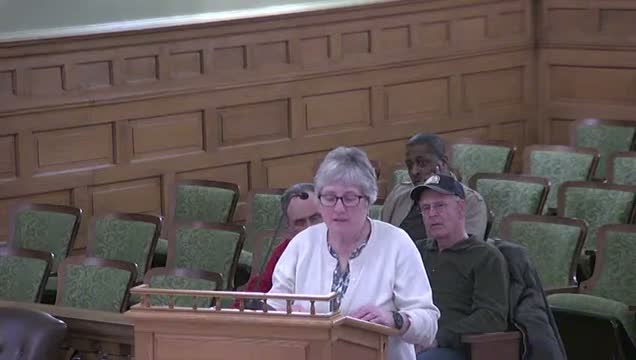
Supporters at the podium said existing overnight services leave a daytime gap during extreme cold. Tracy Zane, an outreach worker, told commissioners, "we have failed miserably for our community" and urged establishment of daytime warming centers after several nights of subzero temperatures. City staff said the recently opened Good Samaritan Rescue Mission averaged "about 20 people a night," while its overnight capacity is roughly 35.
Commissioners discussed options including partnering with county emergency services, using churches and nonprofits to open daytime sites under specified weather triggers, and whether a dedicated "warming bus" similar to Lansing's model would be feasible. Several members pressed staff for concrete numbers: how many days per year the code-blue threshold would be met and how much a daytime program would cost.
Commissioner Coopet, who moved to refer the measure, said the item was "meant to be open ended, starting the conversation" but recognized the need for a more detailed, implementable plan. Commissioners who supported referral said staff should return with cost estimates and any required certifications or medical staffing obligations; opponents had argued for immediate action by community groups instead of formal staff work.
By vote, the commission approved referring the resolution to staff for development of options and an implementation plan; any fiscal impacts would be returned to the commission for approval. The referral does not itself create a program; it directs staff to report back with specific proposals and budget implications.
Supporters at the podium said existing overnight services leave a daytime gap during extreme cold. Tracy Zane, an outreach worker, told commissioners, "we have failed miserably for our community" and urged establishment of daytime warming centers after several nights of subzero temperatures. City staff said the recently opened Good Samaritan Rescue Mission averaged "about 20 people a night," while its overnight capacity is roughly 35.
Commissioners discussed options including partnering with county emergency services, using churches and nonprofits to open daytime sites under specified weather triggers, and whether a dedicated "warming bus" similar to Lansing's model would be feasible. Several members pressed staff for concrete numbers: how many days per year the code-blue threshold would be met and how much a daytime program would cost.
Commissioner Coopet, who moved to refer the measure, said the item was "meant to be open ended, starting the conversation" but recognized the need for a more detailed, implementable plan. Commissioners who supported referral said staff should return with cost estimates and any required certifications or medical staffing obligations; opponents had argued for immediate action by community groups instead of formal staff work.
By vote, the commission approved referring the resolution to staff for development of options and an implementation plan; any fiscal impacts would be returned to the commission for approval. The referral does not itself create a program; it directs staff to report back with specific proposals and budget implications.
Don't Miss a Word: See the Full Meeting!
Go beyond summaries. Unlock every video, transcript, and key insight with a Founder Membership.
✓
Get instant access to full meeting videos
✓
Search and clip any phrase from complete transcripts
✓
Receive AI-powered summaries & custom alerts
✓
Enjoy lifetime, unrestricted access to government data
30-day money-back guarantee
